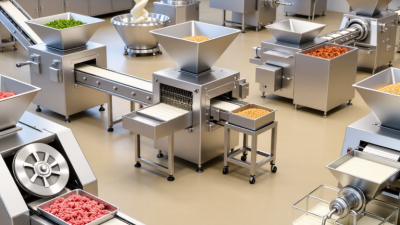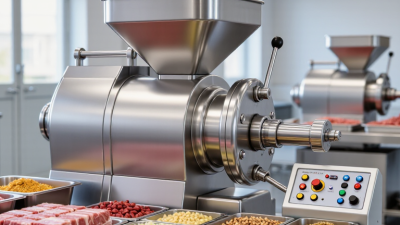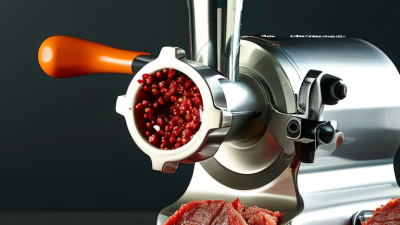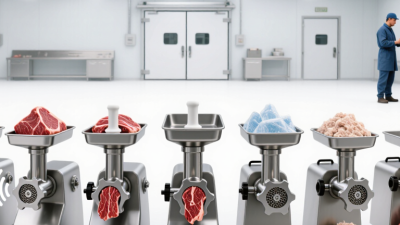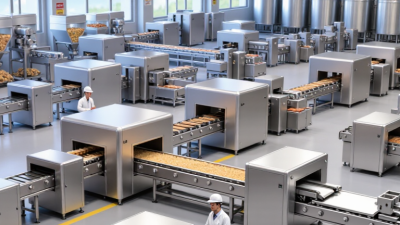
An industrial food grinder machine can shape product consistency, line speed, and cleaning time. Choosing one is not just a capacity decision. A unit that handles a dry spice well may struggle with wet vegetables, fibrous meat, or sticky cheese. Small details matter: feed opening size, blade design, motor load, discharge shape, and the minutes needed to clean contact surfaces. In food engineering, Dr. Dennis R. Heldman is a recognized authority on processing systems. A practical paraphrase of the process-focused approach reflected in his work is: “Choose equipment for the material and process, not capacity alone.” That is a useful starting point, not a complete specification.
This 2026 buying guide explains how to compare grinder types, throughput claims, particle-size control, construction materials, and maintenance needs. It also highlights questions worth asking suppliers, such as how performance changes with product temperature or moisture. Ask for a trial using your own ingredients. Watch for bridging in the hopper, uneven discharge, and heat buildup. Then review cleaning access and replacement-part availability. The right machine should fit the real production routine, not just a brochure’s best-case figures. There may still be trade-offs. A faster grinder is not automatically the better choice if it creates inconsistent texture or longer sanitation stops. This guide offers a practical framework for weighing those trade-offs before you buy.
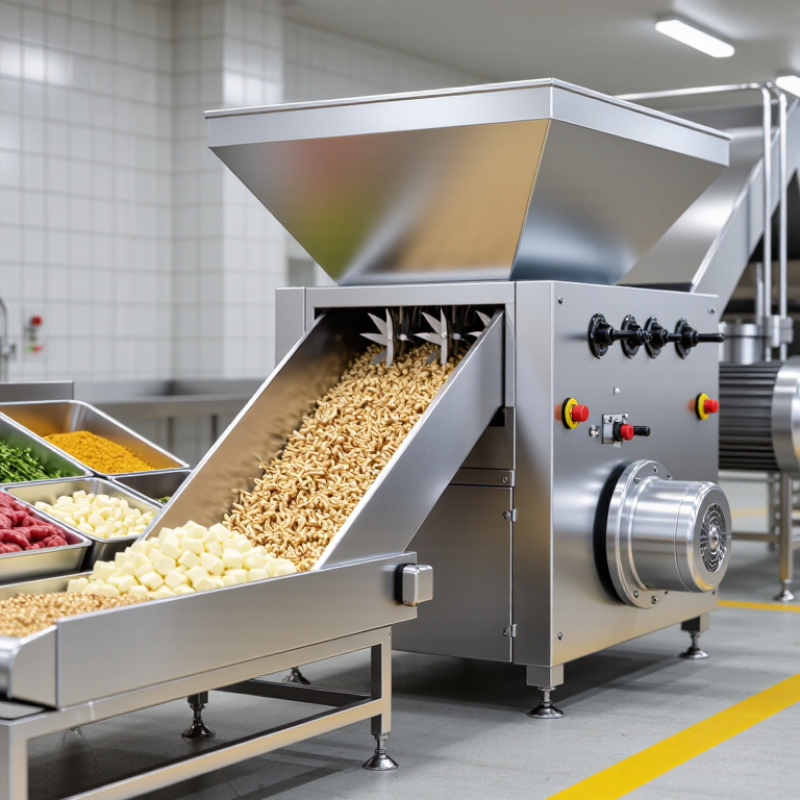
An industrial food grinder reduces ingredients into smaller, more uniform pieces for further processing. Depending on its design, it may chop, mince, crush, or grind meat, vegetables, grains, and other suitable foods. The machine typically uses rotating knives, plates, hammers, or rollers inside a guarded chamber. The right mechanism depends on the ingredient’s texture and the particle size needed for the next production step.
Food enters through a hopper, then moves into the working chamber by gravity or a feed mechanism. Cutting elements break it down as it passes through. Some grinders push material through a perforated plate to control output size. Operators may adjust the feed rate, plate openings, or speed. A chilled meat mixture can need different settings from fibrous roots. Check the texture. Small details matter.
During production, staff check the ground product for consistency, temperature changes, and unwanted residue. They also clean food-contact parts between runs. Capacity figures deserve a close look: ingredient condition, loading, and cleaning pauses can reduce real hourly output. A neat specification sheet may not reflect that. Neither will one test batch. Request a trial with your actual ingredients, and confirm that parts are practical to remove and clean. A suitable grinder is less about maximum power than maintaining a stable, hygienic process.
Industrial food grinders differ mainly in how they handle ingredients. Hammer mills suit dry grains, spices, and other brittle materials. Rotating hammers break particles against a screen, so screen size helps control the final texture. They can process varied inputs, but heat and dust may require attention during long runs.
Pin mills can produce fine powders from dry, relatively free-flowing ingredients. For fibrous vegetables or meat, cutter grinders use blades to reduce material without relying on brittle fracture. A small test batch matters. Oily or damp ingredients may behave differently than expected, causing buildup or uneven flow.
For wet products, colloid mills shear mixtures into pastes, sauces, or smooth dispersions. Roller mills are useful when grains need a more controlled, less pulverized reduction. Match the machine to the ingredient’s moisture, fat content, and desired particle range, then check cleaning access and throughput under realistic conditions. Ask how quickly parts can be inspected between batches. A specification sheet cannot reveal every processing issue; even a well-matched grinder may need adjustments to feed rate or screen choice.
Choosing an industrial food grinder in 2026 begins with the product and shift pattern, not the motor label. Estimate kilograms per hour, then check whether that figure assumes dry, uniform feed. Wet vegetables, fibrous roots, or irregular chunks can reduce real throughput. Leave operating headroom for peak batches and cleaning pauses. Fit matters.
Capacity should match both batch size and available floor space. A hopper that is too small creates constant feeding; an oversized unit may waste energy on short runs. Ask for a test using your actual ingredients and target particle size. Record output after the machine has warmed up, not only during an ideal first pass. Actual results vary.
Inspect product-contact surfaces, welds, seals, and screen access. Stainless steel is common, but grade and surface finish should suit salt, acidity, moisture, and washdown routines. Confirm how screens, blades, and bearings are replaced. Performance depends on more than motor power: rotor design, screen openings, feed rate, heat buildup, and overload protection all matter. A finer grind may lower throughput. Check noise, cleaning time, and service access at the installation site. A specification sheet rarely captures these daily irritations, so have operators review the final choice.
Food safety starts with the grinder’s design, not just the cleaning schedule. Check that food-contact parts are corrosion-resistant, smooth, and easy to reach. Tight corners around the feed throat can trap damp meat or vegetable fibers. Ask to see the machine opened for cleaning, not only running. A quick demonstration reveals more.
Confirm which plates, blades, and seals can be removed without awkward tools. Removable parts should be easy to inspect and dry fully before reassembly. Follow the manufacturer’s cleaning instructions, and keep water away from motors, switches, and electrical connections. Never clean a machine while it is energized. Staff should know how to isolate power and verify that moving parts have stopped. Small steps matter.
Maintenance affects hygiene too. Worn seals may leak lubricant or allow residue into joints, so inspect them regularly. Check blades for chips, unusual wear, and loose fasteners. Keep a simple log of cleaning, inspections, and repairs; it helps teams spot patterns before downtime grows. Verify that procedures meet the food-safety requirements that apply to your operation. A polished exterior is not proof of a clean interior. Even careful routines can miss a hidden buildup, so schedule periodic inspections and adjust the process when the product changes.
| Buying dimension | What to verify | Practical selection criteria | Records and acceptance checks |
|---|---|---|---|
| Product and capacity | Product type, incoming temperature, particle-size target, batch size, and required hourly throughput. | Ask for a product trial using representative ingredients. Confirm capacity at the required fineness and operating conditions; rated throughput can vary with product and screen or plate configuration. | Document trial material, settings, measured output, particle-size results, and product temperature before and after grinding. |
| Food-contact materials | Material specifications for product-contact surfaces, seals, lubricants, and coatings; suitability for the food and cleaning chemicals used. | Stainless steel 304 is commonly used for food equipment; 316 may be preferable where exposure to chlorides or more corrosive conditions warrants it. Select materials based on the actual process and corrosion risk. | Obtain material and food-contact compliance documentation for the intended market. In the United States, verify applicable FDA requirements; for the EU, check applicable food-contact rules, including Regulation (EC) No 1935/2004. |
| Hygienic design | Product-zone access, drainability, crevices, exposed threads, hollow members, weld quality, and the ability to inspect all food-contact areas. | Prefer accessible product paths and smooth, cleanable surfaces. Check that plates, screens, feed components, and discharge areas can be removed or reached using the intended cleaning method. | Inspect the machine during a cleaning demonstration. Record inaccessible areas, tools required for disassembly, and any corrective actions needed before acceptance. |
| Machine guarding and interlocks | Guards at moving parts, access doors, feed openings, emergency stops, and any interlocks that prevent hazardous operation when access is open. | Verify safeguards are suitable for the machine’s hazards and cannot be easily bypassed. In the United States, review applicable OSHA machine-guarding requirements, including 29 CFR 1910.212. | Complete and document a safeguarding inspection and functional test of emergency stops and interlocks before production and after relevant repairs. |
| Cleaning and sanitation | Whether the equipment is designed for manual cleaning, clean-out-of-place (COP), or clean-in-place (CIP); disassembly steps; and chemical, temperature, and water-pressure limits. | Use only the cleaning method specified for the machine. Do not assume a grinder is CIP-capable unless its design and validated procedure support CIP. Follow chemical-label instructions and equipment-manufacturer limits. | Create a site-approved cleaning procedure covering disassembly, cleaning, rinsing, sanitation where required, inspection, reassembly, and pre-operational release. |
| Allergen and cross-contact control | Shared use across products, residue-retaining areas, changeover time, and the risk of allergen or other cross-contact. | Consider dedicated product-contact components or validated changeover procedures when products with different allergen profiles use the same grinder. | Validate cleaning effectiveness using methods appropriate to the hazard and site food-safety plan; retain changeover and verification records. |
| Maintenance and lockout | Wear parts, lubrication points, inspection intervals, spare-part availability, energy sources, and safe access for service. | Request a maintenance schedule and parts list. Establish energy-isolation procedures before cleaning, clearing jams, or servicing where hazardous energy could be released; in the United States, review applicable OSHA lockout/tagout requirements, including 29 CFR 1910.147. | Maintain logs for inspections, blade or plate changes, lubrication, repairs, and lockout training. Verify guards are restored and the machine is safe before returning it to service. |
| Installation and utilities | Electrical supply, motor rating, floor loading, clearance for cleaning and maintenance, drainage, ventilation, and noise levels. | Match the machine specifications to the site’s verified utilities and layout. Allow access for safe operation, product flow, disassembly, and sanitation. | Complete a site-readiness checklist and commissioning record, including utility verification, operator training, safety checks, and cleaning-procedure approval. |
Requirements vary by product, facility, and sales jurisdiction. Confirm applicable food-safety, workplace-safety, electrical, and sanitation requirements with qualified personnel before purchase and installation.
An industrial grinder can look impressive on a specification sheet and still disappoint with your actual ingredient. Compare models using the same sample, moisture level, and target particle size. Record kilograms per hour, heat rise, noise, and how often the operator clears a blockage. Small tests matter. Ask whether quoted capacity reflects continuous production or a short demonstration. Also check motor duty rating, screen options, cleaning access, and the expected life of blades or hammers.
For a realistic 2026 budget, compare more than the purchase price. Include installation, electrical upgrades, shipping, spare parts, routine maintenance, and expected downtime. Request an itemized quote, plus clear assumptions about throughput and included components. A cheaper unit may cost more over time if wear parts are difficult to obtain. Still, precise lifetime-cost estimates can be hard; ingredient variability and operator habits complicate the math.
Evaluate suppliers by asking for a sample test, service response times, parts availability, and references from similar processing applications. Have them explain what changes when material moisture or feed rate rises. Their answers should be specific, not just confident. I would also ask for written acceptance criteria before ordering. It is an easy step to overlook, and comparing suppliers can feel less tidy than comparing machines.