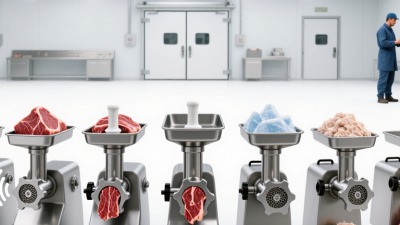
China Top 10 Industrial Food Grinder Machine Manufacturers
Choosing an industrial food grinder machine is not simply a matter of comparing motor power or purchasing price. In real production, the machine must handle changing raw materials, long operating hours, strict hygiene routines, and demanding output targets. A grinder processing frozen meat behaves differently from one handling vegetables, spices, or nuts. Small design details matter.
Dr. R. Paul Singh, a respected food engineering expert, has stated, “Food engineering is the application of engineering principles to food processing.” This principle provides a useful foundation for evaluating China’s leading manufacturers. Their capabilities should be examined through practical evidence, including cutting consistency, stainless-steel construction, cleaning access, overload protection, spare-parts availability, and after-sales support. A polished showroom is not enough.
Performance must be tested.
The best industrial food grinder machine suppliers usually provide clear technical data, material specifications, production videos, and application-based recommendations. Buyers should also ask for trial results using their own ingredients. A machine that performs well with soft vegetables may struggle with sinew, chilled meat, or fibrous roots. That difference can affect yield, downtime, and labor costs.
This guide reviews ten prominent Chinese manufacturers from an experience-led perspective. It considers engineering quality, customization ability, export experience, certifications, and customer service. Some rankings remain debatable because factory claims are not always measured consistently. That limitation deserves attention. A reliable decision requires more than a catalog. It requires inspection, testing, and honest questions before purchase.
What Industrial Food Grinder Machines Are and How They Work
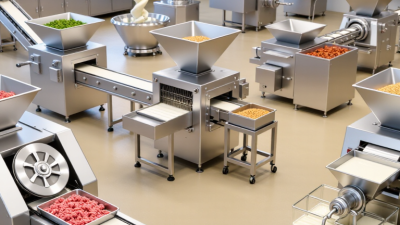
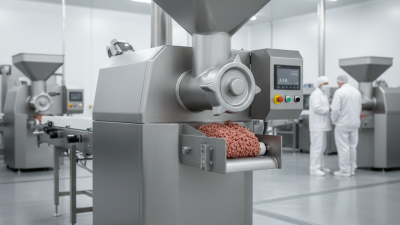
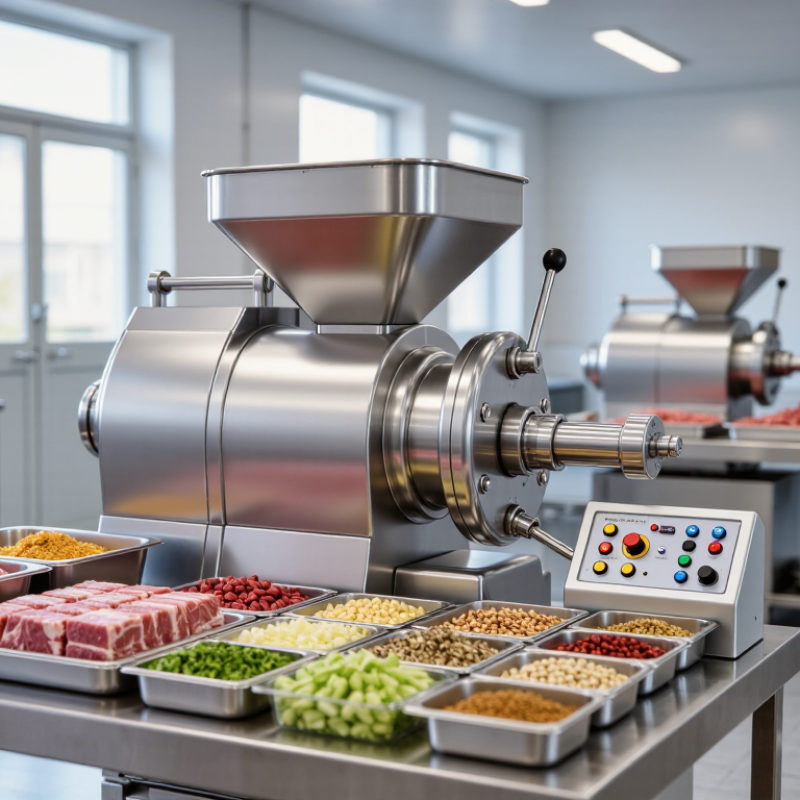
Industrial food grinder machines reduce meat, vegetables, grains, and other food materials into controlled particle sizes. A typical unit uses a feed hopper, rotating knives or hammers, a perforated plate, and a motor-driven shaft. Operators adjust the screen or plate to produce coarse mince, fine paste, or uniform granules. In production, chilled water jackets may control heat, while stainless-steel contact surfaces support hygienic cleaning.
The process looks simple. It is not always simple.
Material enters the hopper and moves toward the cutting chamber. Shear, compression, and impact break the structure apart. Excessive speed can raise temperature, damage texture, or increase oxidation. Poor feeding can also create uneven particles. Practical trials should measure throughput, motor load, product temperature, and cleaning time rather than relying only on catalogue figures.
The need for efficient processing is substantial. FAO’s The State of Food and Agriculture 2019 estimated that 14% of food is lost between harvest and wholesale. UNEP’s Food Waste Index Report 2024 estimated 1.05 billion tonnes of food waste in 2022. A grinder cannot solve waste alone, but it can help convert irregular raw materials into usable ingredients. I would still question any claimed capacity without testing the actual product, moisture level, and particle target. A machine handling dry grain may perform very differently with fibrous vegetables or chilled meat. Safety interlocks, guarded feeding zones, and validated sanitation procedures remain essential in commercial operations.
Key Criteria for Ranking Chinese Food Grinder Manufacturers
China Top 10 Industrial Food Grinder Machine Manufacturers
Ranking Chinese food grinder manufacturers requires more than comparing prices. Real experience starts with machine trials using the buyer’s actual ingredients. Test results should record particle size, output per hour, temperature rise, noise, and cleaning time. A reliable manufacturer explains these figures clearly. Vague claims deserve caution. Short visits to working factories can reveal assembly quality, inspection routines, and operator training.
Engineering depth also matters. Examine motor protection, blade or plate materials, sealing design, and feeding consistency. Food-contact surfaces should have traceable material documentation and practical cleaning access. Ask whether critical components are tested before shipment. Strong technical teams provide drawings, maintenance schedules, and operating guidance. They should also explain limitations, not only advantages.
After-sales support separates a useful supplier from a risky purchase. Review response times, spare-parts availability, warranty conditions, and installation assistance. Speak with verified users, preferably those processing similar products. Total cost includes energy use, replacement parts, downtime, and labor. A low quotation may become expensive after repeated stoppages. No ranking is perfect. A polished showroom can still hide weak service, while a modest factory may deliver dependable equipment. For this reason, scoring should combine documented evidence, hands-on testing, production capacity, quality control, and honest communication. Rechecking the ranking each year is sensible because equipment, teams, and service standards can change.
China’s Top 10 Industrial Food Grinder Machine Manufacturers
China’s Top 10 Industrial Food Grinder Machine Manufacturers are best compared through measurable production evidence, not glossy rankings. During factory visits, buyers should inspect cutting chambers, motor housings, weld quality, and cleaning access. A reliable supplier explains particle-size control, throughput testing, and maintenance intervals clearly. Ask for test records using materials similar to your products. Raw meat, spices, grains, and frozen ingredients behave differently.
The strongest manufacturers usually provide grinder designs for different capacities and operating temperatures. Useful details include stainless-steel contact parts, overload protection, adjustable screens, and practical tool-free access. Operators also need clear manuals, spare-part lists, and responsive technical support. Check whether suppliers document food-contact material grades and electrical compliance for the target market. Factory scale alone proves little. Production discipline matters more.
A sensible shortlist of ten should include manufacturers with traceable quality systems, stable export experience, and realistic delivery schedules. Request running-equipment videos, sample outputs, noise readings, and power consumption under load. Then compare results under identical conditions. Some suppliers may present ideal test data. That deserves questions. Even experienced buyers can overlook sanitation time or operator training. A grinder that performs well for one recipe may struggle with sticky or fibrous ingredients. The final choice should reflect actual production conditions, not catalogue capacity.
Machine Types, Capacities, Materials, and Processing Features
China Top 10 Industrial Food Grinder Machine Manufacturers
When comparing China’s top industrial food grinder manufacturers, machine type should match the product.
Hammer mills suit dry grains, spices, and dehydrated vegetables.
Pin mills create finer powders, but heat can affect aroma.
Colloid grinders handle sauces, pastes, and emulsions.
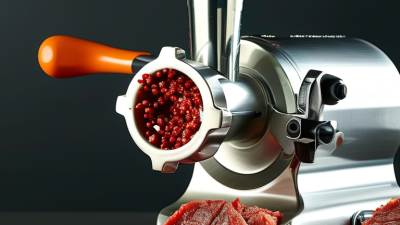
For meat and seafood, plate grinders provide controlled particle sizes and steady feeding.
Capacity needs practical testing. Small production lines may require
100–300 kilograms per hour, while large plants can exceed
2,000 kilograms. Actual output changes with moisture, hardness, screen size, and feeding speed.
Stainless steel 304 is common for food-contact surfaces.
Stainless steel 316 is more suitable for salty or acidic products.
Look for removable screens, variable-speed drives, overload protection, and cooling jackets.
Clean-in-place features save labor, although they never replace careful inspection.
Tips:
Request a sample test with your real ingredients. Check particle size, temperature rise, noise, and cleaning time.
Ask for food-contact certificates and service records. A catalog capacity is only a starting point.
I have seen identical models perform differently because operators used unsuitable screens.
That detail is easy to miss. Confirm motor voltage, spare-part availability, warranty terms, and installation support before purchase.
Weaker documentation does not always mean poor machinery, but it increases uncertainty.
How to Compare Suppliers and Choose the Right Manufacturer
When comparing China’s top 10 industrial food grinder machine manufacturers, start with your raw material, target particle size, and daily output. A grinder for dried spices may fail with oily nuts or fibrous vegetables. Ask each supplier for a test using your actual product. Request feed rate, motor power, screen size, temperature rise, and final particle distribution. Numbers matter.
Inspect the factory through a live video call or an independent audit. Look for machining areas, electrical testing, stainless steel welding, and spare-parts storage. Ask how operators clean contact surfaces between batches. A capable manufacturer should provide drawings, manuals, safety documents, and a clear acceptance standard. Check whether the quoted capacity includes feeding, grinding, and collection time. It often does not.
Supplier communication also reveals practical reliability. Compare response speed, technical detail, replacement-part availability, installation support, and warranty terms. Speak with recent customers when possible, but verify their production conditions differ from yours. A low price can hide weaker bearings, thin metal, or difficult maintenance. I once treated a polished demonstration as strong evidence; the machine later produced uneven powder during continuous operation. That mistake made load testing essential. Keep a written comparison sheet, including exclusions, delivery dates, inspection steps, and unresolved questions. Leave room for doubt. Good equipment decisions usually improve after one more uncomfortable question.