Global meat processing is becoming more standardized, yet purchasing equipment remains highly practical. FAOSTAT reported global meat production at more than 350 million tonnes annually in recent years. This volume supports steady demand for reliable grinding systems across butcher shops, catering factories, supermarkets, and food-processing plants.
The OECD-FAO Agricultural Outlook 2024–2033 also indicates continued growth in global meat consumption, especially in emerging markets. That growth creates pressure for safer, faster, and more consistent preparation. A meat grinder machine commercial model must handle repetitive production without excessive heat, unstable output, or difficult cleaning. Small details matter. Stainless-steel contact surfaces, removable plates, overload protection, and clear capacity ratings can affect daily operating costs.
This guide reviews ten commercial meat grinder machines for global buyers. The comparison considers grinding capacity, motor performance, blade design, hygiene features, maintenance access, energy use, and supplier reliability. These criteria reflect common recommendations from food-equipment safety guidance, including principles published by the U.S. Food and Drug Administration and the European Food Safety Authority. Certifications still require careful verification. A product photograph is not proof of compliance.
No single machine fits every facility. A restaurant may value compact dimensions, while a central kitchen needs continuous throughput and service support. Some listings exaggerate capacity under ideal conditions. Buyers should request test results, warranty terms, spare-part availability, and electrical specifications before ordering. This ranking is useful, but not infallible. Actual performance depends on meat temperature, fat ratio, operator habits, and cleaning discipline. That practical gap deserves attention.
What defines a commercial meat grinder is not appearance. It is sustained performance under demanding production conditions. Grand View Research valued the global meat processing equipment market at approximately USD 11.7 billion in 2023. This figure reflects continued investment in productive, hygienic processing systems. A commercial grinder should handle repeated batches without unstable motor temperatures or excessive vibration. Domestic equipment usually cannot maintain that workload.
Throughput is only one measure. Buyers should examine kilograms per hour, duty cycle, feed opening, plate diameter, and motor power. A machine processing 500 kilograms hourly may slow when meat is warm or unevenly cut. Cold meat produces cleaner definition and reduces smearing. Shorter preparation pieces also protect the cutting system. Small details matter.
Hygiene defines professional suitability. Food-contact surfaces should resist corrosion and allow tool-free or simple disassembly. NSF/ANSI 8 and EN 1672-2 are useful reference points for sanitation and machine design. Safety requires guarded feeding zones, emergency stopping, and controlled restart functions. The U.S. Department of Agriculture also emphasizes temperature control during meat handling, because grinding increases exposed surface area. That risk is easy to underestimate. Industry reports offer valuable market direction, but their methods differ. Buyers should verify test conditions, not trust capacity figures alone. A practical trial with chilled meat often reveals more than a polished specification sheet.
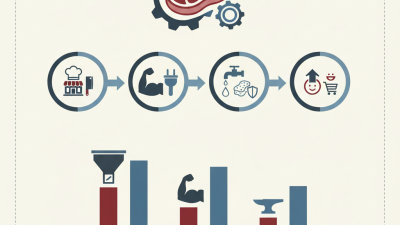
Commercial meat grinders are defined by continuous-duty construction, larger feed openings, powerful motors, stainless-steel contact surfaces, and higher hourly throughput than household equipment. The chart presents representative rated throughput levels for commonly used commercial grinder sizes. Actual output depends on meat temperature, plate size, cut size, fat content, and operator technique.
Throughput is shown in kilograms per hour (kg/h) using representative commercial capacity ranges rather than company or brand-specific data.
Top 10 Commercial Meat Grinder Machines for Global Buyers
Commercial meat grinders differ mainly in capacity, motor strength, and feeding design. Small units may process 50 to 150 kilograms per hour, while heavy-duty models can exceed 500 kilograms. Actual output depends on meat temperature, cutting plate size, and operator feeding speed. A machine rated for high capacity may perform poorly with sinew-heavy cuts.
Design also affects daily workflow. A wide hopper reduces preparation time, while a narrow throat gives operators better control. Stainless steel construction supports hygiene and long service life. Removable plates, tool-free components, and smooth internal surfaces make cleaning faster. These details matter during busy shifts.
In practical equipment evaluations, safety interlocks prevent operation when the hopper or head is incorrectly fitted. Overload protection helps protect the motor during demanding batches. Variable plate options allow coarse, medium, or fine textures for different products. Some buyers focus too heavily on motor power. That can be a mistake. A powerful motor cannot compensate for poor feeding design or weak transmission parts.
Noise, electrical compatibility, and spare-part access also vary between machines. Global buyers should check voltage, frequency, plug standards, and local service support before ordering. Product specifications are useful, but hands-on testing reveals more. We have seen stated capacity fall when meat warms or operators load the hopper unevenly. That imperfect gap deserves attention.
Top 10 Commercial Meat Grinder Machines for Global Buyers: Key Features for Global Buyers to Compare
Global buyers should compare verified output, not impressive advertising. A machine rated at 1,500 kilograms per hour may require frozen inputs, large plates, and continuous feeding. Request test results using your actual meat temperature and cut size. Measure kilograms per hour during a 30-minute production run. Motor power, duty cycle, feed throat size, and plate diameter directly affect performance. Small details matter.
Hygiene deserves equal attention. The WHO reports that contaminated food causes about 600 million illnesses annually, making cleanability a purchasing requirement. Choose food-grade stainless steel, rounded internal corners, removable grinding components, and tool-free access where possible. Check the stated ingress-protection rating, weld quality, and drainage design. A difficult-to-clean machine can create costly delays, even when its purchase price looks attractive. It happens.
Global compatibility also requires careful comparison. Confirm voltage, frequency, plug configuration, control language, spare-part availability, and local technical support. The OECD-FAO Agricultural Outlook 2024–2033 indicates continued growth in global meat demand, but demand differs sharply by region. Therefore, flexible plates, adjustable feed rates, and scalable capacity may be more useful than maximum speed. Energy consumption per tonne should be recorded, not guessed. Buyers should also review noise levels, emergency-stop access, operator guarding, and maintenance intervals. Certification claims need independent verification. A supplier’s brochure is not enough.
| Rank | Machine Configuration | Typical Plate Size | Motor Power | Typical Throughput* | Hopper Capacity | Main Construction | Electrical Options | Best Commercial Use | Key Buying Consideration |
|---|---|---|---|---|---|---|---|---|---|
| 1 | Heavy-Duty #52 Grinder | 52 mm nominal system | 15–30 kW | 2,000–5,000 kg/h | 80–150 kg | 304 stainless steel contact parts | 380–415 V, three-phase | Large meat-processing plants | Floor space, electrical infrastructure, and continuous-duty cooling |
| 2 | Industrial #42 Grinder | 42 mm nominal system | 11–22 kW | 1,200–3,000 kg/h | 50–100 kg | Stainless steel hopper and grinding head | 380–415 V, three-phase | High-volume butcheries and processors | Check auger design and service access for daily production |
| 3 | Commercial #32 Grinder | 32 mm nominal system | 5.5–11 kW | 500–1,500 kg/h | 25–60 kg | 304 stainless steel food-contact surfaces | 220–240 V or 380–415 V | Retail butcher shops and medium processors | A practical balance between output, price, and footprint |
| 4 | Medium-Duty #22 Grinder | 22 mm nominal system | 2.2–5.5 kW | 250–800 kg/h | 15–35 kg | Stainless steel grinding head; coated or stainless body | 220–240 V, single- or three-phase | Restaurants and smaller butcher shops | Confirm duty cycle before selecting for continuous production |
| 5 | Compact #12 Grinder | 12 mm nominal system | 1.1–2.2 kW | 100–350 kg/h | 5–15 kg | Stainless steel food-contact parts | 110–120 V or 220–240 V | Delis, cafés, and low-volume retail counters | Best where counter space and single-phase power are limited |
| 6 | Frozen-Meat Pre-Breaker Grinder | 32–52 mm system | 22–75 kW | 1,500–6,000 kg/h | 100–300 kg | Heavy stainless steel frame and reinforced cutting system | 380–415 V, three-phase | Industrial lines handling chilled or semi-frozen blocks | Verify approved product temperature and block-size limits |
| 7 | Mixer-Grinder Combination | 22–42 mm system | 7.5–22 kW | 500–2,500 kg/h | 100–500 L mixing bowl | 304 stainless steel bowl and contact parts | 380–415 V, three-phase | Sausage, burger, and seasoned-meat production | Reduces handling steps but requires more cleaning and floor space |
| 8 | Continuous-Feed Grinder | 32–52 mm system | 15–55 kW | 1,000–5,000 kg/h | Feed conveyor or hopper-based | Stainless steel product zone and guarded drive system | 380–415 V, three-phase | Automated processing and packaging lines | Check conveyor compatibility, controls, and line integration |
| 9 | Mobile Floor-Stand Grinder | 22–32 mm system | 3–11 kW | 300–1,200 kg/h | 20–60 kg | Stainless steel body with lockable casters | 220–240 V or 380–415 V | Shared production rooms and flexible workstations | Prioritize wheel strength, stability, drainage, and operator height |
| 10 | Hygienic Washdown Grinder | 22–42 mm system | 5.5–22 kW | 500–2,500 kg/h | 30–100 kg | 304 or 316 stainless steel product-contact parts | 220–240 V or 380–415 V | Meat plants with frequent wet cleaning | Confirm ingress protection, weld quality, drainage, and cleaning procedure |
*Typical throughput varies with meat temperature, fat content, cut size, plate-hole diameter, operator loading, and machine configuration. Confirm the final specification, local electrical requirements, food-contact material documentation, guarding, and applicable safety certification before purchase.
Top 10 Commercial Meat Grinder Machines for Global Buyers
Top 10 Commercial Meat Grinder Machines by Application
Choosing by application is safer than choosing by motor size alone. Butcher shops need steady output, clean cutting, and quick plate changes. Machines producing 300 to 800 kilograms hourly may suit busy retail counters. Smaller units can reduce waste during quieter periods. That detail is often overlooked.
Restaurants need compact grinders beneath stainless worktables. They usually process burgers, meatballs, and fillings. Sausage producers need stable feeding and compatible stuffing attachments. Supermarkets require repeatable texture and easy cleaning between batches. Hotels and catering kitchens may prioritize mobility, low noise, and simple controls. Paper specifications can mislead.
Central kitchens and food processors often need automatic loading, dual cutting sets, and documented sanitation procedures. Frozen-meat applications demand stronger feeding systems and clearly stated temperature limits. Institutional kitchens usually value easy training over maximum speed. Specialty processors should verify plate materials, motor protection, and spare-part availability. Pet-food applications require separate hygiene controls and material verification. Local food-safety rules still decide suitability. A machine can look ideal on paper, yet cleaning access may disappoint operators after a long shift. Performance should be checked with the actual meat temperature, cut size, and daily workload.
Commercial meat grinder selection starts with safety, not capacity. A powerful motor cannot compensate for a missing guard. Look for feed throat protection, an accessible emergency stop, and secure interlocks. Operators should never reach into the hopper, even when the auger appears still. Stored energy can remain. Lockout procedures should cover cleaning, jam removal, and blade changes.
Maintenance affects both uptime and food safety. Choose machines with removable plates, smooth welds, and drainable surfaces. After each shift, staff should disassemble approved parts, wash them, sanitize them, and dry them fully. Moisture trapped behind seals can encourage contamination and corrosion. Keep a dated log for inspections, lubrication, blade condition, and repairs. A simple log is useful, but it cannot prove proper cleaning alone.
Compliance needs a wider purchasing review. Confirm food-contact materials, electrical protection, noise limits, guarding rules, and destination-market documentation. Ask for test reports, manuals, spare-part details, and training instructions before payment. Local inspectors may interpret requirements differently. That uncertainty deserves time and budget. The cheapest quote can become expensive after customs delays, unsafe modifications, or unavailable seals. Even experienced buyers miss small details. Measure floor space, drainage, power supply, and peak daily load before comparing the top ten machines.