10 Best Industrial Meat Mincers for Global Buyers?
Choosing the right industrial meat mincer is a practical decision, not a simple equipment comparison. Global buyers must examine throughput, cutting consistency, motor strength, sanitation, safety controls, and local service support. A machine producing 2,000 kilograms per hour may look attractive, yet it can disappoint when cleaning takes too long or spare parts remain unavailable. Real production conditions matter.
Dr. Temple Grandin, a respected authority in meat-processing systems, offers a useful principle: “The best way to get people to change is to make it easy for them to change.” That idea also applies to mincer selection. Operators need clear controls, safe access, simple washdown procedures, and comfortable maintenance routines. Good design reduces mistakes. It also supports repeatable results.
This guide reviews ten industrial meat mincer options for international buyers. The comparison considers fresh and frozen meat handling, plate and knife systems, hopper capacity, energy use, stainless-steel construction, and after-sales reliability. It also considers less visible details, such as noise, floor space, cleaning access, and operator training. These factors can shape daily costs more than the advertised output.
No machine is perfect. A high-capacity model may be excessive for a smaller plant. A lower-cost unit may create higher maintenance expenses later. Buyers should question impressive specifications and request evidence from comparable facilities. Supplier claims deserve verification. The best choice depends on product volume, meat texture, labor skills, hygiene procedures, and future expansion plans.
Industrial Meat Mincers: Purpose, Design, and Core Processing Principles
10 Best Industrial Meat Mincers for Global Buyers?
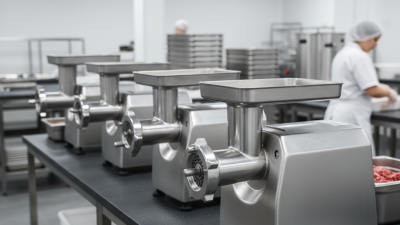
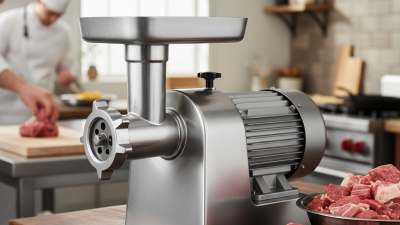
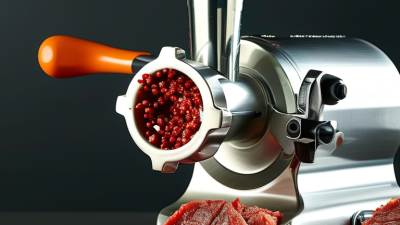
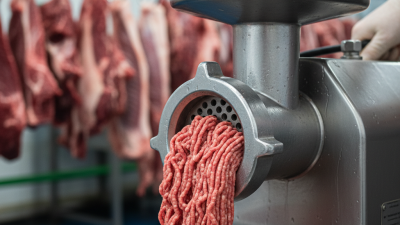
Industrial meat mincers transform chilled or partially frozen meat into consistent particle sizes for sausages, patties, fillings, and prepared foods. Their purpose is not simply faster grinding. They must protect texture, control temperature, and maintain stable output during long production runs. A typical machine uses a feed hopper, screw conveyor, cutting knife, and perforated plate. Meat moves forward under controlled pressure, then passes through the plate openings. Smaller holes create finer mince, while larger holes preserve a coarser bite.
Design details affect daily performance. Stainless steel contact surfaces support hygienic cleaning and resist corrosion. A strong motor handles dense blocks, but excessive power may raise product temperature. That can weaken texture and increase cleaning challenges. In practical plant testing, operators should inspect knife sharpness, plate alignment, feed pressure, and motor load. Even a well-designed mincer can perform poorly when meat is too warm. The ideal setting is not always obvious. It may require several trials.
Tips: Confirm the required output per hour before comparing models. Check plate sizes, cleaning access, noise levels, spare-part availability, and electrical compatibility. Ask suppliers for material certificates, safety documentation, and test results using similar meat conditions. Record mince temperature before and after processing. Small differences matter. Periodic calibration and careful operator training often improve consistency more than purchasing a larger machine.
Key Criteria for Comparing Industrial Meat Mincers Worldwide
10 Best Industrial Meat Mincers for Global Buyers?
Key Criteria for Comparing Industrial Meat Mincers Worldwide
A reliable comparison starts with production capacity, not advertising claims. Check kilograms per hour under realistic meat temperatures and cutting conditions. A machine rated for 2,000 kilograms may perform differently with frozen blocks or fatty cuts. Ask for test data, duty-cycle limits, and the recommended feed size. Motor power matters, but torque, transmission design, and overload protection matter more.
Hygiene deserves equal attention. Food-contact surfaces should resist corrosion and allow quick disassembly without hidden residue traps. Inspect weld quality, seals, hopper access, and the spacing around the cutting assembly. Stainless construction is useful, but it does not guarantee sanitary design. Request cleaning instructions and verify whether tools are needed. Safety interlocks, emergency stops, and guarded feeding areas should be documented clearly.
Global buyers must also compare voltage options, spare-part availability, training, and service response times. A lower purchase price can become expensive when a bearing or cutting plate takes months to replace. Review warranty terms carefully, including labor and international shipping. Independent inspection reports are valuable, though they cannot replace an actual production trial. A perfect ranking is unrealistic. Each facility has different labor costs, recipes, floor space, and maintenance skills. The best choice is the machine that remains safe, clean, productive, and supportable in that specific operating environment.
Ten Leading Industrial Meat Mincer Types and Their Best Applications
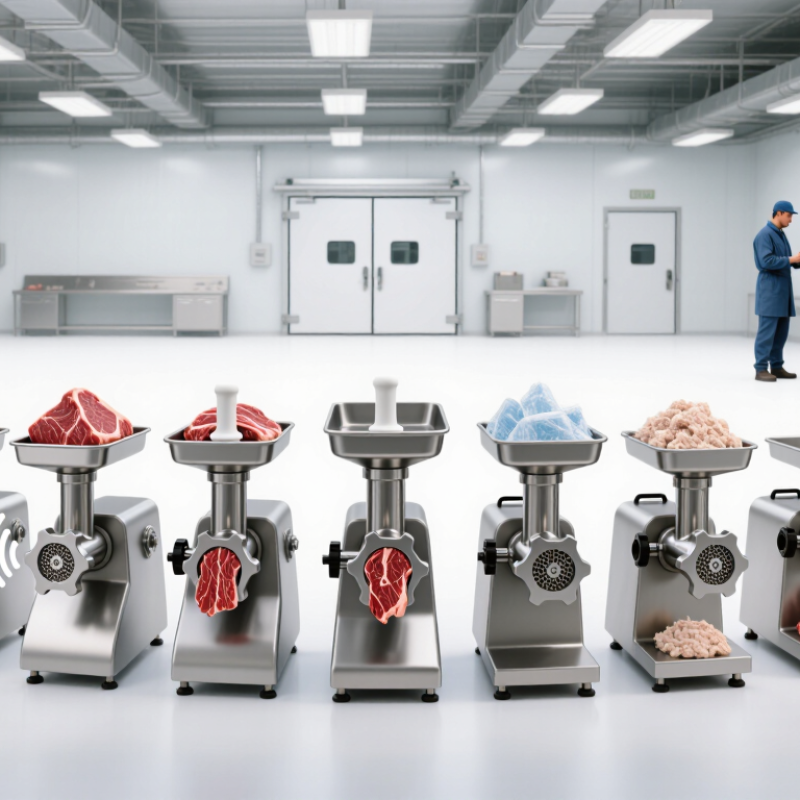
Industrial meat mincers differ by feed system, cutting design, temperature control, and output capacity. Fresh-meat grinders suit butcheries and medium processors handling chilled beef or pork. Frozen-block grinders process solid blocks with minimal thawing. Coarse-plate grinders create visible meat texture for burgers and sausages. Fine-plate grinders produce smoother fillings. Bowl-cutting mincers support emulsified products, such as frankfurter-style mixtures. Mixer-grinder units combine mincing and seasoning in one cycle. Vacuum mincers reduce trapped air in premium sausage mixtures. Inline mincers connect directly with stuffing or forming lines. Double-cut systems improve throughput for continuous production. Poultry-focused mincers handle softer meat and controlled bone-free raw material.
The FAO reported global meat production above 350 million tonnes in 2022, increasing pressure on hygienic, scalable equipment. A 2024 market assessment by Grand View Research also identified automation and processing efficiency as major growth drivers. These trends favor automatic-feed and inline designs for large factories. However, capacity figures can mislead. Actual output changes with meat temperature, plate condition, fat ratio, and operator practice. A machine rated at several tonnes hourly may perform differently on a busy production floor. That gap deserves attention.
Tips: Match the mincer to the product, not only the motor size. Ask for trials using your real meat temperature and recipe. Check cleaning access, emergency controls, spare-part availability, and documented food-contact materials. Smaller processors may prefer a mixer-grinder, while high-volume plants often need vacuum or inline systems. Keep one spare cutting set ready. Downtime is expensive.
How to Select the Right Industrial Meat Mincer for Your Operation
Selecting an industrial meat mincer starts with your daily production pattern, not a catalogue ranking. The OECD-FAO Agricultural Outlook 2024-2033 projects global meat production to increase by about 12% by 2033. That growth makes reliable sizing important. Estimate peak-hour demand, not average demand. A machine producing 1,000 kilograms per hour may struggle during continuous shifts if loading is irregular.
Test the mincer with your actual meat temperature, fat ratio, and cut size. Product temperature can change cutting pressure and texture. Check whether the motor supports continuous duty, because intermittent ratings can mislead buyers. Review plate diameter, knife design, feed-hopper capacity, electrical compatibility, and cleaning access. The FAO’s General Principles of Food Hygiene stresses hygienic design, effective cleaning, and contamination control. Stainless contact surfaces help, but smooth welds and tool-free access matter more than appearance. Very important.
Ask for measured noise, energy use, and output data under comparable conditions. Request spare-part lead times and service training before signing a purchase order. A cheaper unit may become expensive when one imported component stops production. I would not assume a larger motor is automatically better; it can increase energy costs and still produce poor texture. In plant evaluations, operators often reveal problems that brochures omit, especially awkward lifting points and difficult-to-clean corners. Leave room for human error. The best mincer fits your workflow, sanitation routine, workforce, and future volume.