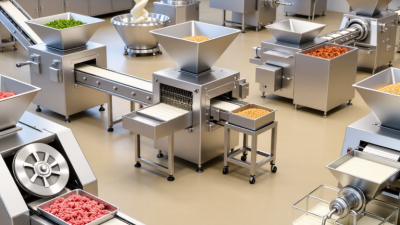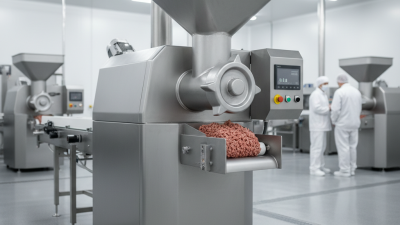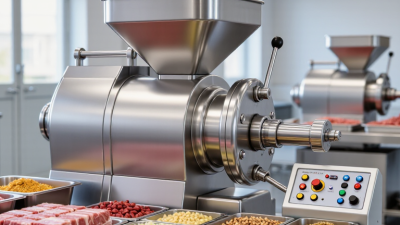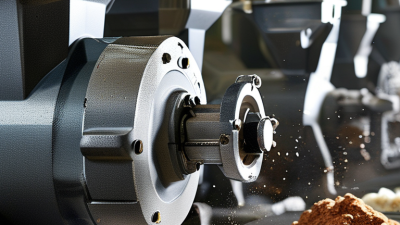
Choosing an industrial food grinder begins with the material, not the motor rating. Is your product dry, fibrous, oily, or sticky? A handful of fresh meat, a sack of spices, and frozen vegetables behave differently beneath the same cutting head. Particle-size targets, hourly throughput, cleaning time, and heat sensitivity all affect the right design. Small details matter: a narrow feed opening can slow operators, while a worn screen may leave uneven particles.
Food-engineering authority R. Paul Singh describes the discipline as “the application of engineering principles to food processing.” That principle applies directly to grinder selection: match the machine to measurable process needs, then verify performance with your own product. The FAO’s 2019 The State of Food and Agriculture report estimated that about 14% of food is lost between harvest and retail. It does not measure grinder-related losses, but it underscores why careful handling and efficient processing deserve attention.
Compare blade or hammer systems, screen options, contact materials, and cleanability against your actual production conditions. Ask suppliers for a product trial, documented capacity, and particle-size results—not just a headline rating. Check whether the grinder maintains consistency during a full shift, when feed conditions may change. No brochure can fully predict a sticky batch. That is a limitation worth acknowledging. The right industrial food grinder should fit the product, the cleaning routine, and the line around it, with evidence from testing rather than guesswork.
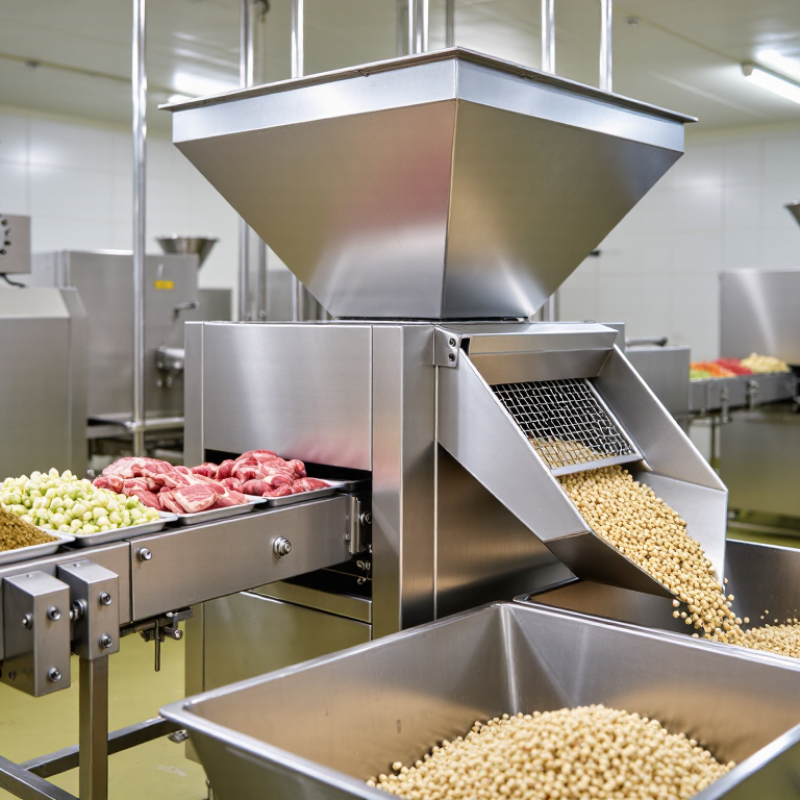
Before comparing grinder types, document the job in measurable terms. Define hourly throughput, batch size, target particle range, operating hours, and acceptable product temperature. Specify whether material arrives fresh, frozen, dried, fibrous, oily, or sticky. Small details matter. Moisture and fat content can affect feeding, heat buildup, and screen performance. FAO’s 2023 report, Tracking Progress on Food and Agriculture-related SDG Indicators, estimates that 13.2% of food was lost globally between harvest and retail in 2021. That figure is not a grinder benchmark, but it reinforces why recording input and usable output matters. A rough yield estimate is easy to overlook.
Describe the finished product, too. A coarse meat filling, fine spice powder, and uniform vegetable purée place different demands on cutting geometry and screen openings. Note whether the material must stay cool, retain visible pieces, or avoid smearing. Include the toughest ingredient, not just the easiest one. Test actual batches. A worksheet rarely captures every sticky batch. Ask operators to record feed rate, motor load, temperature, and particle consistency during trials; these observations can expose bottlenecks a catalogue specification misses. Also check cleaning access and changeover time against the real production schedule. I would leave room for uncertainty: seasonal ingredients can vary, so one successful trial may not represent the next delivery.
Choosing an industrial food grinder starts with the feed, not the catalog capacity. A hammer mill repeatedly strikes dry grains and brittle ingredients with swinging hammers. A pin mill accelerates particles between pins, using impact and shear to produce fine powders. Friction can warm fat-rich ingredients. For wet pastes, a colloid mill forces material through a narrow rotor–stator gap. It creates intense shear and a smooth dispersion, not necessarily a dry powder. Fibrous vegetables may suit a cutter grinder, which slices rather than shatters. Short test runs matter.
Working principles indicate trade-offs, but don’t guarantee results. Request particle-size distribution, throughput at your actual moisture level, and product temperature after grinding. The U.S. Department of Energy’s 2008 sourcebook, Improving Motor and Drive System Performance, estimates motor-driven systems use about 68% of U.S. industrial electricity. This covers industry-wide systems, not grinders alone. Still, specific energy use, measured in kWh per tonne, is a useful trial metric. Compare screen sizes and rotor speeds using the same batch, then check fines, heat, and retained material. “Finer” may mean slower output and more heat. Real food rarely behaves like a clean sample. Record clean-down time, too; awkward corners can quietly undermine a good throughput result.
| How to Choose an Industrial Food Grinder? - Compare Industrial Grinder Types and Their Working Principles | |||||
|---|---|---|---|---|---|
| Grinder type | Working principle | Typical food materials | Typical result | Key strengths | Main considerations |
| Hammer mill | Fast-moving hammers strike the feed; particles are further reduced by impact and contact with the screen. Screen openings help control the discharged particle size. | Dry grains, cereals, spices, sugar, and other brittle, low-moisture ingredients. | Coarse meal to fine powder, depending on the screen, rotor speed, and feed properties. | Versatile and suitable for many dry materials; screen changes allow adjustment of the product size range. | Can produce heat and dust; oily, sticky, or damp feeds may clog the screen or reduce flow. Wear parts require inspection. |
| Pin mill | Material passes between discs fitted with rows of pins. High-speed impacts between pins and particles reduce the feed into smaller particles. | Dry, brittle materials such as spices, sugar, starch, and some cereal ingredients. | Often a fine, relatively uniform powder when the feed and operating conditions are suitable. | High-speed impact can achieve fine grinding without a conventional sizing screen in some designs. | Heat generation and dust control need attention. Hard contaminants can damage pins, and sticky feeds are generally unsuitable. |
| Roller mill | Material is drawn between rotating rollers and reduced mainly by compression and shear. Roller gap and surface design influence the product. | Wheat, grains, malt, and other dry materials that benefit from controlled, staged size reduction. | Cracked grain, grits, or flour, depending on roller configuration and the number of grinding stages. | Offers controlled, repeatable reduction and can limit excess fines when correctly configured. | Requires correct roller settings and alignment. It is less suited to irregular, sticky, or highly fibrous materials. |
| Cutting or knife grinder | Rotating knives or blades shear and cut material against stationary blades or a cutting surface; a screen may determine the maximum discharged size. | Vegetables, fruits, herbs, meat, and other moist, fibrous, or deformable foods, depending on machine design. | Chopped, diced, minced, or comminuted material; the texture depends on blade geometry, speed, and feed rate. | Cuts fibrous and moist materials that impact mills may handle poorly; can preserve a defined cut structure. | Blade sharpness affects performance. Product temperature, texture, and sanitation requirements should be considered. |
| Colloid mill | A rotor and stator create a narrow adjustable gap. High shear and fluid turbulence disperse or refine particles in a liquid or pumpable mixture. | Pumpable pastes, suspensions, sauces, dressings, and some nut or seed preparations. | A finer, more uniform dispersion or paste; it is not typically used to grind dry bulk solids. | Effective for wet grinding, mixing, and homogenizing in a continuous process. | Feed must be sufficiently fluid. Viscosity, temperature rise, gap setting, and cleanability are important selection factors. |
| Plate or burr mill | Food is drawn between two grooved plates or burrs; relative motion reduces it by compression, friction, and shear. The plate gap affects fineness. | Coffee, grains, spices, and selected dry or semi-dry ingredients, depending on the plate design. | Ground material with a size range influenced by plate spacing, feed rate, and material characteristics. | Straightforward adjustment and effective grinding for appropriate, relatively brittle materials. | Plate wear can affect consistency. Excessive heat and oily or moist feed may limit operation. |
| Selection note: Confirm the required particle size or texture, feed moisture and fat content, target capacity, temperature limits, cleaning method, and food-contact requirements. Actual output and particle-size distribution depend on the machine design, operating settings, and material properties. | |||||
Choosing an industrial food grinder starts with the real hourly load, not the largest figure on a sales sheet. Record peak and average feed rates, then include pauses for cleaning, changeovers, and material variation. For example, a line needing 600 kg per hour with 20% operating headroom calls for about 720 kg per hour of usable capacity. That is a planning estimate, not a guarantee. Validate it with the actual ingredient: oily seeds, damp grains, and brittle sugar behave differently in the same machine. Keep a run log. Small details matter.
Particle size should match the next process, such as mixing, extraction, or cooking. ASTM E11-24 lists standard test sieve openings of 850 μm for No. 20 and 180 μm for No. 80; these provide concrete checks when specifying a target range. Ask suppliers for a particle-size distribution, not only an average. A sample may meet the average while still containing coarse pieces that clog a screen or fine dust that heats quickly. Test multiple batches at production speed, and measure the feed’s moisture and temperature. The first trial can mislead. I would also leave room to revise the target: tighter grinding may reduce throughput, and that trade-off is easy to underestimate.
When choosing an industrial food grinder, inspect the parts that touch food, not just the frame. Look for durable, corrosion-resistant construction, smooth contact surfaces, and joints without deep crevices. The FDA Food Code 2022 describes food-contact surfaces as smooth and easily cleanable. That is a useful benchmark, though a specification sheet cannot show whether a real weld traps residue. Check seams, seals, guards, and the area beneath the hopper.
Cleaning must fit the actual production routine. Can workers remove the cutting plate and reach the chamber without awkward tools? Are seals easy to inspect and replace?
CDC estimates that 48 million people in the United States become ill from foodborne diseases each year, with 128,000 hospitalizations and 3,000 deaths.
These figures are not grinder-specific, but they underline why sanitation details matter. Small details matter. A grinder that takes too long to clean may encourage rushed checks between batches.
Review maintenance access before purchase. Ask how often blades, bearings, and seals need inspection, and whether wear parts are straightforward to replace. Confirm that the manual gives clear cleaning and reassembly steps. Stainless steel alone is not a guarantee of hygienic design; scratches, loose fasteners, or a worn gasket can still create trouble. It is easy to overlook the sound of a machine, too. A new vibration or uneven grind may be an early warning, but operators should compare it with the machine’s normal performance rather than guess.
Before comparing cutting capacity, check the grinder’s installation needs. Measure the floor space, including room to open guards and clean around the machine. Confirm the available voltage, phase, drainage, ventilation, and lifting access. A grinder that fits on paper may still be difficult to position beside a wall or feed from a small hopper. Ask for utility requirements and service clearances in writing.
Tips: Measure doorways and turning space, not just the final footprint. Keep a little clearance for maintenance. It is easy to overlook.
Check that the machine’s food-contact surfaces, guarding, emergency stops, and cleaning procedures meet the requirements that apply to your facility and location. Request documentation, such as material specifications and cleaning instructions, and have your safety or quality team review it. Do not assume a compliance label covers every process or local requirement. Then estimate total operating cost: purchase price, installation, power use, water, labor, wear parts, and planned downtime. Compare costs against expected throughput, using realistic shifts and product types. A lower price can be costly if frequent cleaning or blade changes interrupt production. Estimates are imperfect; revisit them after a trial run, when actual energy use and cleaning time become clearer.
Estimated annual electricity cost for example motor ratings, assuming 8 operating hours per day, 250 days per year, and an electricity rate of $0.12 per kWh. These are planning estimates, not specifications or quotes for particular machines. Before choosing a grinder, verify its actual power requirements, site clearances, utility connections, and applicable food-safety and electrical regulations. Total operating cost also depends on maintenance, cleaning, labor, and downtime.