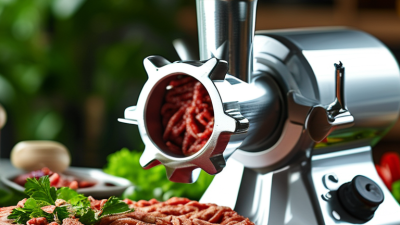
7 Best Industrial Bone Grinders for Sale

Choosing an industrial bone grinder is a practical decision, not just a search for the biggest motor or lowest price. These machines may process chilled or frozen bones into material for rendering, pet-food production, or other approved uses. The right model depends on the bones you handle, your required output, and the space available for installation. A grinder that looks powerful in a brochure may not suit your daily workload.

This guide compares seven options by useful purchasing criteria: stated capacity, motor power, construction, feeding design, cleaning access, and available service support. Check whether specifications refer to bones similar to yours; throughput can change with bone size, temperature, and feed rate. Ask suppliers for written details and, when possible, a demonstration using representative material. Small details count. A narrow feed opening or difficult-to-remove guard can slow routine work and complicate cleaning.

Maintenance deserves equal attention. Look for clear instructions, accessible wear parts, and practical guidance on safe operation. Confirm that the machine fits your facility’s electrical supply and sanitation procedures before placing an order. That is not enough. Compare warranty terms and the supplier’s ability to provide replacement parts, too. The models in this list offer different strengths, but no single grinder suits every processor. Use the comparison as a starting point, verify claims with the manufacturer, and weigh long-term upkeep against purchase price. Some details may seem minor until the machine runs every day.
7 Best Industrial Bone Grinders for Sale

What Industrial Bone Grinders Are and How They Work

7 Best Industrial Bone Grinders for Sale

What Industrial Bone Grinders Are and How They Work

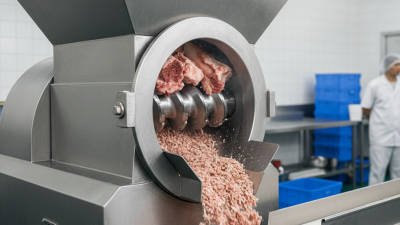
An industrial bone grinder reduces animal bones into smaller pieces for further processing or suitable end uses. Depending on its design, it uses rotating knives, toothed rollers, or hammers to break material against a cutting surface. A screen can help control the final particle size. The output is not automatically uniform; bone size, moisture, and feed rate all matter.

Operators typically load bones through a guarded hopper. The machine’s motor drives the cutting assembly, while safety interlocks help prevent access during operation. Some models handle soft bones more easily than dense, large pieces. That matters. A grinder also does not sterilize material, so sanitation and downstream handling need separate controls. FAO’s 2019 State of Food and Agriculture report estimated that 14% of food is lost between post-harvest and retail worldwide. That figure is not specific to bones, but it underscores why processors assess by-product handling carefully.

Key Features of Commercial Bone Grinding Equipment

7 Best Industrial Bone Grinders for Sale

Key Features of Commercial Bone Grinding Equipment

A commercial bone grinder must handle dense material without stalling or producing inconsistent particle sizes. Look closely at motor torque, cutting assembly, feed opening, and rated throughput. These specifications matter more than a large horsepower figure alone. Bone type, temperature, and feeding method can all change real output.

USDA NASS reported approximately 55.4 billion pounds of U.S. commercial red meat production in 2023, illustrating the scale of processing operations. That figure is not a grinder-capacity benchmark. It does show why equipment uptime and predictable throughput matter. Ask suppliers how capacity was tested, and whether their figures describe continuous operation or short runs.

Small details matter. Choose corrosion-resistant food-contact surfaces, accessible cutting parts, and a design that allows thorough cleaning. Guarding and interlocks help reduce operator exposure around moving components. A clear maintenance schedule is useful, too; blades that dull quietly can increase heat, strain, and uneven output. Still, a polished specification sheet can mislead. Request a demonstration using material similar to your own, then inspect the ground product and cleaning access.

7 Best Industrial Bone Grinders for Sale: Key Features of Commercial Bone Grinding Equipment

Screen aperture is one key feature to compare when selecting a commercial bone grinder. The chart shows seven representative perforated-plate aperture sizes; actual availability varies by machine. Aperture size does not guarantee the finished particle size, which also depends on the bone, feed rate, and grinder configuration.

Seven Types of Industrial Bone Grinders for Sale

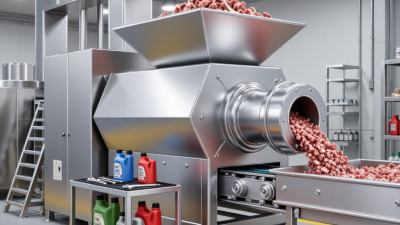
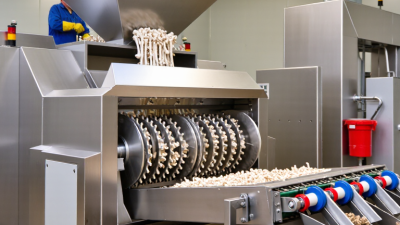
Industrial bone grinders differ by cutting action, feed size, and target texture. A jaw-style crusher breaks large pieces into coarse fragments before finer processing. Hammer mills use rotating hammers and screens to produce a more controlled particle size. Plate grinders shear material between grooved plates, while cutter grinders rely on sharp blades for a relatively uniform grind. Check the equipment’s stated feed limits; a machine suited to small bone pieces may not accept whole sections. Fit matters.

Screw grinders move material through a narrowing channel, combining feeding and crushing in one operation. Pin mills use fast-moving pins to reduce smaller, pre-crushed material. Frozen-bone grinders are designed for hard, chilled feed, which can help control smearing but demands suitable power and construction. Not every line needs all seven types. For a purchase, compare throughput, screen or plate options, cleaning access, and wear-part replacement. Ask for a sample run using material close to your actual feed. One honest limitation: published capacity figures may not reflect irregular bones or frequent stops, so treat them as estimates, not guarantees.

7 Best Industrial Bone Grinders for Sale - Seven Types of Industrial Bone Grinders for Sale

Equipment Type Typical Processing Stage Suitable Feed Typical Output Key Selection Consideration
Jaw-Type Bone Crusher Primary size reduction Large, hard animal bones, subject to the machine’s rated feed size Coarse, irregular bone pieces Check maximum feed dimensions, discharge opening, and access for cleaning.
Hammer Mill Bone Grinder Secondary or fine grinding Usually dried or pre-crushed bone suitable for the mill’s feed system Granules or meal; particle size depends on screen and setup Consider screen size, dust control, wear parts, and the material’s moisture content.
Screw-Type Bone Grinder Continuous size reduction Prepared bone pieces that fit the feed opening and are compatible with the screw and cutting assembly Coarse to medium-ground material, depending on the cutting plate Confirm bone hardness limits, cutting-plate options, and whether the machine is designed for continuous duty.
Plate or Disc Mill Fine grinding after pre-crushing Small, pre-broken bone pieces within the mill’s specified feed limits Finer meal; fineness varies with disc design and adjustment Verify that the mill is rated for bone rather than only grain or other softer materials.
Meat-and-Bone Grinder Grinding of compatible meat-and-bone mixtures Fresh or chilled material, only when bone size and hardness are within the machine’s rating Ground mixture with texture determined by the plate and feedstock Do not assume a meat grinder can process hard or large bones; check the manufacturer’s feed specifications.
Frozen-Bone Crusher or Grinder Size reduction of frozen feed Frozen bone or frozen meat-and-bone blocks within the rated dimensions and temperature range Broken or ground frozen pieces, depending on machine configuration Check block-size limits, drive capacity, safe feeding method, and whether thawing is required before cleaning.
Bone-Paste Grinder or Colloid Mill Wet finishing or homogenizing after pre-crushing Pre-ground, soft bone material or a prepared bone slurry; not intact hard bones Fine paste or slurry, depending on feed preparation and rotor-stator gap Confirm particle-size limits, required liquid content, sanitary design, and cleaning procedure.

Note: These are general equipment categories, not guaranteed performance specifications. Actual capacity, acceptable bone size, particle size, and operating conditions vary by model and material; confirm them with the equipment supplier before purchase.

How to Compare Capacity, Safety, and Maintenance

When comparing industrial bone grinders for sale, treat capacity figures as a starting point, not a promise. Numbers can mislead. A machine rated at 1,000 pounds per hour may deliver less with dense joints, chilled material, or uneven feeding. Ask sellers to specify test conditions, motor duty cycle, and recommended feed size. Better yet, run a representative sample and record output over a timed interval. Small test, useful answer.

Safety deserves equal weight. Check that the hopper prevents hands from reaching moving parts, guards stay secured, and emergency stops are easy to reach. Confirm the manual explains safe jam clearing and electrical isolation before cleaning. A loud motor can hide warning sounds, so consider noise and visibility around the work area. Paperwork alone is not enough.

Maintenance affects real uptime. Look for straightforward access to cutting parts, clear lubrication points, and components that can be inspected without dismantling half the frame. Ask how often blades need sharpening under your workload, and whether wear parts are readily available. Inspect seals, welds, and drain paths after washdown; hidden residue is easy to miss. I would compare cleaning time during a trial, even if that makes a machine look less impressive. The inconvenient details matter.

Selecting a Grinder for Your Processing Requirements

Choosing an industrial bone grinder starts with the material, not the advertised capacity. Fresh poultry frames behave differently from dense beef bones or frozen trim. Tell suppliers what enters the machine, including typical dimensions, temperature, and daily volume. Small details matter. A grinder sized only by kilograms per hour may struggle when bones are hard, irregular, or fed unevenly.

Ask for a trial using representative samples, then check particle size and whether the motor overheats during sustained operation. I would not rely on a test with unusually clean, uniform material.

Your required end product should guide the cutting system and screen choice. Coarse meal for rendering has different needs from finer material intended for further processing. Consider floor space, power supply, noise, and how operators will load and clean the unit.

Accessible guards and food-contact surfaces that are easy to inspect can support routine sanitation, but they do not replace a documented cleaning procedure. Check safety interlocks, service access, spare-part lead times, and how difficult it is to clear a jam. These practical costs are easy to overlook when comparing purchase prices.