What Is an Industrial Bone Grinder and How Does It Work?

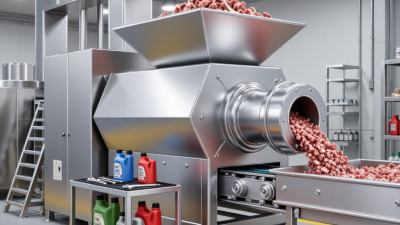
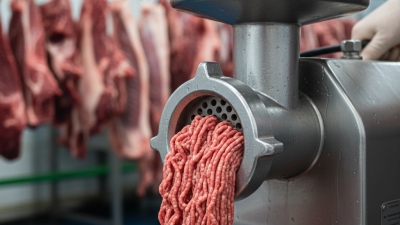
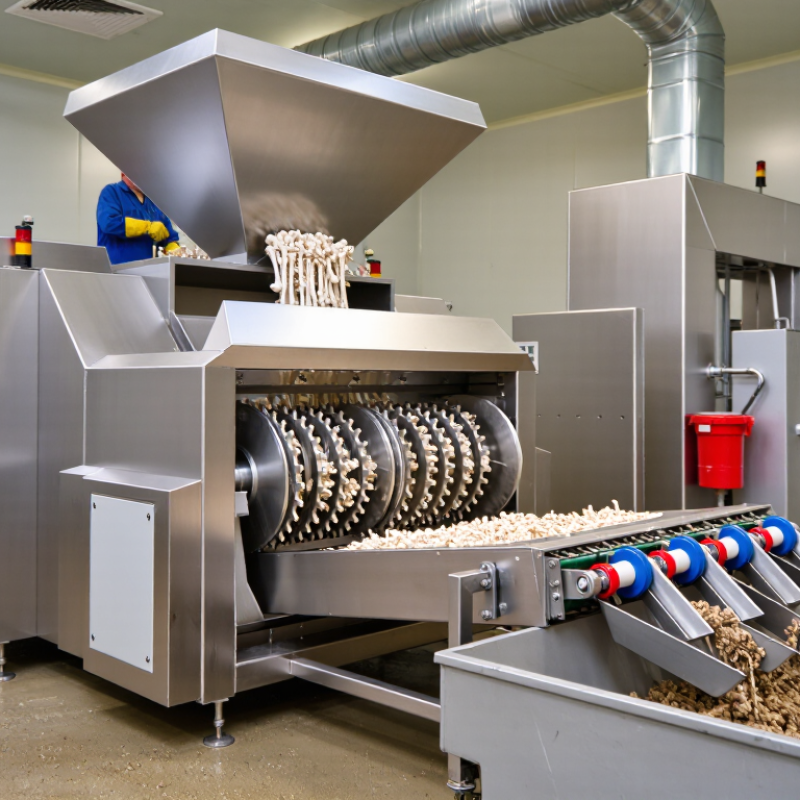
An industrial bone grinder is a heavy-duty machine used to reduce animal bones into smaller, more manageable particles. It supports rendering, pet-food production, fertilizer manufacturing, and selected feed applications. In plant practice, operators load cleaned bones through a guarded hopper. Rotating knives, shafts, or toothed rollers then apply cutting, crushing, and shearing forces. The resulting material may resemble coarse chips, damp granules, or a meal-like product.

Scale matters. The OECD-FAO Agricultural Outlook 2024-2033 projects global meat production to increase by about 12% by 2033. More processing creates more bones and related by-products. FAO’s World Food and Agriculture—Statistical Yearbook 2023 also shows the continuing importance of livestock production worldwide. These reports do not measure grinder sales directly. However, they explain why efficient by-product handling remains an industrial concern.

A modern industrial bone grinder usually includes a feed hopper, reduction chamber, drive motor, discharge system, and safety interlocks. Screens can control particle size. Magnets may remove stray ferrous fragments before later processing. Moisture, bone density, fat content, and throughput all affect performance. Hard bones can produce severe shock loads.

The machine is not simply a larger kitchen grinder. It requires planned maintenance, noise control, dust management, and documented sanitation procedures. USDA food-safety guidance and rendering-industry practices emphasize controlled handling and contamination prevention. That distinction is easy to miss. A grinder can reduce material quickly, yet poor feeding or weak maintenance may create jams, overheating, and uneven output. This article explains how the equipment works, where it fits, and what responsible operators should evaluate before installation.
What Is an Industrial Bone Grinder and How Does It Work?

What Is an Industrial Bone Grinder and What Are Its Main Functions?

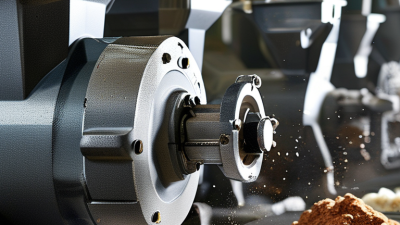
An industrial bone grinder reduces bones into consistent pieces for approved processing applications. Its main function is size reduction. A rotating shaft drives hardened blades or cutting plates inside a guarded chamber. Bones enter through a controlled hopper, then move through the cutting zone. A screen determines the final particle size. Larger pieces stay inside for another pass.

The machine also improves material handling. Uniform bone particles feed rendering, drying, separation, or other regulated processes more evenly. Operators monitor motor load, vibration, temperature, and output texture. These signs reveal blockages or worn cutting parts. Moisture and fat can change performance. A damp mixture may smear instead of breaking cleanly. Hygiene matters too, because residue can collect around seals and discharge points. Cleaning procedures must follow the facility’s approved standards.

Tips: Check guards and emergency stops before operation. Match the screen to the required particle size. Never reach into the hopper. Stop and isolate power before clearing a jam. Inspect blades regularly, but do not rely only on appearance. A blade may look usable while cutting poorly. Keep service records. They help connect unusual noise with maintenance history. Small oversights can affect throughput, sanitation, and worker safety.

What Is an Industrial Bone Grinder and How Does It Work?

An industrial bone grinder is a heavy-duty size-reduction machine that uses rotating knives, hammers, or toothed shafts to break bones into smaller, more uniform pieces. The resulting material can be used for rendering, bone meal production, gelatin processing, or further separation.

The chart shows representative industrial throughput ranges by feed condition. Actual capacity depends on bone size, moisture, temperature, hardness, rotor design, motor power, screen opening, and the required particle size.

Main Functions of an Industrial Bone Grinder

  • Size reduction: Breaks whole or large bones into smaller particles.
  • Material homogenization: Produces a more consistent feedstock for rendering or downstream processing.
  • Controlled particle sizing: Uses screens or calibrated openings to regulate the final particle size.
  • Continuous processing: Supports steady feeding in high-volume meat-processing and rendering operations.

Which Components Control the Bone Grinding Process?

What Is an Industrial Bone Grinder and How Does It Work?

Which Components Control the Bone Grinding Process?

An industrial bone grinder converts cleaned bones into uniform particles for approved rendering and processing applications. FAO’s 2023 Statistical Yearbook recorded about 361 million tonnes of global meat production in 2022. That scale creates a substantial by-product stream. The North American Renderers Association reports that renderers process more than 50 billion pounds of animal by-products annually.

The grinding chamber controls the main action. A feed hopper regulates loading, while a screw conveyor maintains a steady supply. Inside, hardened knives or hammers break the material against a perforated screen. Screen openings determine particle size. A variable-frequency drive adjusts rotor speed, torque, and energy use. Lower speed can reduce heat, but it may increase recirculation. Bearings, seals, and temperature sensors protect mechanical reliability. A magnet before the chamber helps remove stray metal. It is a small component. It matters greatly.

Tips: Check particle size at regular intervals, not only at the discharge point. Measure motor current during changing loads. Excessive amperage may indicate oversized bones, a blocked screen, or dull cutting parts. Moisture also changes performance. A wet feed can smear across the screen instead of breaking cleanly. In my experience, operators sometimes trust the machine’s sound too much. Noise is useful, but data is better. Maintenance records should connect screen wear, rotor speed, feed rate, and final particle consistency.

What Is an Industrial Bone Grinder and How Does It Work? - Which Components Control the Bone Grinding Process?

Component or Process Dimension Primary Function Main Variables Controlled Typical Industrial Considerations Effect on Grinding Performance
Feed Hopper and Inlet Receives bones and directs material into the grinding chamber at a controlled rate. Feed rate, inlet opening, bridging, foreign-material exclusion. A steady feed helps prevent surging, motor overload, and uneven particle size. Controls throughput stability and reduces the risk of blockages.
Feed Conveyor or Metering Screw Moves raw material continuously toward the cutting or crushing zone. Screw speed, conveyor speed, loading rate, torque. Variable-speed drives are commonly used to match feed rate with grinder capacity. Affects production capacity, energy demand, and the consistency of the product.
Pre-Breaker or Primary Crusher Breaks large bones into smaller pieces before fine grinding. Rotor speed, cutter geometry, clearance, feed size. Pre-breaking reduces the load on downstream grinding equipment and improves feeding. Determines the maximum size entering the final grinding stage.
Cutting Blades, Knives, or Hammers Apply impact, shear, and compression forces to fracture bone material. Sharpness, profile, spacing, hardness, rotor speed. Wear changes the cutting gap and can increase heat generation and power consumption. Strongly influences particle shape, throughput, and the amount of fines.
Grinding Rotor or Shaft Rotates the cutting or impact elements and transfers mechanical energy to the material. Rotational speed, balance, shaft torque, vibration. The correct speed depends on bone type, moisture, target size, and grinder design. Higher speed can increase reduction intensity but may also increase heat, noise, and wear.
Stationary Plates, Screens, or Counter-Knives Provide a fixed cutting surface or classification boundary against the rotating tools. Clearance, opening size, wear condition, alignment. Smaller openings generally produce finer material but can reduce capacity. Controls the final or intermediate particle-size distribution.
Screen or Sizing Grid Allows particles below a selected size to exit while retaining larger pieces for further grinding. Aperture size, open area, screen condition, material flow. Common openings may range from a few millimetres to several tens of millimetres, depending on the application. Provides a physical limit on product size and improves batch uniformity.
Drive Motor and Gearbox Supplies and transmits the torque required for crushing and grinding. Motor power, speed, torque, current draw, transmission ratio. Motor sizing must account for peak loads caused by dense or oversized bone pieces. Determines available capacity and whether the machine can maintain speed under load.
Variable-Frequency Drive Adjusts motor speed to match the required grinding intensity and feed conditions. Frequency, acceleration, deceleration, current limit. Speed adjustments should remain within the machine builder's mechanical and safety limits. Improves process control, energy management, and overload protection.
Grinding Chamber Contains the rotating and stationary grinding elements where size reduction occurs. Internal volume, liner condition, clearances, residence time. The chamber must withstand repeated impact, abrasion, moisture, and cleaning procedures. Controls how long material remains under mechanical action and how evenly it is processed.
Discharge Chute and Collection System Removes processed bone meal or bone fragments from the grinder. Discharge rate, air movement, chute angle, blockage level. The outlet must prevent accumulation that could restrict airflow or overload the grinding chamber. Affects continuous operation and helps maintain consistent residence time.
Moisture and Temperature Management Controls the physical condition of bone during grinding and limits excessive heat. Moisture content, product temperature, ambient temperature, airflow. Wet material may smear or clog screens, while excessive heat can affect product quality and equipment lubrication. Influences flowability, energy demand, particle formation, and sanitation requirements.
Sensors and Control System Monitors operating conditions and coordinates automatic adjustments or shutdowns. Motor current, torque, vibration, temperature, speed, level, emergency status. Alarm limits should be established through commissioning, risk assessment, and operating data. Supports stable production, predictive maintenance, and protection against overloads.
Magnetic or Foreign-Material Protection Reduces the chance that metal or other hard contaminants enter the grinding chamber. Detection sensitivity, inspection frequency, reject response. Protection devices help prevent tool damage, sparks, contamination, and unplanned downtime. Improves equipment reliability and supports product-safety controls.
Cleaning and Sanitary Design Features Enable inspection, cleaning, drainage, and hygienic maintenance of product-contact areas. Surface finish, access, drainage, cleaning method, inspection intervals. Food and animal-by-product applications require procedures appropriate to the material, facility, and applicable regulations. Reduces residue buildup, cross-contamination risk, corrosion, and sanitation downtime.
Process Summary: An industrial bone grinder reduces bone size through a combination of impact, shear, and compression. Feed control, rotor speed, tool condition, grinding clearance, screen aperture, motor torque, moisture, and discharge capacity are the primary factors that determine throughput, energy use, temperature, and final particle-size distribution.

How Does an Industrial Bone Grinder Process Raw Material Step by Step?

An industrial bone grinder turns inspected raw bones into a controlled, usable particle stream. FAO’s Food Outlook 2024 projected global meat production at roughly 365 million tonnes. That scale creates substantial bone byproducts, although bones are not equal to total meat output.

The process begins at receiving. Operators record the source, temperature, and batch weight. Workers remove visible contamination and foreign objects. A magnet may capture ferrous fragments.

Large bones then enter a breaker with slow, high-torque shafts. The crushed material moves into a finer grinding chamber. Knives or hammers reduce it further. A screen controls the final size.

PROCESS CONTROL Oversized pieces return for another pass. It sounds simple. It is not always consistent.

Technicians monitor motor load, vibration, temperature, moisture, and particle size. Excessive heat can affect downstream handling, so pauses and airflow may be necessary.

Sampling after grinding helps verify uniformity. The UNEP Food Waste Index Report 2024 estimated 1.05 billion tonnes of food waste in 2022, highlighting why controlled byproduct recovery matters. Still, this figure does not represent bone volume directly. That distinction deserves attention.

Tips: Keep batches traceable. Clean contact surfaces between runs. Replace worn cutting parts early. A finer screen is not automatically better; energy use and heat may rise. Always validate settings with actual material, because bone density, moisture, and fat content can change performance.

What Materials and Industries Use Industrial Bone Grinding Equipment?

What Is an Industrial Bone Grinder and How Does It Work?

Industrial bone grinders convert hard animal bones into controlled particle sizes. A hopper feeds bones into rotating blades, hammers, or toothed rollers. Screens then control the final texture. Large cattle bones require stronger equipment than poultry frames or fish bones. Moisture also matters. Wet material can clog screens and reduce throughput.

The main users are rendering plants, fertilizer producers, pet nutrition manufacturers, gelatin processors, and selected feed operations. These facilities may process cattle, pig, poultry, or fish by-products. The OECD-FAO Agricultural Outlook 2024–2033 projects global meat production to grow by almost 12% during the outlook period. More meat production usually means more recoverable bone material, although the amount depends on processing methods. The UNEP Food Waste Index Report 2024 also estimates 1.05 billion tonnes of food waste occurred in 2022. Bones are only one fraction, but better separation can support resource recovery.

Tips: Match grinder capacity with bone type, moisture, and target particle size. Use magnets to remove metal contamination. Keep batch records for traceability. Bone meal intended for fertilizer needs different controls than material used in regulated animal nutrition. That distinction is easy to miss. Operators should verify local feed, sanitation, and waste-handling requirements before production. In practice, energy use and dust control can challenge even well-designed systems. A smaller screen may improve consistency, but it can reduce output. Testing should decide the balance.

How Are Industrial Bone Grinders Operated, Cleaned, and Maintained?

An industrial bone grinder reduces bones into uniform particles for rendering, pet food, fertilizer, or other approved processing. Its operation begins with a guarded hopper, controlled feeding, and rotating cutting elements. Operators verify that the machine is anchored, emergency stops work, and screens match the required particle size. They remove metal, stones, and oversized pieces before feeding material. Keep hands clear. A steady feed prevents jams and protects the drive motor from sudden loads. Noise, vibration, and unusual heat deserve immediate attention.

Cleaning and Safety Cleaning starts only after shutdown, isolation, and verified zero energy. Workers wear suitable gloves, eye protection, hearing protection, and protective clothing. They remove residue from the hopper, chamber, screens, and discharge area with approved tools. Water may be used only when the equipment design and site procedure allow it. Moisture around bearings or electrical components can cause corrosion, contamination, or failure. The cleaned surfaces should dry fully before reassembly. That detail is easy to miss.

Maintenance teams inspect blades, shafts, bearings, belts, seals, fasteners, and screens at scheduled intervals. They lubricate only specified points and use the correct lubricant quantity. Worn cutting parts can increase energy use and produce uneven particles. Technicians record vibration, temperature, repairs, and replacement dates to identify developing faults. In my experience, rushed cleaning creates more problems than difficult repairs. Mistakes still happen. Inspection intervals may need adjustment after heavy or wet processing. A checklist helps, but it cannot replace judgment.