7 Best Commercial Meat Grinder Machines for Global Buyers?
Demand for processed meat is shaped by population growth, changing diets, and the needs of food businesses. The OECD-FAO Agricultural Outlook 2024–2033 projects that global meat consumption will rise by 12% over the decade. That growth puts practical pressure on processors, butcher shops, and commercial kitchens. A grinder must do more than turn meat into mince. It should handle the expected volume, produce a consistent texture, and fit the pace of daily work.
Choosing a meat grinder machine commercial buyers can rely on means comparing capacity, motor power, feed-system design, cleaning access, and available service support. These details show up in real use: a slow feed can hold up a production line, while awkward disassembly can make routine cleaning harder. Stainless-steel contact parts and clear specifications are useful signals, but neither guarantees a good machine. Supplier claims deserve scrutiny.
This guide compares seven commercial meat grinder machines for buyers serving different markets and workloads. It looks at stated output alongside operating needs, because headline capacity alone can mislead. A machine rated for high throughput may not suit a small shop with limited space or intermittent demand. There is no universal best choice. Buyers should verify specifications, local service availability, and compatibility with their own workflow before placing an order.
What Is a Commercial Meat Grinder and How Does It Work?
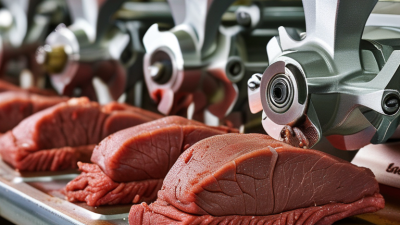
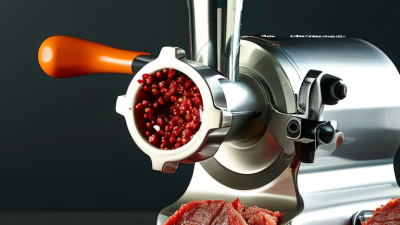
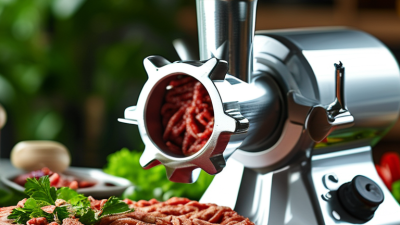
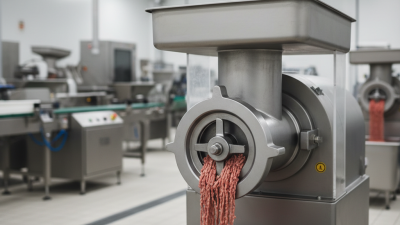
A commercial meat grinder is a food-processing machine designed to turn chilled meat into a consistent mince at volumes beyond typical household use. Its main parts are a feed tray, a guarded throat, an auger, a cutting blade, and a perforated plate. Operators place trimmed meat on the tray and guide it into the feed opening with the machine’s pusher. Never use fingers. The rotating auger carries meat toward the blade, which cuts it as the meat passes through the plate’s holes. Plate size affects texture: smaller holes usually produce finer mince, while larger holes leave a coarser result.
The process is straightforward, but the details matter. Cold meat tends to feed and cut more cleanly than warm, soft meat. Tough connective tissue can wrap around the blade or slow production, so trimming and cutting meat into manageable pieces helps. A steady feed is better than forcing a large load through at once. Listen for a change in motor sound; it can signal strain or a blockage, though it is not a diagnosis by itself. Small things count.
Capacity figures need context. Output varies with meat temperature, cut size, plate choice, and how continuously the machine runs. Cleaning also affects reliable operation: disconnect power before removing parts, then wash and dry components according to the equipment manual. A machine may be fast on paper and still be awkward to clean. That trade-off deserves attention before purchase.
Commercial Meat Grinders: Common Plate Hole Diameters
These are commonly available plate hole diameters, not a ranking of grinder models. Smaller holes generally produce a finer grind, while larger holes produce a coarser grind. In a commercial grinder, an auger feeds meat toward a rotating knife, which cuts it as it passes through the perforated plate.
Which Features Matter When Choosing a Commercial Meat Grinder?
A commercial meat grinder should match the daily workload, not just its advertised peak output. Check its rated capacity in pounds per hour, then compare that figure with your busiest production period. A grinder that runs near its limit may heat meat, slow service, and wear faster. Ask how long it can operate continuously. That detail matters. Also consider feed-tube size, reverse function, and whether operators can safely clear a jam without dismantling the machine.
Cleanability deserves equal attention. The FDA Food Code 2022 requires food-contact surfaces to be smooth, durable, corrosion-resistant, and easy to clean. Look for removable plates, knives, and trays, with few hard-to-reach seams. Stainless steel can help resist corrosion, but it does not make cleaning automatic. USDA FSIS guidance recommends cooking ground beef to 160°F; careful temperature control starts with cold handling and clean equipment. Check motor protection, replacement-part availability, noise, and the machine’s footprint. Measure the counter first. Buyers sometimes overlook that. A quieter, easier-to-clean unit may serve a busy kitchen better than a faster model that is difficult to maintain.
What Types of Commercial Meat Grinders Suit Different Business Needs?
Commercial kitchens rarely need the same grinder. A neighborhood butcher may process several batches of beef each morning, while a hotel kitchen handles smaller amounts of meat across changing menus. Matching the machine to that rhythm matters more than choosing the largest model available.
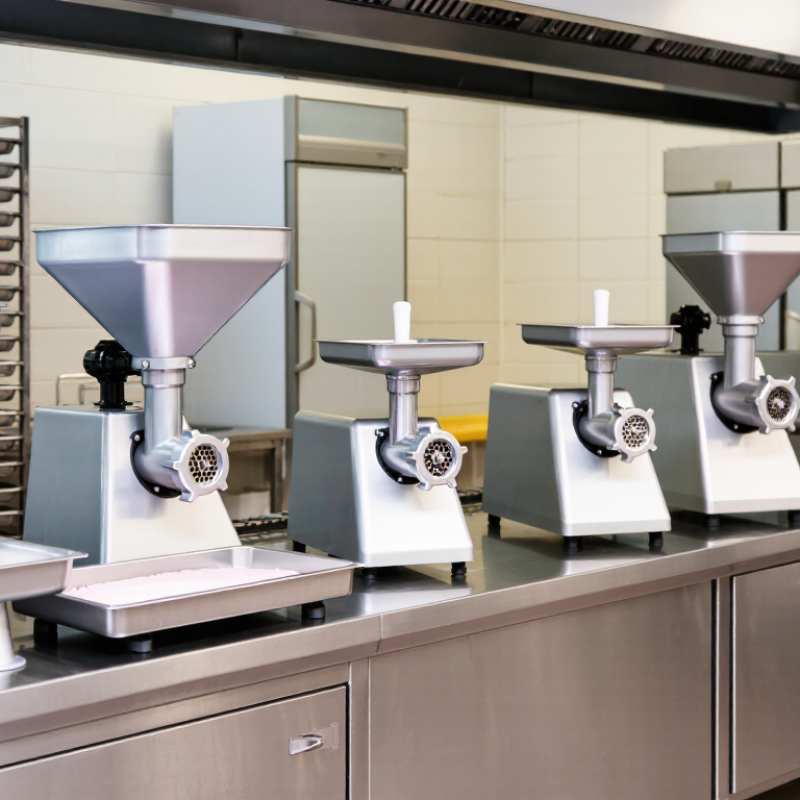
A countertop grinder can suit cafés and small kitchens with limited floor space. Look for a stable base, removable parts, and a feed opening that handles the portion sizes staff actually prepare. For steady daily production, a floor-standing grinder offers more capacity and often accepts larger cuts. But capacity figures can mislead: actual output changes with meat temperature, fat content, cutting plate, and operator pace. Ask suppliers how their stated rate was measured.
Processors serving supermarkets or central kitchens may need a heavy-duty machine built for long runs and frequent cleaning. Stainless steel contact parts help with routine sanitation, though staff still need to follow the equipment manual and local food-safety procedures. Choose plate sizes for the texture customers expect, from coarse sausage filling to finer mince. Noise, cleaning time, replacement parts, and available electrical supply deserve attention too. I have seen a high-output unit become a poor fit when its cleaning routine slowed the whole shift. Sometimes a smaller grinder works better. A trial with your usual meat is worth arranging before purchase.
How Do the 7 Best Commercial Meat Grinder Machines Compare?
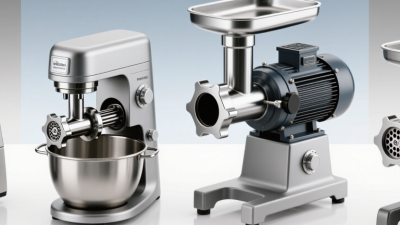
Seven commercial meat grinder configurations deserve comparison: compact #12, countertop #22, heavy-duty #32, floor-standing #42, refrigerated, mixer-grinder, and automatic-feed machines. The OECD–FAO Agricultural Outlook 2024–2033 projects global meat consumption increasing by 12% over the outlook period. That growth provides market context, but equipment selection still depends on daily workload. Compare usable output, cleaning time, temperature control, and local electrical compatibility.
A compact #12 suits small batches; a #22 offers more capacity without requiring a floor-standing installation. A #32 accommodates larger batches, while a #42 requires more space and heavier component handling. Refrigerated models help control temperature during extended processing. Mixer-grinders combine blending and grinding; automatic-feed machines reduce manual loading during continuous production. These categories overlap. Plate size alone cannot establish throughput. Request timed trials using your meat temperature, fat percentage, and grinding plate diameter. For example, processing 120 kilograms within two hours requires at least 60 kilograms per hour of usable output. Allow additional capacity for loading, interruptions, and cleaning. Bigger can disappoint.
Tips: Ask suppliers to demonstrate disassembly and provide replacement prices for knives, plates, seals, and feed screws. Check whether removable components fit your wash station. A heavy grinding head may become a daily handling problem. USDA food-safety guidance recommends keeping refrigerated food at 40°F (4.4°C) or below. Check product temperature during trials. One limitation remains: a short demonstration may conceal heat buildup during a full production shift.
What Should Global Buyers Consider Before Purchasing?
What Should Global Buyers Consider Before Purchasing?
A commercial meat grinder should match the workday, not just the product photos. Estimate peak hourly volume, batch size, and the cuts you process, including chilled meat or connective tissue. Compare rated output with realistic operating conditions; advertised capacity may not reflect continuous use. Check motor power, plate sizes, feed opening, and whether the machine can handle your expected workload without frequent stops. A useful test is to ask the supplier for performance details using meat similar to yours. Small differences matter.
Confirm that electrical requirements match your facility. Voltage, frequency, plug type, and available power can vary by destination. Ask for clear documentation on food-contact materials, cleaning procedures, and safety features, then verify that it meets requirements in your market. Stainless steel helps with routine cleaning, but design matters too: look for removable parts and accessible corners. Ask about spare blades, plates, seals, warranty coverage, and service response times. Shipping a replacement part across borders can take longer than expected. Compare shipping terms, installation support, and packaging protection. A spreadsheet helps, but it can hide practical issues; request dimensions and weigh the machine against your available floor space. Recheck every assumption before ordering.