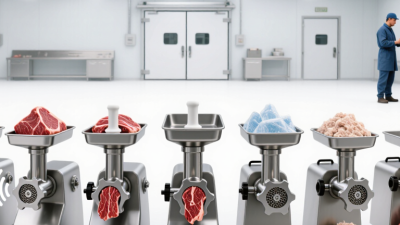
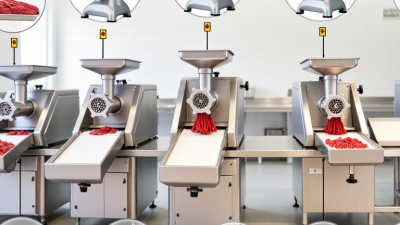
2026 Top Commercial Meat Grinder Types for Buyers
In 2026, choosing a commercial meat grinder is less about buying the largest machine and more about matching its design to daily production. A small butcher shop, busy restaurant, and central kitchen face different workloads. Their best options may differ in capacity, motor strength, feed opening, and duty cycle. Bigger is not always better.
This guide introduces common grinder types, from compact countertop electric models to floor-standing machines built for heavier, repeated use. It also considers grinder-mixer combinations and models designed for particular processing needs. Buyers should compare more than advertised pounds per hour. Actual output can change with meat temperature, cut size, plate selection, and operator pace. A clean, well-organized work area matters, too.
Look closely at the details. Stainless-steel contact parts can support easier cleaning, while readily available plates and knives simplify routine replacement. Check the manufacturer’s instructions for suitable ingredients, operating limits, and cleaning procedures; not every grinder handles partially frozen meat. That distinction matters. A machine that struggles during a lunch rush can disrupt prep and create avoidable maintenance costs. Yet specifications alone cannot predict every kitchen’s experience. Sometimes the best choice is less obvious. Treat this overview as a starting point, then compare models against your real batch sizes, available space, and service support. A careful fit often serves buyers better than an impressive number on a product page.
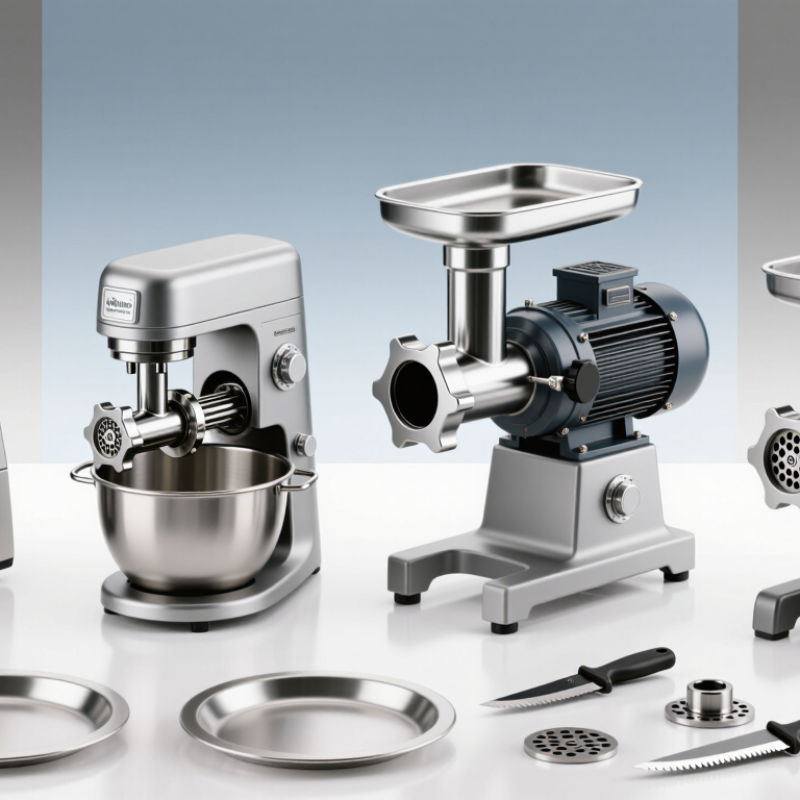
Commercial Grinder Basics: #12, #22, and #32 Head-Size Conventions
Commercial meat grinder sizes #12, #22, and #32 describe the grinder head, not a guaranteed output rate. The numbers generally correspond to plate diameter: roughly 2¾ inches, 3¼ inches, and 4⅛ inches, respectively. Exact dimensions can vary by equipment design, so check the manufacturer’s specifications before comparing models.
A #12 head may suit smaller prep stations and occasional batches. A #22 offers a larger opening for steady daily work, while a #32 is often chosen for higher-volume processing. Bigger is not automatically faster. Motor power, auger design, meat temperature, plate selection, and operator feeding all affect throughput. I would not treat the size number as a performance promise; it is only one useful clue.
Tips: Compare plate diameter and rated capacity, then consider your busiest shift. Check that the grinder fits your counter and that staff can remove its head for cleaning. A larger unit can be awkward in a tight workspace. It is an easy detail to overlook.
2026 Top Commercial Meat Grinder Types for Buyers — Commercial Grinder Basics: #12, #22, and #32 Head-Size Conventions
| Head size |
Typical plate diameter |
Common fit |
Typical use |
Buyer considerations |
What the size does not tell you |
| #12 |
About 2¾ in (70 mm) |
Small commercial kitchens, butcher counters, and lower-volume preparation areas |
Batch grinding where a smaller footprint and easier handling are priorities |
Check the machine’s stated capacity, motor duty rating, and whether the feed opening suits the cuts you prepare. |
The number is a grinder-head size convention; it does not specify motor power or a guaranteed output rate. |
| #22 |
About 3¼ in (82 mm) |
Many butcher shops, restaurants, and other moderate-volume operations |
General-purpose grinding for regular batches of boneless meat |
Compare continuous-duty capability, feed-tray size, cleaning access, and available plate and knife options. |
Two #22 machines can differ substantially in construction, capacity, and performance. |
| #32 |
About 3⅞ in (98 mm) |
Higher-volume butcher shops and production kitchens with suitable space and power |
Larger batches and operations that benefit from a larger grinding head |
Confirm electrical requirements, installation space, operator workflow, and the manufacturer’s rated duty cycle. |
A larger head alone does not guarantee faster grinding; motor, auger design, meat temperature, and preparation also matter. |
Compatibility and purchasing note: Plate diameters are typical nominal measurements, not a guarantee of interchangeability. Plate, knife, and head dimensions can vary by machine design, so verify the exact parts compatibility with the equipment specifications before ordering. Keep meat properly chilled during preparation and follow applicable food-safety requirements.
Countertop Grinders: Compare Feed Rate and Batch Capacity
For countertop meat grinders, feed rate and batch capacity answer different questions. Feed rate estimates how quickly prepared meat passes through the grinder, usually in pounds per hour. Treat it as a comparison point, not a guaranteed result. Cold, trimmed meat moves more smoothly than warm meat with sinew or large connective pieces. Plate size and how steadily you feed the hopper also affect output.
Batch capacity tells you how much meat the hopper or grinder can handle before you need to pause. A wide hopper may save loading time, but it does not prove the motor can run continuously. Check the stated duty cycle and recommended rest periods. That matters. For a small kitchen processing several pounds at a time, steady operation may be more useful than a high advertised feed rate. It is easy to overvalue the biggest number; I would compare it with the machine’s intended workload, too.
Tips: Weigh a typical batch before choosing. Note its weight, then compare it with the grinder’s rated capacity and duty cycle. Cut meat into even strips and keep it chilled for more consistent feeding. Small detail. Leave room in your schedule for pauses, especially when grinding tougher cuts.
Countertop Commercial Meat Grinders: Feed Rate & Batch Capacity
Indicative planning ranges by grinder plate size. Feed rate varies with meat temperature, cut size, plate, and operating conditions; batch size is a practical working estimate, not a standardized equipment rating.
Larger plate sizes generally support higher throughput and larger working batches. Confirm the manufacturer’s rated capacity and duty cycle before choosing a grinder for a specific operation.
Floor and Mixer Grinders: Assess Duty Cycle and Throughput
A floor grinder suits steady production, but duty cycle matters more than its advertised peak rate. Check how long the machine can grind before it needs a rest. A unit rated for intermittent use may struggle through a morning’s steady batch work. Ask suppliers for rated operating time, cooling intervals, and throughput with the plate size you plan to use.
Mixer grinders combine mixing and grinding in one workflow. They can help when seasoning and texture need consistent distribution, but mixing capacity may limit output before the motor does. Picture a chilled, 20-kilogram batch: meat temperature, fat content, and operator loading all affect the actual run time. Small details count. Compare usable batch size with your hourly target, not just the motor’s power rating.
Throughput figures are usually best treated as a starting point. A spreadsheet can look precise and still be wrong. Request a demonstration using similar cuts and a comparable grind. Record kilograms processed, pauses, and cleanup time across several batches. Leave room for variation; an occasional tough batch can expose a machine that looked adequate on paper.
Industrial Grinders: Evaluate lb/h Ratings for High-Volume Processing
For industrial buyers, an lb/h rating is useful only when it matches the workday. A plant needing 1,200 pounds of ground meat across four productive hours needs about 300 lb/h in real operation. That does not mean a 300 lb/h machine is enough. Loading, pauses, meat temperature, plate size, and repeated passes can all reduce output. Published capacity may reflect favorable conditions, so ask how the figure was measured and with what product. Numbers need context.
Tips: Record actual output during a timed trial, including loading and brief stops. Check the grinder’s duty cycle and cleaning time, too. A short trial is worth the hassle.
Compare the measured rate with peak demand, not just the daily average. If the line needs 400 pounds in one hour, a machine averaging 300 lb/h may create a queue, even when the shift total looks manageable. Test the cuts and plate sizes you expect to use. Tough, chilled pieces may feed differently from softer batches. Leave some capacity headroom, but avoid paying for a rating your process cannot use. I would still recheck the estimate after installation; real shifts rarely run as neatly as a spreadsheet.
Buyer Safety Checks: NSF/ANSI 8, USDA-FSIS Rules, and 40°F Cold Holding
A commercial grinder is only a sound purchase if its food-contact surfaces are easy to clean and verify. Check the exact model’s NSF/ANSI 8 certification; the standard covers commercial powered food-preparation equipment. Do not assume every attachment or replacement part shares the grinder’s listing. Smooth surfaces, accessible joints, and removable plates make daily cleaning more practical. Small details matter.
USDA-FSIS requirements depend on the operation and its inspection status, so buyers should confirm which rules apply to their facility. Ask for cleaning instructions and keep supplier, lot, and grinding records where required. Cold holding deserves equal attention. USDA guidance recommends keeping refrigerators at 40°F or below, while the FDA Food Code sets 41°F as the maximum for cold holding. A 40°F target gives a small buffer. The CDC’s 2011 foodborne-illness estimates attribute about 1 in 6 U.S. illnesses to foodborne causes, underscoring why temperature checks matter.
Tips: Use a calibrated probe thermometer, not the cooler’s display alone. Check ground meat when it arrives and during storage; record the reading and time. Keep raw meat covered on the lowest shelf, with a clear separation from ready-to-eat foods. I still find temperature drift easy to overlook during busy receiving periods. Verify local requirements before purchase.