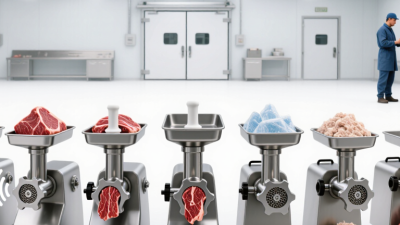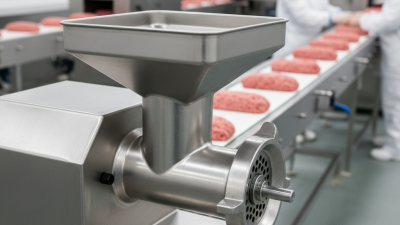
Commercial meat preparation puts steady pressure on equipment. A grinder may run through several batches before lunch, processing chilled beef, pork, or poultry at a consistent pace. The right industrial meat grinder machine can help a butcher shop, restaurant kitchen, or food-processing facility manage that workload without unnecessary delays. But capacity is only part of the decision. Motor power, feed size, plate options, cleaning access, and build quality all affect daily performance.
Small details matter. A heavy-duty frame can feel more stable on a busy worktable, while removable parts may make end-of-shift cleaning less frustrating. Operators should also check the manufacturer’s guidance for safe assembly, operation, and maintenance. A large advertised output does not always reflect real-world throughput; meat temperature, cut size, and workflow can change results. That deserves a closer look. No single model fits every operation, and a machine suited to a neighborhood butcher may be excessive for a small restaurant.
This guide compares seven commercial grinder machines by practical features, intended workload, and considerations for ownership. It aims to help buyers narrow their options, not promise that one model will solve every production problem. Check current specifications and service support before purchasing. A careful choice usually starts with an honest estimate of daily volume—and a little room for the unexpected.
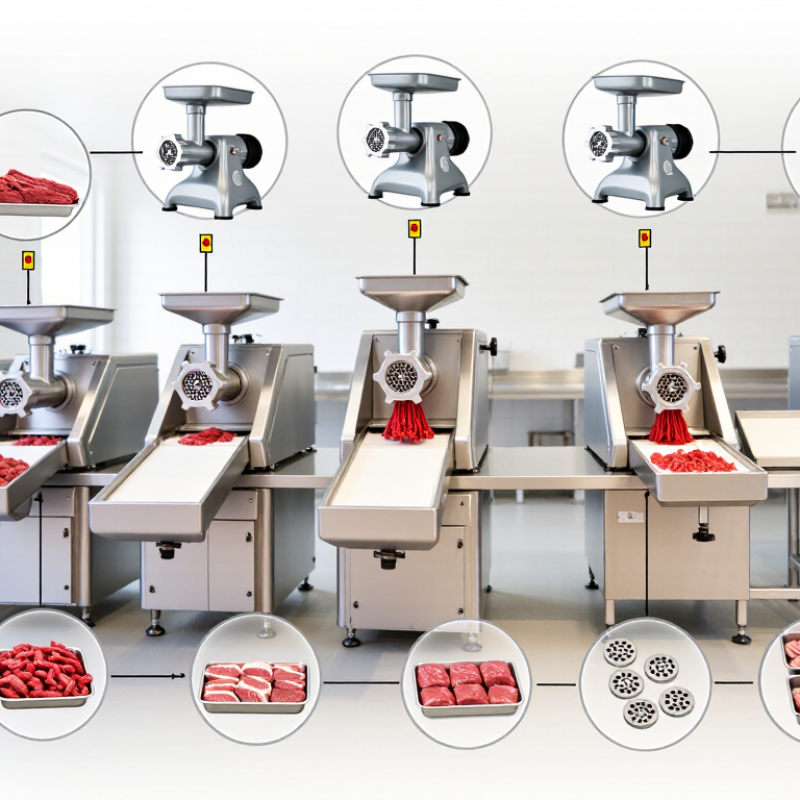
An industrial meat grinder’s feed system controls how steadily product reaches the auger. Gravity-fed models rely on meat dropping from the hopper, while powered feed systems push product forward at a more consistent rate. For a busy line, that difference can affect both speed and texture.
Inside the grinder, the auger carries meat toward the knife and cutting plate. The knife must sit correctly against the plate, while plate-hole size helps determine the finished grind. Smaller holes usually produce a finer texture, but the right choice depends on the recipe and the grinder’s capacity.
Not always. Check parts for wear, and use the equipment maker’s instructions for assembly, cleaning, and replacement intervals. A quick visual check is useful, though it cannot replace proper maintenance.
Commercial grinders differ less by appearance than by how long they can sustain a steady feed. Compact countertop machines suit small butcher counters; floor-standing units handle larger batches. Fresh-meat grinders prioritize clean cuts, while frozen-meat models need stronger drives and purpose-built feeding systems. Mixer-grinders blend and grind in one vessel, but can take longer to clean. Inline continuous-feed machines suit production lines. Bone-capable models should only process materials specified by the manufacturer. That matters.
Compare rated output in kilograms per hour with motor power, but treat both as starting points. A high-wattage motor does not guarantee higher throughput if the plate, auger, or feed throat restricts flow. Duty cycle is the practical divider: intermittent units need cooling pauses, while continuous-duty machines tolerate longer runs. Ask whether ratings reflect chilled meat, lean trim, or a test setup unlike yours. Check the label.
For a deli processing 40 kilograms daily, a mid-capacity floor model may be more sensible than a large production unit. A central kitchen with heavier demand may need an inline grinder, spare plates, and easy washdown access. Inspect overload protection, tool-free access, and cleaning clearances alongside quoted capacity. Capacity figures can look like promises; that is too simple. Actual output changes with temperature, cut size, fat content, and operator rhythm. A small trial batch can reveal more than a specification sheet.
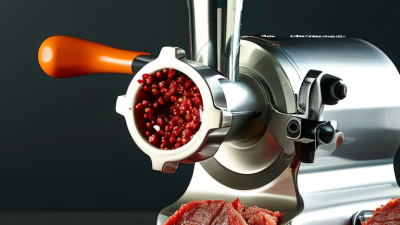
In commercial meat processing, plate size changes more than appearance. A 3 mm plate produces a fine, compact mince that suits smooth sausages, meatballs, and fillings. The texture feels cohesive, with fewer distinct pieces of meat. Keep the meat and grinder components cold; warm fat can smear across the plate and make the result greasy. Small details matter.
A 4.5 mm plate gives a middle-ground texture for burgers, meatloaf, and everyday mince. It leaves a little more definition without feeling notably coarse. A 6 mm plate creates larger, visible particles and a looser bite, often preferred for rustic sausages or chunky patties. The choice is not automatic. Meat cut, fat ratio, blade sharpness, and whether the meat passes through once or twice all affect the final result. A coarse grind may look uneven, but that is not necessarily a defect. Test a small batch before setting a production run, and check the texture after cooking; raw mince can be misleading. Even the same plate may perform differently when the meat is warmer or the cutting edge is worn.
Common 3 mm, 4.5 mm, and 6 mm plates provide progressively larger openings. Smaller openings generally produce a finer grind, while the final texture also depends on the meat, grinder, and number of passes.
EN 12331:2003+A2:2010 addresses safety and hygiene requirements for meat-mincing machines. For commercial buyers, it offers a useful framework when comparing industrial grinder machines, but a product listing alone cannot confirm suitability. Check the machine’s documentation and intended use. Pay close attention to the feed opening, cutting assembly, guards, and emergency stop. These details matter during busy shifts, when operators may handle chilled meat with wet gloves. Small design choices can affect both safety and cleaning.
Tips: Use the supplied pusher. Never reach into the feed opening. Before cleaning or removing parts, isolate the machine from its energy source and follow the manufacturer’s instructions.
Hygienic design deserves equal attention. Look for smooth, accessible food-contact surfaces with minimal gaps where meat residue can collect. Removable components should be practical to clean and refit correctly. Check that cleaning procedures match the machine’s materials and configuration. A quick rinse may look sufficient, but residue around a blade housing can be easy to miss. One useful inspection is to review the machine after disassembly, not just while it runs. Standards help set expectations; staff training, maintenance, and documented cleaning checks still matter. No checklist replaces careful daily practice.
A practical comparison of seven commercial grinder configurations. Capacity figures are indicative operating ranges, not guaranteed outputs; actual throughput varies with meat temperature, cut size, plate and knife condition, product formulation, and feed rate.
| Commercial grinder configuration | Indicative throughput | Typical motor range | Typical plate diameter | Suitable operation | Safety and hygiene checks |
|---|---|---|---|---|---|
| Compact floor-standing grinder | 200–500 kg/h | 2.2–5.5 kW | 82–98 mm | Restaurants, butcher shops, and smaller food-production rooms processing several batches per shift. | Use the supplied feed pusher; keep hands and tools out of the feed opening. Confirm that removable product-contact parts can be cleaned and sanitized. |
| Medium-duty single-cut grinder | 500–1,200 kg/h | 5.5–11 kW | 98–130 mm | Butcheries, catering production, and medium-volume fresh-mince preparation. | Check the feed-tray and throat guarding, emergency-stop access, and safe isolation before removing the head or clearing a blockage. |
| Heavy-duty single-cut grinder | 1,000–2,500 kg/h | 11–22 kW | 130–160 mm | Continuous or extended-shift production where a single grind is sufficient. | Inspect interlocked guards and stopping functions as specified by the machine documentation. Ensure product-contact surfaces are accessible for effective cleaning. |
| Two-stage (coarse-and-fine) grinder | 1,500–4,000 kg/h | 18.5–37 kW | 160–200 mm | High-volume mince production requiring two grinding stages in one machine. | Follow lockout procedures before accessing either cutting set. Verify that both stages can be dismantled, cleaned, inspected, and reassembled correctly. |
| Frozen-meat pre-breaker grinder | 1,000–5,000 kg/h | 22–55 kW | 200–250 mm | Reducing frozen or tempered meat blocks to smaller pieces before further processing; operating limits depend on the machine design and product condition. | Use only within the manufacturer’s stated product-temperature and block-size limits. Keep hands clear of the feed area and isolate power before removing lodged product. |
| Hygienic-design production grinder | 800–3,000 kg/h | 11–37 kW | 130–200 mm | Food plants prioritizing frequent washdown, inspection, and documented sanitation between production runs. | Assess seals, joints, drainage, and accessible product zones for soil traps. Confirm the cleaning method is compatible with the machine’s electrical and mechanical design. |
| Grinder with integrated mixing or portioning line | 500–2,500 kg/h | 15–45 kW combined, depending on configuration | 98–200 mm | Integrated processing lines where minced product is transferred directly to mixing or downstream portioning equipment. | Check guarding and emergency stops across connected equipment, safe access at transfer points, and hygienic cleanability of the complete product path. |
EN 12331:2003+A2:2010: This European standard addresses safety requirements for meat mincing machines. The checks above are practical selection prompts, not a complete compliance assessment or a claim that any configuration complies. Confirm the applicable standard edition, machine documentation, risk assessment, guarding, controls, and cleaning instructions for the specific equipment and installation.
Choosing an industrial meat grinder starts with the actual workload, not the largest capacity printed on a product sheet. Estimate kilograms processed per hour, typical batch size, and the length of peak service periods. Peak hours matter. A shop grinding 25 kilograms before lunch needs a different duty cycle from a facility running continuously. I would treat advertised hourly output as a ceiling, since meat temperature, cut size, and operator pace can all change results.
Match the feed opening and grinding plates to the products you make. A wider throat can reduce prep time for larger cuts, while finer plates may require an extra pass and slow production. Check whether the motor can handle repeated batches without overheating, and ask how long it can run before needing a rest. Small batches differ. An oversized machine may leave meat sitting in the hopper, which can complicate workflow and cleaning.
Features should solve specific problems on your floor. Removable cutting parts make thorough cleaning easier; smooth, accessible surfaces help staff spot residue. Look for stable housing, guarded moving parts, and controls that are easy to reach with clean hands. Noise and footprint count too, especially in compact kitchens. Before buying, compare output under conditions close to yours, including your usual meat and plate size. A capacity estimate based on ideal conditions may disappoint. It is worth checking whether the machine fits your busiest shift, not just your average day.