
What Are the Top Types of Inclined Belt Conveyors?
Inclined conveyors look simple from a distance: a moving belt, a frame, and material climbing between two levels. In practice, the right design depends on the load, incline, available space, and discharge point. A shallow incline may suit a smooth belt carrying stable cartons. Loose grain or aggregate can slide backward, especially when dust coats the belt. Small details matter.
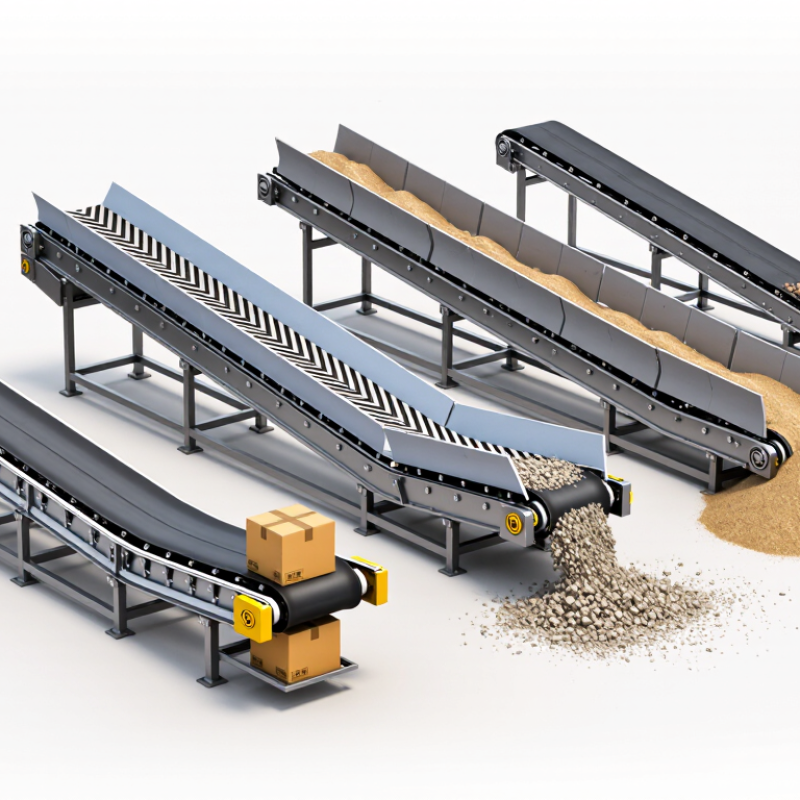
This guide compares the main types of inclined belt conveyor, including cleated, chevron, sidewall, and pocket-style designs. Each handles elevation differently. Cleats help control backsliding; sidewalls contain material on steep paths; chevron patterns can improve grip without separate flights. None is ideal for every job. A rough, wet aggregate needs different support from a light package, and a steep transfer can increase spillage or wear.
Professor G. Lodewijks is a conveyor researcher whose work addresses conveyor engineering and system performance. A careful paraphrase of the practical lesson in that field is: “Match the conveyor design to the material and operating conditions.” This is a paraphrase, not a verified verbatim quotation. That distinction matters. An incline rating alone cannot predict dependable performance. Belt speed, loading method, return-side behavior, and maintenance access all deserve attention. A trial may still reveal surprises. The sections ahead explain how the leading types differ, where each fits, and what to check before choosing one.
How Inclined Belt Conveyors Lift Materials Between Levels
What Are the Top Types of Inclined Belt Conveyors?
Inclined belt conveyors lift materials from one level to another using a powered belt, rollers, and a supporting frame. Their design depends on what moves, how far it travels, and how steep the route is. Cleated belts use raised ridges to grip loose items such as cartons or packaged goods. Sidewall belts add flexible edges that help contain grains, pellets, or small parts. For stable boxes, a textured belt may provide enough traction without cleats. Small details matter: a damp carton can slide where a dry one holds.
The right conveyor balances incline, speed, and load. A steeper angle saves floor space, but can increase rollback or spillage. Cleat height and spacing should match the material size, while sidewalls need room to flex around pulleys. A short test with the actual material can reveal problems that drawings miss. There is no perfect angle for every product. Even a well-designed system may need adjustment after installation.
Tips: Check the material at its heaviest and least stable condition. Watch the loading point for bouncing, and inspect belt tracking during a trial run. Keep transfer points aligned; a small gap can scatter loose material.
What Are the Top Types of Inclined Belt Conveyors? - How Inclined Belt Conveyors Lift Materials Between Levels
| Conveyor Type | Belt Design | Typical Incline Range | Common Materials | How It Lifts Materials | Selection Considerations |
|---|---|---|---|---|---|
| Smooth-Surface Belt | Flat, unprofiled belt surface | Often used for modest inclines, roughly 10°–20°; the practical limit depends on the load and belt surface. | Cartons, packages, and other stable unit loads; some bulk materials at gentle angles | Friction between the belt and load carries material upward. | Simple and suitable for many general conveying tasks. Loose or slippery material may roll or slide backward as the incline increases. |
| Cleated Belt | Raised transverse cleats attached across the belt | Commonly selected for inclines around 20°–45°, depending on cleat height, spacing, and material behavior. | Loose bulk solids, small parts, and products that need separation during elevation | Cleats form pockets that help resist material sliding down the belt. | Cleat dimensions and spacing should suit the material size and flow rate. Cleats can make belt cleaning and discharge-point design more involved. |
| Chevron or Patterned Belt | Molded V-shaped or other raised surface patterns | Often used at moderate inclines, approximately 15°–30°; performance varies with the pattern and conveyed material. | Grains, sand, gravel, and other bulk materials that benefit from added surface grip | The raised pattern improves traction and helps limit rollback without using separate cleats. | Useful where a continuous patterned surface is preferred. Material moisture, particle size, and belt loading affect the achievable incline. |
| Sidewall Belt | Corrugated sidewalls combined with cross cleats on a base belt | Can be designed for steep inclines, commonly about 30°–90° in suitable systems. | Bulk materials such as aggregates, powders, and granules | Sidewalls contain the load while cross cleats support it as the belt climbs. | Enables compact, steep transfers. Belt geometry, loading, transfer points, and material properties must be engineered for the application. |
| Pocket or High-Angle Belt | Formed pockets or compartments retain material on a steeply inclined belt | Designed for steep to near-vertical conveying; the usable angle depends on the pocket and system design. | Free-flowing bulk solids and materials that can be securely retained in pockets | Individual pockets carry material upward and release it at the discharge point. | Can reduce the floor space needed for elevation. Pocket shape, feed consistency, and discharge arrangement are important design factors. |
Note: Incline ranges are indicative, not guaranteed limits. The workable angle depends on belt speed, loading, surface condition, particle size, moisture, and the conveyor’s overall design. Confirm performance with application-specific calculations or testing.
Related Posts
-
How to Choose the Best Incline Conveyors?
-
China Best Screw Conveyor Components for Your Business Needs?
-
How to Choose the Right Stainless Conveyor Belt for Your Needs?
-

2026 Top Trends in Food Manufacturing Machinery for Industry Growth?
-
2026 Best Industrial Food Grinder Machine for Your Kitchen Needs?
-
2026 Best Industrial Food Grinder Machine Buying Guide