
2026 Top Stainless Steel Conveyors for Global Buyers
Global buyers are entering 2026 with stricter expectations for hygiene, durability, and production flexibility. Stainless steel conveyors now support food processing, pharmaceuticals, cosmetics, and clean industrial operations. Their polished frames, sealed bearings, and washdown-ready surfaces help reduce contamination risks. Yet material grade alone does not guarantee performance.
Grand View Research reported that the global conveyor systems market was valued at approximately USD 10 billion in 2023 and is expected to grow steadily through 2030. MarketsandMarkets also identifies automation, labor shortages, and e-commerce expansion as major drivers of material-handling investment. These trends explain rising interest in stainless steel conveyors, especially systems designed for continuous production and frequent cleaning. The details matter. A conveyor moving wet seafood needs different drainage, belt, and motor protection than one carrying boxed electronics.
This guide evaluates leading conveyor options for international purchasers in 2026. It considers 304 and 316 stainless steel, belt construction, load capacity, sanitation design, controls, energy use, and after-sales support. Reports provide useful market direction, but they cannot replace factory testing. Supplier claims still require careful verification. Some advertised “food-grade” systems may lack complete documentation, accessible welds, or clear maintenance instructions. That assumption deserves testing.
Experience from plant installations shows that small design choices can create large operating differences. A poorly positioned transfer point may spill product every hour. An exposed motor can complicate cleaning. Buyers should compare technical drawings, certification records, spare-part availability, and total ownership costs before ordering. The best choice is not always the cheapest. It is the system that remains reliable after thousands of washdown cycles.
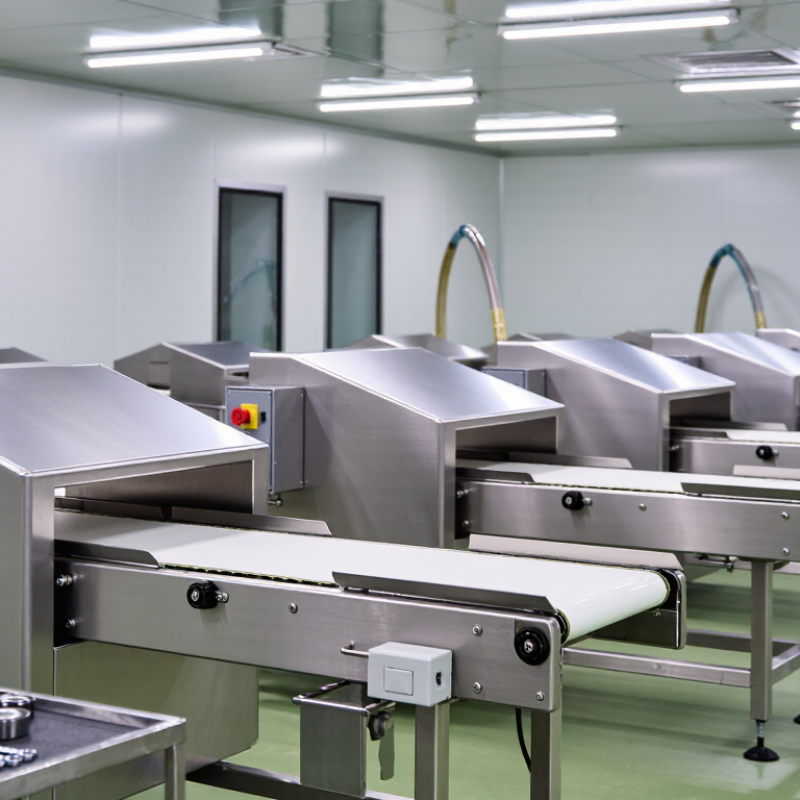
Stainless Steel Conveyor Grades: 304 vs 316 and Corrosion Resistance
2026 Top Stainless Steel Conveyors for Global Buyers
Choosing between 304 and 316 stainless steel can determine a conveyor’s service life. Grade 304 suits dry processing, packaging, and ordinary washdown areas. It contains chromium and nickel that form a protective passive layer. In many factories, it offers a practical balance between cost, strength, and cleanability.
Grade 316 adds molybdenum, which improves resistance to chlorides and aggressive cleaning chemicals. It is often preferred near saltwater, brine, coastal air, or frequent chemical sanitation. Small details matter. Welded joints, trapped moisture, and scratched surfaces can corrode before the main frame shows damage. A conveyor may look clean while corrosion develops underneath a belt support.
From installation experience, drainage is as important as alloy selection. Frames should avoid water pockets, and welds need careful finishing and suitable passivation. We once treated 316 as nearly immune to rust. That assumption was wrong. Crevices and contaminated tools still caused staining. Grade 316 costs more, but replacement downtime can cost more than the original upgrade. Buyers should compare chemical exposure, washdown temperature, cleaning frequency, and maintenance access. A corrosion-resistant conveyor is not created by material grade alone.
2026 Top Stainless Steel Conveyors for Global Buyers - Stainless Steel Conveyor Grades: 304 vs 316 and Corrosion Resistance
| Evaluation Dimension | 304 Stainless Steel Conveyor | 316 Stainless Steel Conveyor | Buyer Guidance |
|---|---|---|---|
| Common standard designation | AISI 304 / EN 1.4301 | AISI 316 / EN 1.4401; low-carbon 316L / EN 1.4404 is widely used for welded equipment | Confirm the required designation against the purchasing standard, certificates, and local regulations. |
| Typical chemical composition, mass % | Chromium approximately 18–20%; nickel approximately 8–10.5%; molybdenum is not intentionally added. | Chromium approximately 16–18%; nickel approximately 10–14%; molybdenum approximately 2–3%. | Actual limits vary by product standard and grade suffix. Request a material test certificate for critical applications. |
| Corrosion resistance in normal indoor environments | Very good resistance to atmospheric corrosion, moisture, and many food-processing environments. | Excellent resistance, with greater protection against localized corrosion than 304 in demanding environments. | 304 is generally suitable for dry or moderately wet indoor conveying. Good cleaning practice is required for both grades. |
| Resistance to chlorides and salt exposure | More susceptible to chloride-induced pitting and crevice corrosion, especially where deposits remain wet. | Better resistance because molybdenum improves resistance to pitting and crevice corrosion; it is not immune to seawater corrosion. | Prefer 316 or 316L for coastal sites, brine, salt handling, frequent chloride cleaning, and persistent wet service. |
| Approximate PREN range | Approximately 18–20 using PREN = Cr + 3.3Mo + 16N. | Approximately 23–27, depending on chromium, molybdenum, and nitrogen content. | PREN is a comparative indicator, not a guarantee of service life. Temperature, concentration, crevices, and surface condition also matter. |
| Typical minimum yield strength, annealed product | Approximately 205 MPa under ASTM A240 requirements for common plate and sheet products. | Approximately 205 MPa under ASTM A240 requirements for common plate and sheet products. | Conveyor load capacity depends on thickness, frame geometry, support spacing, welds, shafts, and drive design—not grade alone. |
| Typical minimum tensile strength, annealed product | Approximately 515 MPa under ASTM A240 requirements for common plate and sheet products. | Approximately 515 MPa under ASTM A240 requirements for common plate and sheet products. | Verify the applicable product form and standard because mechanical requirements may differ for tube, bar, sheet, or fabricated parts. |
| Weldability and fabrication | Excellent weldability. Post-weld cleaning and passivation help restore corrosion resistance. | Excellent weldability. 316L is commonly selected to reduce sensitization risk in welded assemblies. | Specify sanitary weld quality, weld finishing, pickling, passivation, and surface roughness where hygiene is important. |
| Hygiene and cleanability | Suitable for many food, beverage, packaging, and pharmaceutical conveying applications when properly finished. | Preferred for aggressive washdown, high-chloride sanitation, pharmaceutical processing, and high-purity wet areas. | Use smooth, drainable surfaces, sanitary welds, minimal crevices, and validated cleaning chemicals for hygienic designs. |
| Typical conveyor applications | Dry foods, cartons, parcels, general manufacturing, indoor packaging, and moderately wet processing lines. | Seafood, meat and poultry, brine products, coastal installations, chemical handling, and frequent wet-cleaning lines. | Select the grade based on the actual process fluid, cleaning regime, temperature, and exposure time. |
| Relative material cost | Usually lower initial material cost because it contains less nickel and no intentional molybdenum addition. | Usually higher initial material cost because of additional nickel and molybdenum. | Compare total lifecycle cost, including cleaning, downtime, replacement, corrosion repairs, and product-contamination risk. |
| Surface finish considerations | Common finishes include 2B for general fabrication and brushed or polished finishes for improved cleanability. | The same finish options are available; a smooth, cleanable finish is especially valuable in chloride and washdown service. | Surface roughness, weld finishing, passivation, and contamination control can be as important as the stainless grade. |
| Best overall selection | Best value for general-purpose conveying where chloride exposure is limited and controlled. | Best corrosion-resistance choice for chloride-rich, coastal, chemical, or intensive washdown conditions. | For uncertain or highly corrosive conditions, obtain a site-specific materials review rather than relying only on grade names. |
Technical note: Values shown are typical or standard-based guidance for commonly supplied annealed stainless-steel products. Final conveyor specifications should be verified against the applicable ASTM, EN, ISO, hygienic-design, and local safety requirements.
Related Posts
-
Top 10 Stainless Steel Conveyors What Buyers Need to Know
-
7 Tips for Choosing Stainless Steel Conveyors?
-
How to Choose the Best Stainless Conveyor Belt for Your Needs?
-
What is a Stainless Conveyor Belt and How is it Used?
-
Top 10 Steel Conveyor Belt Types for Buyers
-
7 Tips for Choosing the Right Stainless Conveyor Belt