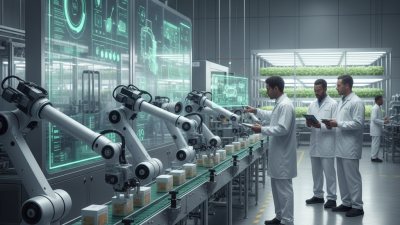
Choosing reliable industrial food processing equipment manufacturers is a practical decision, not a popularity contest. A poorly matched conveyor, mixer, or filling machine can create product loss, difficult cleaning, and costly production delays. The best manufacturers understand these risks and design equipment around hygiene, throughput, maintenance, operator safety, and consistent product quality.
Food engineering expert R. Paul Singh stated, “Food engineering is the application of engineering principles to the manufacture and distribution of food.” That principle remains important today. Modern processing lines combine stainless-steel construction, automated controls, hygienic pumps, thermal systems, and traceable production data. However, advanced features do not automatically mean better performance. A smaller manufacturer may offer stronger customization, while a global supplier may provide broader service coverage and spare-parts support.
This guide reviews ten notable industrial food processing equipment manufacturers across different processing categories. It considers their equipment portfolios, engineering capabilities, sanitation features, customization options, after-sales support, and industry experience. The comparison also recognizes that no single supplier fits every factory.
Plant reality matters.
A bakery, dairy facility, meat processor, and beverage plant face very different production pressures. Equipment that performs well in one environment may struggle in another. Buyers should verify capacity claims, clean-in-place performance, energy consumption, installation requirements, and local technical support before making a final decision. Some manufacturers communicate these details clearly; others leave important questions unanswered. That is worth questioning.
The companies discussed here are not ranked as universally superior. Their suitability depends on product type, production scale, budget, facility layout, and long-term maintenance expectations.
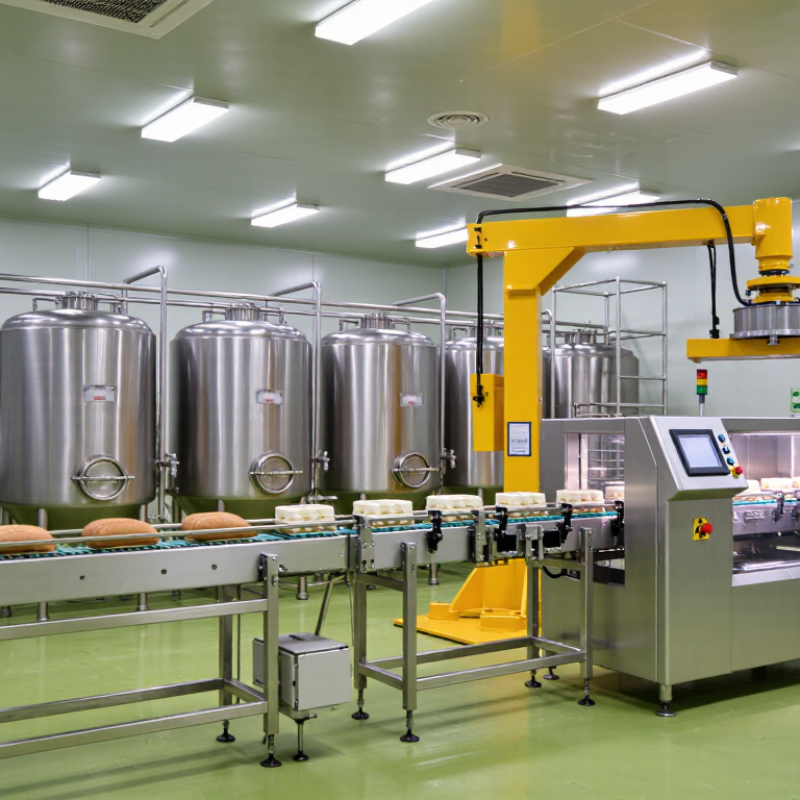
Industrial food processing equipment manufacturers do more than build stainless-steel machines. They design systems for washing, cutting, mixing, cooking, filling, sealing, freezing, and inspection. Their engineers study product viscosity, temperature, moisture, and contamination risks before selecting equipment. Hygienic design matters. Poorly placed welds or hard-to-clean joints can trap residue and increase sanitation time.
Manufacturers also integrate sensors, controls, conveyors, and data systems into one production line. PMMI’s 2024 industry research identifies labor availability, productivity, and automation as major equipment investment drivers. This explains the demand for easier changeovers and remote performance monitoring. According to the FAO’s State of Food and Agriculture 2019, about 14% of food is lost between harvest and retail. Better dosing, temperature control, and packaging accuracy can reduce some of that loss. However, equipment alone cannot fix weak operating procedures. That part is often underestimated.
Reliable manufacturers test machines with real ingredients, not only empty containers. They measure throughput, cleaning time, product damage, and energy use. They should provide validation records, operator training, spare-parts planning, and responsive technical support. A small delay can stop an entire line. I have seen impressive automation fail when staff lacked practical training. Design assumptions need challenge. Specifications should also reflect local utilities, workforce skills, floor space, and maintenance habits. The best supplier relationship continues after installation, through performance reviews and documented improvements.
Evaluating the top ten industrial food processing equipment manufacturers requires more than comparing purchase prices. Start with hygienic design, product-contact materials, cleanability, and documented compliance. EHEDG guidance emphasizes eliminating product traps, dead legs, and difficult-to-clean surfaces. Ask suppliers for sanitation drawings, validation records, and factory acceptance test results. A polished brochure is not evidence.
Operational data matters too. PMMI’s 2024 State of the Industry reporting identifies labor pressure, automation, and operational efficiency as major packaging priorities. Therefore, compare changeover time, controls integration, remote diagnostics, and spare-parts availability. Request measured uptime from comparable installations, not general promises. Check whether the equipment communicates through open industrial protocols. Closed systems can increase future costs.
Total cost of ownership Total cost of ownership should include energy, water, labor, maintenance, training, and planned downtime. Deloitte’s 2024 Manufacturing Industry Outlook also highlights smart manufacturing and workforce capability as important investment areas. Evaluate the manufacturer’s service response, technician coverage, cybersecurity process, and training materials. Ask for a five-year cost model using your actual production schedule. Keep assumptions visible.
Experience on the factory floor still matters.
A machine may pass testing yet frustrate operators during a wet-shift changeover. Visit a working installation if possible. Speak with maintenance staff privately. Their complaints often reveal more than sales presentations. I would also score documentation quality, because missing drawings can delay repairs. This method is imperfect; weighting uptime too heavily may undervalue sanitation or operator safety. Recheck the scoring after pilot trials, especially when products vary in viscosity, temperature, or particulate size.
Choosing the best industrial food processing equipment manufacturer depends on product, capacity, and sanitation demands. The leading suppliers usually specialize in one category rather than making everything. Strong candidates include manufacturers of stainless-steel conveyors, washing systems, cutting machines, industrial mixers, filling equipment, thermal ovens, frying lines, freezing systems, packaging machines, and automated inspection units.
In real plants, equipment performance is rarely judged by speed alone. A conveyor may handle 10,000 units per hour, yet poor belt access can make cleaning difficult. Mixers should provide consistent texture without damaging delicate ingredients. Ovens need stable heat across every zone. Freezing systems must protect quality while controlling energy use. Reliable manufacturers provide test runs, maintenance schedules, spare-part support, and clear hygienic design documents. Ask for measurable results. Marketing language is not evidence.
Tips: Request product samples before signing. Check weld quality, drainage, sensor placement, and emergency controls. Compare total ownership cost, not only the purchase price. Speak with operators who use similar lines. Their complaints often reveal more than a polished factory tour. Leave room for uncertainty. A machine that performs well in demonstrations may behave differently under dust, moisture, seasonal ingredients, or frequent changeovers. Review cleaning time, training needs, utility consumption, and repair response in writing. Small details matter.
10 Best Industrial Food Processing Equipment Manufacturers?
Key Technologies and Applications in Modern Food Processing
Modern food processing depends on more than high-speed machinery. Hygienic design, accurate temperature control, and traceable data now shape daily plant performance. According to the FAO’s 2022 food-loss assessment, about 13.2% of food is lost between harvest and retail. Better conveying, cooling, sorting, and storage systems can reduce avoidable damage. Optical scanners remove foreign materials, while automated weighing improves portion consistency. These systems support vegetables, dairy products, meat alternatives, and ready-to-eat meals.
Thermal processing remains important, but newer methods are gaining attention. High-pressure processing can extend shelf life without intense heating. Membrane filtration helps concentrate liquids with lower thermal exposure. Industrial sensors monitor viscosity, moisture, pressure, and microbial risk in real time. Clean-in-place systems also reduce manual cleaning and improve repeatability. The UNEP Food Waste Index Report 2024 estimated 1.05 billion tonnes of food waste in 2022, showing why efficient processing still matters.
Automation is not a cure-all. Poor sensor calibration can create confident, expensive mistakes. Plant teams should test equipment with real ingredients, not only water or ideal samples. Energy monitoring, heat recovery, and predictive maintenance can lower operating costs, although installation may be difficult in older facilities. A well-designed line balances throughput, food safety, worker access, and repair time. The best equipment is not always the fastest. It is the equipment that performs reliably on a difficult Monday morning.
10 Best Industrial Food Processing Equipment Manufacturers: Choosing the Right Manufacturer for Your Production Needs
Selecting a manufacturer should begin with your process, not a popularity list. Define throughput, product viscosity, temperature, cleaning chemicals, and available floor space. A sauce line may need a gentle positive-displacement pump, while frozen vegetables require precise blanching and rapid cooling. Small details matter. Ask for validated test results using your actual ingredients.
The FAO reports that 13.2% of food is lost between harvest and retail globally. Equipment that reduces spills, overheating, and changeover waste can directly support efficiency. PMMI’s 2024 industry reporting also identifies labor shortages as a major driver of automation investment. Therefore, evaluate recipe controls, remote diagnostics, and safe operator access. A fast machine is not useful if two trained technicians are always required.
Request documented hygienic design, clean-in-place performance, energy consumption, and spare-parts availability. Check whether the manufacturer can support installation in your region. Speak with users running similar products, not only polished reference sites. A factory visit can reveal noise, awkward hose routing, or difficult inspection points. These issues rarely appear in brochures. I would also challenge optimistic capacity claims; real output often falls during sanitation and product changeovers. The best supplier should explain those losses clearly, provide acceptance criteria, and adapt the design when your assumptions prove wrong.
Anonymous supplier benchmark based on common food-processing equipment capabilities, engineering practices, compliance requirements, and service factors.
| Rank | Anonymous Manufacturer Profile | Primary Equipment Strength | Typical Throughput Range | Sanitary Design Capability | Automation and Controls | Documentation and Validation | Typical Project Lead Time | Best Production Fit | Key Selection Check |
|---|---|---|---|---|---|---|---|---|---|
| 01 | Large Integrated Line Builder | Complete processing, conveying, filling, packaging, and line integration | 2,000–60,000 units/hour or 1–30 tonnes/hour | Hygienic stainless-steel construction; clean-in-place options; drainage-focused design | PLC, HMI, recipe management, SCADA, production data connectivity | Layout drawings, risk assessment, FAT/SAT, operating manuals, spare-parts lists | 9–18 months for complex lines | High-volume meat, dairy, bakery, beverage, and prepared-food plants | Confirm integration responsibility, utility loads, and after-sales coverage |
| 02 | Continuous Processing Specialist | Continuous mixing, heating, cooling, evaporation, and homogenization systems | 500–25,000 litres/hour or 0.5–20 tonnes/hour | Sanitary welds, hygienic valves, validated cleaning cycles, product-recovery options | Temperature, pressure, flow, and viscosity control with recipe automation | Process calculations, heat-balance data, control narratives, commissioning records | 6–14 months | Sauces, dairy products, beverages, liquid foods, and emulsions | Request product trials using the actual formulation and target viscosity |
| 03 | Thermal Processing Specialist | Pasteurizers, retorts, sterilizers, ovens, fryers, and heat-treatment systems | 100–20,000 kg/hour depending on product and thermal load | Food-contact stainless steel; hygienic access; automated cleaning and drainage | Multi-zone temperature control, data logging, alarms, and batch traceability | Thermal validation, lethality calculations, calibration records, and test protocols | 8–16 months | Canned foods, ready meals, bakery products, sauces, and protein products | Verify uniformity testing, energy consumption, and product quality retention |
| 04 | Packaging Automation Specialist | Form-fill-seal, tray sealing, cartoning, case packing, and palletizing | 30–1,200 packs/minute, depending on format and product | Washdown-compatible frames; hygienic conveyors; tool-less changeover features | Servo motion, vision inspection, checkweighing, metal detection, and line monitoring | Machine manuals, format drawings, software backups, FAT/SAT, and training documents | 5–12 months | Retail-ready snacks, frozen foods, meat, bakery, and prepared meals | Check changeover time, reject accuracy, film compatibility, and spare-part availability |
| 05 | Powder and Dry-Material Specialist | Powder dosing, blending, conveying, sieving, drying, and dust-control systems | 50–10,000 kg/hour | Sealed product paths, cleanable surfaces, dust-tight transfer, and allergen-control options | Loss-in-weight dosing, batch control, weighing records, and recipe management | Dust-hazard assessment, validation protocols, calibration, and cleaning procedures | 6–13 months | Infant formula, bakery mixes, spices, nutrition powders, and dry ingredients | Assess segregation risk, dust explosibility, dosing accuracy, and allergen changeover |
| 06 | Fruit, Vegetable, and Fresh-Cut Specialist | Washing, sorting, peeling, cutting, blanching, and fresh-product handling | 1–30 tonnes/hour | Open hygienic design, easy sanitation access, water-management systems, and corrosion-resistant materials | Optical sorting, water-quality monitoring, recipe control, and production reporting | Sanitation procedures, water-use data, performance trials, and operator training | 4–10 months | Fresh-cut produce, frozen vegetables, canned produce, and prepared salads | Compare product damage, water consumption, sanitation time, and yield loss |
| 07 | Meat and Protein Processing Specialist | Cutting, grinding, mixing, forming, marinating, tumbling, and cooking systems | 500–15,000 kg/hour | High-pressure washdown design, hygienic conveyors, rounded frames, and contamination-control features | Recipe control, weight feedback, temperature monitoring, and automated product tracking | Hygiene risk assessment, product trials, cleaning validation, and maintenance schedules | 6–14 months | Poultry, red meat, seafood, plant-based protein, and ready-to-cook products | Review hygienic zoning, yield performance, cleaning labor, and worker safety controls |
| 08 | Dairy and Beverage Line Specialist | Milk reception, liquid blending, fermentation, filling, capping, and aseptic handling | 2,000–50,000 litres/hour | Hygienic piping, sanitary valves, clean-in-place systems, and sterile-zone options | Continuous process control, batch records, conductivity monitoring, and alarm history | CIP recipes, P&IDs, hygienic design review, validation records, and calibration plans | 7–16 months | Milk, yogurt, cultured products, juices, soft drinks, and liquid nutrition products | Measure product loss, CIP chemical use, water use, and microbiological performance |
| 09 | Modular and Mid-Market Equipment Builder | Standalone mixers, conveyors, fillers, slicers, depositors, and compact packaging machines | 100–8,000 units/hour or 0.1–8 tonnes/hour | Food-contact stainless steel, removable parts, accessible inspection points, and basic washdown design | Standalone PLC/HMI controls, sensor monitoring, and optional remote diagnostics | User manuals, installation drawings, basic FAT, maintenance schedules, and operator training | 2–8 months | Start-ups, contract manufacturers, pilot plants, and capacity expansion projects | Check upgrade paths, electrical standards, local service, and integration limits |
| 10 | Custom Engineering and Pilot-Plant Specialist | Product development skids, pilot processing, laboratory-scale equipment, and custom systems | 5–2,000 kg/hour or 10–5,000 litres/hour | Application-specific hygienic construction with configurable cleaning and product-contact materials | Small-batch recipe control, data acquisition, sensors, and experimental process monitoring | Process-development reports, test data, design calculations, and scale-up recommendations | 3–12 months | New product development, specialty foods, research facilities, and process optimization | Require reproducible test results and a documented path from pilot scale to production scale |
How to Use This Benchmark
The throughput, lead-time, and capability figures are indicative industry ranges rather than quotations or company-specific claims. Before selecting a manufacturer, verify food-contact materials, applicable local regulations, hygienic design standards, clean-in-place performance, factory acceptance testing, spare-parts support, energy consumption, and total cost of ownership.