What Is a Conveyor Belt Conveyor and How Does It Work?
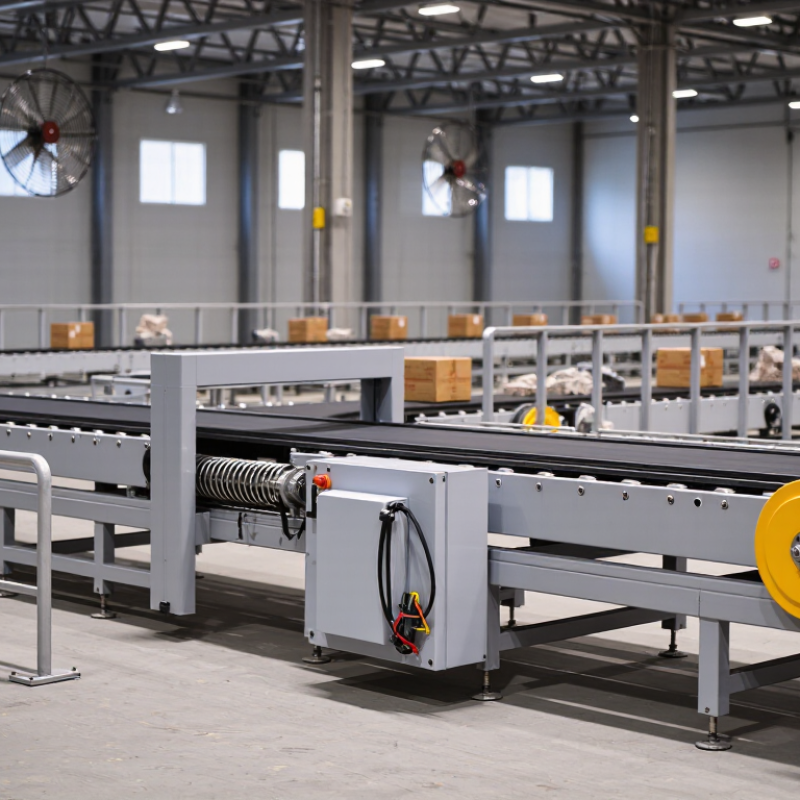
A conveyor belt conveyor is more than a moving strip of rubber. It is a coordinated material-handling system that transfers products, minerals, parcels, or components across a planned route. Its main parts include the belt, pulleys, idlers, drive unit, take-up system, frame, and control equipment.
Lawrence K. Nordell, a respected conveyor dynamics engineer, stated, “The belt is the most important component of a conveyor system.” This observation remains practical. A belt carries the load, absorbs tension, follows the structure, and influences the system’s safety and service life. When the drive pulley rotates, friction moves the belt forward. Idlers support its loaded surface. The tail pulley guides the return strand. A take-up device maintains suitable tension as the belt stretches or temperature changes.
The working process looks simple. It is not always simple.
A small alignment error can make the belt wander. Spillage may then collect beneath the frame. Poorly selected idlers can increase resistance, noise, and wear. Operators often notice these problems through unusual vibration, belt dust, or a drifting belt edge. Regular inspection helps reveal trouble before a minor defect becomes expensive downtime.
This guide explains what a conveyor belt conveyor is, how its components cooperate, and why design details matter. It also considers capacity, speed, loading conditions, maintenance, and workplace safety. Some systems are described as efficient by default, but that assumption deserves review. Actual performance depends on engineering choices, operating habits, material characteristics, and careful maintenance records.
Conveyor Belt Anatomy: ISO 14890 Covers, Pulleys, Idlers, and Frames
What Is a Conveyor Belt Conveyor and How Does It Work?
Conveyor Belt Anatomy: ISO 14890 Covers, Pulleys, Idlers, and Frames
A conveyor belt conveyor moves bulk material through continuous belt rotation. The belt is its working surface and its main tension carrier. ISO 14890 defines requirements for rubber or plastic-covered textile belts used on flat or troughed idlers. It does not cover every belt type, especially steel-cord designs. That distinction matters during specification.
The cover resists abrasion, impact, heat, oil, or moisture. A stronger cover is not always the best choice. It can increase cost and may reduce flexibility. The drive pulley transfers torque through friction. The tail pulley redirects the belt, while snub pulleys increase the contact angle. Carrying idlers support loaded sections. Return idlers support the empty belt underneath. Frames hold alignment, guarding, and access points.
The International Energy Agency reported that industry used about 37% of global final energy in 2022. Efficient conveyors therefore deserve serious engineering attention. Poor tracking creates edge damage, material spillage, and unnecessary motor load. In field inspections, I often find small frame deviations causing large belt problems. Real conveyors are less tidy than diagrams. Pulley lagging, bearing condition, and idler spacing should be checked together. A 2023 bulk-material handling report from a major engineering association also emphasizes preventive inspection as a key reliability practice. Still, inspection intervals must reflect dust, load, speed, and weather. One fixed schedule rarely fits every site.
How Belt Conveyors Move Materials at Speeds Up to 5 m/s
A conveyor belt conveyor moves materials on a continuous belt supported by rollers or a sliding bed. The drive pulley provides traction, while the tail pulley keeps the belt aligned. In high-capacity systems, belt speeds can reach 5 m/s, or about 18 km/h. That speed looks moderate, but a loaded belt can move several tonnes every minute.
Capacity depends on more than speed. Engineers calculate it with the belt’s loaded cross-sectional area, material density, and velocity. The ISO 5048 calculation method uses these variables to estimate bulk-conveyor capacity. For example, increasing speed from 3 m/s to 5 m/s can raise theoretical throughput by roughly 67%, if loading remains stable. CEMA’s Belt Conveyors for Bulk Materials also stresses belt tension, idler spacing, material characteristics, and transfer-point design. Small design errors matter.
Dust changes the picture. Wet ore, sharp aggregate, or uneven loading can cause slipping, spillage, and belt mistracking. Sensors may monitor speed, temperature, vibration, and belt position, allowing operators to stop the drive before damage spreads. In practice, the fastest setting is rarely the best setting. A belt may reach 5 m/s, yet a slower speed can reduce dust, noise, and maintenance costs. This is where design assumptions deserve a second look. Calculated capacity is not always field capacity. Test the material. Watch the discharge point. Adjust carefully.
Conveyor Capacity: CEMA Designs Handling 100–10,000 t/h
What Is a Conveyor Belt Conveyor and How Does It Work?
A belt conveyor moves bulk material on a continuous, tensioned belt. A drive pulley supplies motion, while idlers support the loaded belt. In heavy-duty applications, CEMA design methods cover capacities from about 100 to 10,000 tonnes per hour. That range is broad. Real performance depends on belt width, speed, material density, and loading profile.
CEMA’s Belt Conveyors for Bulk Materials, 7th Edition, calculates capacity from the belt’s loaded cross-sectional area, belt speed, and bulk density. A wider belt does not automatically deliver more tonnes. Poor loading can create spillage, dust, and uneven belt stress.
For example, a 1,200-millimetre belt carrying dense ore may require very different settings from one carrying dry grain. The conveyor must also overcome incline resistance and friction.
Speed matters.
Too slowly, and production falls. Too quickly, and transfer points become difficult to control. ISO 5048 engineering guidance also requires attention to resistance forces, drive power, and belt tension. Field measurements should verify the design assumptions. Material moisture often changes them.
The 100–10,000 t/h range is useful, but it is not a promise.
CEMA notes that selection requires material characteristics and operating conditions. A practical design should check start-up torque, emergency stopping, skirt sealing, and belt tracking.
Small errors become expensive at high throughput. Even a well-calculated conveyor can underperform when loading is off-centre or maintenance access is poor.
Loading and Discharge: Belt Angles Commonly Reach 20°–35°
What Is a Conveyor Belt Conveyor and How Does It Work?
A belt conveyor moves bulk materials continuously between loading and discharge points. Belt angles commonly reach 20°–35°, but the material decides what is practical. CEMA’s Belt Conveyors for Bulk Materials, 7th Edition, notes that incline design depends on particle size, moisture, surcharge angle, and belt surface. A plain belt may handle around 18°–20° safely. Steeper routes often need cleats, raised ribs, or enclosed profiles. At 30°–35°, loose grain or crushed stone may slide backward. Discharge becomes uneven.
Loading needs equal attention. Material should enter near the belt center and travel close to belt speed. Poor alignment creates impact, spillage, and edge wear. ISO 5048:1989 provides methods for calculating belt tension, power, and resistance. Those calculations are useful, but they cannot replace a field test. I have seen a clean design fail after rain increased material adhesion. The spreadsheet was correct. The assumption was not.
Tips: Keep loading chutes short and centered. Use impact beds beneath heavy drop zones. Check material moisture before selecting a 30° incline. For discharge, inspect pulley clearance and prevent material from rolling under the belt. A small trial section can reveal problems earlier than a full installation. Do not treat 35° as a universal target.