What Are the Top Types of Rod Heaters?
Rod Heaters are compact electric elements designed to deliver heat where a process needs it. Their shape is simple, but their construction and performance can vary considerably. Cartridge heaters fit into drilled metal bores, where close contact helps transfer heat to molds, plates, and machinery. Tubular heaters can be straight or formed into bends, making them useful for equipment with unusual layouts. Immersion styles heat liquids directly, while finned versions increase surface area for warming moving air. Small differences matter.
Choosing among these types starts with the job, not the product label. Consider the material being heated, available space, operating temperature, voltage, and required wattage. A heater that fits a bore but has poor contact may transfer heat unevenly. In a tank, sheath material and fluid compatibility deserve careful attention. Manufacturer specifications can clarify dimensions, temperature limits, and installation requirements; qualified technical advice is valuable when conditions are demanding. There is no universal best option. That can be easy to forget.
This guide explores the top types of Rod Heaters and the applications they suit. It also highlights practical trade-offs, including response time, mounting, and heat distribution. These details help readers compare options with clearer expectations. Even so, real equipment may behave differently than a neat specification sheet suggests. Check the operating conditions before choosing.
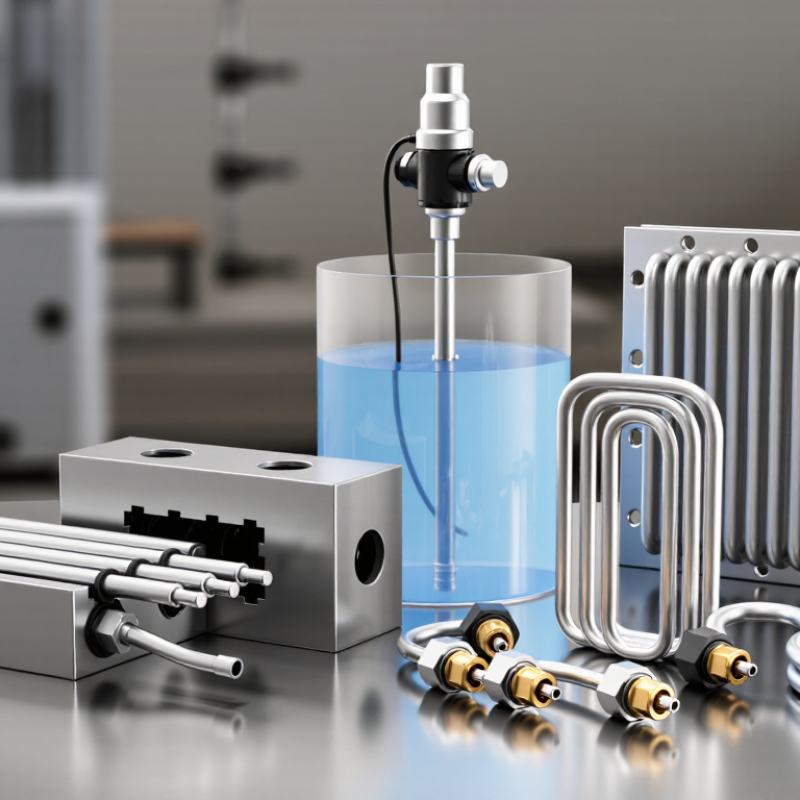
Common Designs and Operating Principles of Rod Heaters
Rod heaters use electrical resistance to turn current into heat, but their shapes suit different jobs. A tubular rod typically contains a resistance wire packed inside an insulated metal sheath. When energized, the wire warms the sheath, which transfers heat to air, a surface, or a surrounding material. The sheath protects the element. It also affects heat transfer and corrosion resistance.
Cartridge heaters are compact rods designed to slide into drilled holes in metal blocks, dies, or plates. Their close fit helps conduct heat into the surrounding metal. A loose fit can create an air gap, slowing transfer and raising the element’s temperature. It sounds minor. It is not. Hole size, surface contact, and temperature control all matter.
Immersion-style rod elements extend into liquids or process tanks, often with a sealed sheath and mounting fitting. Heat passes through the sheath directly into the fluid, so flow and liquid level influence performance. Some designs use straight rods; others are bent or grouped to fit a tank. In real installations, the neat geometry shown in a drawing can be less helpful than checking clearances, deposits, and local hot spots. That part is easy to overlook. A heater that fits mechanically may still heat unevenly if its placement or power density does not suit the application.
Tubular Rod Heaters for General-Purpose Heating
What Are the Top Types of Rod Heaters?
Tubular Rod Heaters for General-Purpose Heating
Tubular rod heaters are a practical choice for warming tanks, dies, platens, and enclosed air spaces. A resistance wire sits inside a metal sheath, surrounded by electrically insulating magnesium oxide. The sheath transfers heat to the nearby surface or material. Straight rods suit simple layouts; bent shapes can follow a fixture or fit around an obstruction. Small details matter. Check the sheath material, watt density, operating temperature, and available space before selecting one.
The U.S. Department of Energy’s Improving Process Heating System Performance sourcebook reports that process heating accounts for about 36% of energy used in U.S. manufacturing. That figure covers many heating methods, not tubular rods alone, but it shows why heat placement and control deserve attention. A rod pressed tightly against a metal block may transfer heat differently from one exposed to moving air. Poor contact can create hot spots, shorten heater life, or leave the workpiece unevenly warm. It’s easy to overlook.
For general-purpose installations, use a suitable temperature controller and confirm the heater’s rating against actual operating conditions. Dust, moisture, vibration, and repeated thermal cycling can affect performance. A heater that works well in a clean test setup may behave differently on a production line. Measure temperatures at the part, not only at the heater surface. That extra check can reveal a mismatch before it becomes a costly maintenance problem.
Cartridge Rod Heaters for Compact, Targeted Heating
Cartridge rod heaters suit compact spaces where heat must reach a specific metal part. Their cylindrical sheaths slide into drilled holes in dies, plates, or manifolds. A close bore fit matters: air gaps slow heat transfer and can create hot spots. Fit matters. So does insertion depth. Installers should check both before powering the heater.
The U.S. Department of Energy’s Improving Process Heating System Performance: A Sourcebook for Industry reports that process heating accounts for about two-thirds of manufacturing energy use. That figure covers many heating methods, not cartridge heaters alone, but it shows why placement and control deserve attention. A cartridge heater concentrates heat near its working zone, rather than warming a large surrounding area. Use a temperature sensor near the target, and match heater wattage to the part’s material, size, and operating cycle. More power is not always better. A tightly packed assembly can still heat unevenly, and a heater may fail early if its bore is rough or undersized. That detail is easy to overlook. Good results depend on the whole installation, not just the element.
What Are the Top Types of Rod Heaters? - Cartridge Rod Heaters for Compact, Targeted Heating
| Heater type | Typical construction and installation | Best suited to | Key advantages | Considerations |
| Cartridge rod heater | A compact cylindrical element fitted into a drilled hole or close-fitting bore in a metal component. | Localized heating of tooling, dies, platens, and other solid parts. | Concentrates heat in a small area and can be installed directly in the part being heated. | A properly sized bore and close fit help transfer heat; poor fit can cause hot spots and shorten service life. |
| Tubular rod heater | A resistance coil enclosed in a metal sheath, commonly formed into a straight or shaped element. | Heating surfaces, air, or compatible liquids, depending on the element design and installation. | Versatile construction allows a range of shapes, mounting arrangements, and applications. | The sheath, mounting, and electrical protection must be suitable for the operating environment. |
| Immersion rod heater | One or more sheathed heating elements arranged to be immersed directly in a liquid tank or vessel. | Direct heating of liquids in tanks and process vessels. | Transfers heat directly to the liquid without first heating an external vessel surface. | The element must remain covered by liquid as required by its design; liquid compatibility and scale buildup matter. |
| Screw-plug immersion heater | A bundled immersion element mounted through a threaded plug that screws into a matching vessel opening. | Heating liquids in closed or semi-closed tanks with a suitable threaded connection. | Provides a compact, integrated mounting arrangement and can simplify installation and removal. | Thread size, vessel material, pressure conditions, and sealing requirements must be matched to the installation. |
| Circulation heater | A flow-through vessel containing sheathed heating elements, installed in a circulating liquid or gas line. | Heating a moving process fluid when controlled, in-line heat delivery is needed. | Combines a contained heating chamber with a flow path for continuous process heating. | Requires appropriate flow, controls, and material selection for the fluid and process conditions. |
Selection note: Heater performance depends on the specific design, materials, fit, power, controls, and operating conditions. Confirm application requirements with the heater specifications.
Finned Rod Heaters for Air and Gas Heating
Finned rod heaters suit air and gas streams because their extended metal fins expose more surface to moving fluid. That helps transfer heat without relying on a bare element alone. In a duct, the fins may look like thin metal collars around a central rod. A bigger fin pack is not automatically better. It can increase pressure drop, trap dust, or restrict flow through a narrow passage.
The U.S. Department of Energy’s 2022 Industrial Decarbonization Roadmap estimates that process heating accounts for about 51% of U.S. manufacturing energy use. That figure shows why heater selection and operating controls matter, though it is not a design target for every plant. DOE’s 2018 Manufacturing Energy and Carbon Footprints also break energy use down by manufacturing subsector; averages can hide major differences between facilities. For a real installation, engineers should check airflow, inlet temperature, outlet target, gas composition, and allowable pressure drop. They should also verify element surface temperature and use airflow or overtemperature protection where appropriate. Details matter.
A finned heater can be a practical choice for clean, steady air or gas, but fouling changes the picture. I would not size one from duct dimensions alone. Measure the operating conditions, then review the selection after commissioning; real systems rarely match a tidy calculation perfectly.
Rod Heater Types: Surface Area for Air and Gas Heating
Finned rod heaters provide more external surface area than smooth rods, supporting heat transfer to moving air and gases.
The chart compares illustrative geometries using a 12.7 mm rod diameter. The smooth rod has no fins; the low-fin example uses 25.4 mm diameter fins, 1.5 mm thick, at 10 mm pitch; the high-fin example uses the same fins at 5 mm pitch. Values are calculated external surface area per meter, excluding ends and fin-to-rod contact surfaces. These geometric comparisons are not standardized heater ratings.
Immersion Rod Heaters for Heating Liquids
Immersion rod heaters warm liquids by placing a sealed electric element directly inside a tank or vessel. Their simple shape hides several design choices. Straight, screw-plug, flanged, and over-the-side configurations suit different tank openings and service needs. For a small open tank, an over-the-side unit can be lifted out for cleaning. A threaded fitting may provide a more fixed installation. That difference matters.
Material selection depends on the liquid, operating temperature, and cleaning routine. Stainless steel suits many water-based applications, while corrosive or high-purity fluids may require a different sheath. Check compatibility with the heater supplier’s technical specifications. High watt density heats a smaller surface more intensely, which can encourage deposits in some liquids. Lower watt density spreads heat over more area but may require a longer element.
Use appropriate temperature controls, and keep the element immersed when its design requires it. Dry firing can damage the sheath quickly.
Check clearances, liquid level, and electrical ratings before installation. A heater that fits physically is not automatically a good match. Recheck your assumptions after a trial run; real liquids may behave differently from clean water.