Top 10 Tips for Choosing the Best Industrial Food Grinder?
Choosing the right industrial food grinder can be challenging. With numerous options available, making the best choice requires careful consideration. A quality industrial food grinder can enhance efficiency in food processing. It greatly impacts the final product's quality as well.
When selecting an industrial food grinder, functionality is key. Consider the capacity and power of the machine. Look for a grinder that meets your production needs. The right size can save time and costs. However, it’s essential to balance power with efficiency and waste. This process is sometimes overlooked.
Take into account the materials used in construction. Stainless steel is preferred for its durability and easy maintenance. Also, consider its noise level. Some models can be quite loud, which might affect the working environment. It’s worth thinking about ergonomics as well. A user-friendly design can prevent injuries and improve productivity. Keep these aspects in mind to make a more informed choice.
Understanding Your Grinding Needs and Applications
When selecting an industrial food grinder, understanding your grinding needs is crucial. Start by assessing the types of food you will process. Are they soft, hard, or fibrous? Different materials require specific grinder capabilities. For instance, a grinder for grains will differ from one designed for meat. This distinction can greatly affect performance and efficiency.
Consider the production volume as well. Will you grind small batches or large quantities? This decision can influence the grinder’s power and speed requirements. It’s important to balance capacity with actual grinding needs to avoid overinvestment. A grinder that is too large for your operations may lead to wasted energy and space.
Reflect on your application’s specific requirements as well. Do you need consistent particle sizes? Adjustability is key. Some grinders offer better customization than others. Also, think about maintenance demands. A seemingly perfect grinder can become a burden if it requires constant upkeep. Finding that sweet spot between performance and practicality will save time and resources in the long run.
Evaluating Different Types of Industrial Food Grinders
When selecting an industrial food grinder, understanding the different types is crucial.
Two common types are flat plate grinders and knife mills. Flat plate grinders offer a distinct advantage by operating at a consistent speed.
This design ensures even grinding, reducing the risk of overheating. In contrast, knife mills can handle a wider variety of products, from grains to tougher materials.
They can sometimes struggle with uniformity, creating challenges.
Another factor to consider is the grinder's capacity. Some models are designed for small runs, while others can process large batches. Choosing the wrong size can lead to inefficiencies.
For instance, a small grinder may slow down production. Meanwhile, a larger machine might be an overkill and waste resources. There’s often a balance to strike here.
Material is also a key consideration. Stainless steel is a popular choice due to its durability and ease of cleaning.
However, not all stainless steel is the same. Some lower-quality options may corrode, impacting safety and flavor. Regular maintenance is imperative.
Neglect can lead to poor performance and safety risks. Reflecting on these variables will help ensure the right grinder is chosen for specific needs.
Considering Grinder Capacity and Production Volume
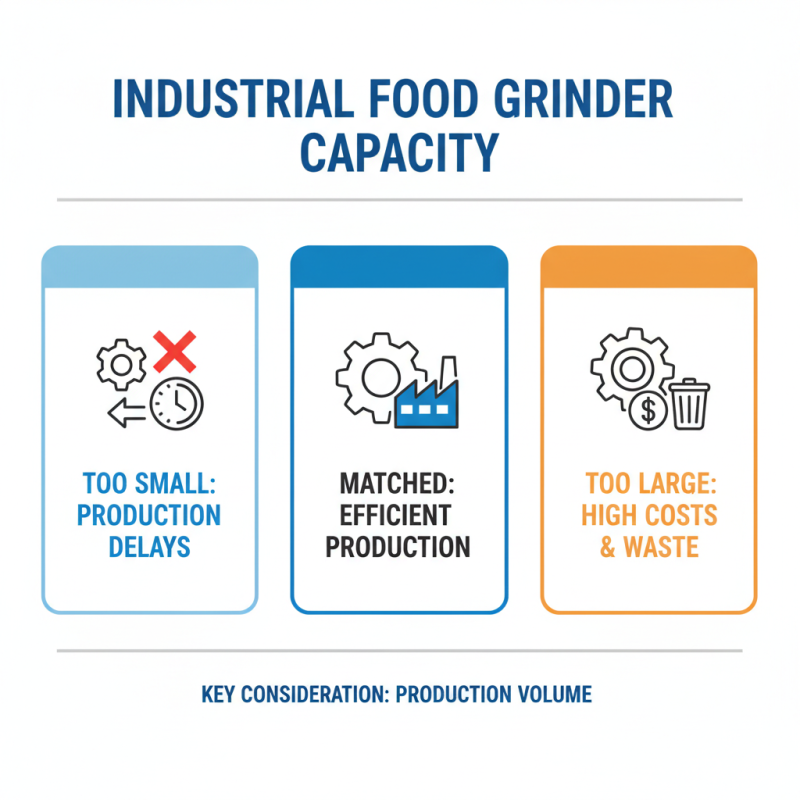
When selecting an industrial food grinder, understanding grinder capacity is crucial. It's essential to match the grinder's output with your production volume. A grinder that is too small may not meet your requirements, causing delays in production. Conversely, an oversized grinder may lead to increased energy costs and unnecessary waste of resources.
Consider the types of food you will process. Different ingredients require different grinding capacities. For example, hard vegetables may necessitate more power compared to softer fruits. Assessing your daily needs can help you choose the right grinder size. Take into account your peak production times. If your output fluctuates, choosing a grinder with adjustable capacity can be beneficial.
Overlooking production volume can lead to inefficiencies. If you choose a grinder without adequate capacity, you might encounter frequent breakdowns. This could interrupt your workflow. It’s also important to reflect on the grinder's maintenance needs. A higher capacity may require more upkeep. Balancing these factors ensures you select a grinder that suits your operation effectively.
Assessing Quality, Durability, and Maintenance Requirements
When selecting an industrial food grinder, quality and durability are essential. Consider the materials used in construction. Stainless steel is often preferred for its strength and resistance to corrosion. However, not all stainless steel is created equal. Some may rust or weaken over time. Look for grinders with a robust design and positive customer reviews regarding longevity.
Maintenance is another critical aspect. Regular cleaning routines can extend the life of your grinder. Ensure that the design allows for easy access to all components. Some grinders can be tricky to disassemble. This can cause frustration during cleaning. Understand the maintenance requirements before purchasing. If a grinder has complex parts, this may lead to neglect and bigger problems later.
Pay attention to the noise levels as well. Some models can be surprisingly loud. A noisy grinder can disrupt the workplace. Reflect on your operational environment. Consider if sound is a deciding factor for your choice. Balancing these factors will help you find a grinder that meets your needs while standing the test of time. Choose wisely.
Reviewing Key Features and Technology Innovations in Grinders
When selecting an industrial food grinder, understanding the key features and technology innovations is paramount. Recent industry reports show that grinders equipped with advanced technology can enhance processing efficiency by up to 30%. These innovations often include precision grinding mechanisms that ensure uniform particle sizes. This is crucial for manufacturers aiming for consistency in product quality.
Another important aspect is material use in construction. High-grade stainless steel remains a preferred choice due to its durability and resistance to corrosion. Industry standards suggest that the material can significantly affect lifespan and performance. Grinders that utilize ceramic grinding elements often provide better heat resistance. However, they may also present challenges, such as maintenance issues.
Speed control features are gaining traction as well. The ability to adjust the grinding speed allows for greater flexibility in processing various food types. Many operators overlook this, which can lead to inefficiencies. A recent survey noted that 40% of users express dissatisfaction with their grinder's adaptability. Understanding these characteristics can lead to informed decisions.