2026 How to Choose the Right Steel Conveyor Belt for Your Industry?
Choosing the right steel conveyor belt is crucial for various industries. The right belt can enhance efficiency and reduce downtime. Steel conveyor belts are known for their durability and strength, making them suitable for heavy loads and challenging environments.
Different industries have unique needs. For example, food processing requires belts that meet strict sanitation standards. On the other hand, mining may prioritize belts that resist abrasion and damage. Understanding these specific requirements is key to making an informed decision.
Working with reputable suppliers is essential. They offer valuable insights into the best options available. However, it’s important to consider your operations as well. What works for one facility may not be ideal for another. Reflect on your unique challenges when choosing a steel conveyor belt. This can prevent potential issues down the line.
Understanding the Different Types of Steel Conveyor Belts Available
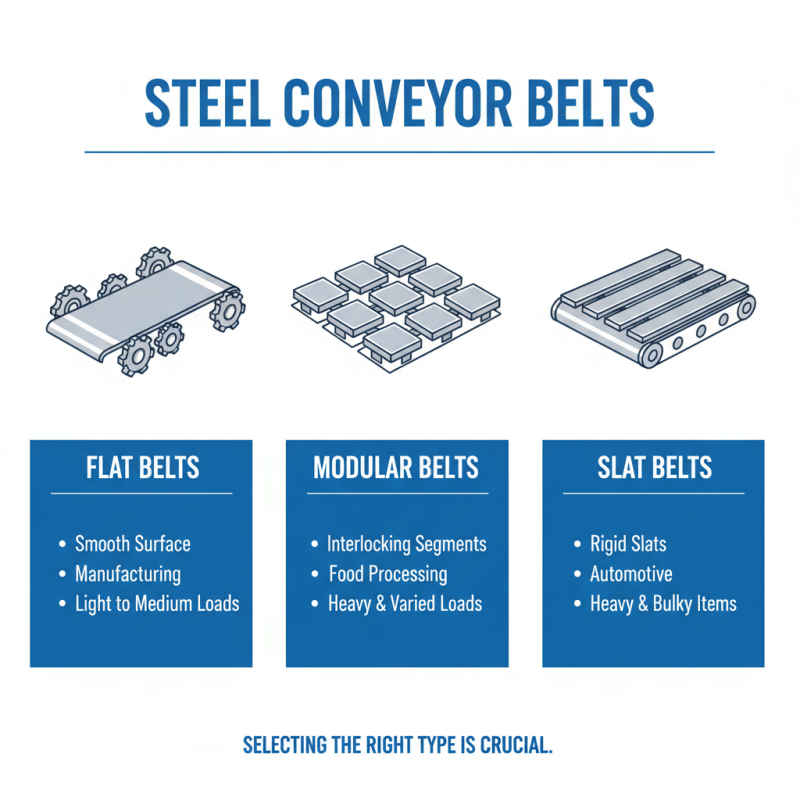
When selecting a steel conveyor belt, understanding the different types available is crucial. There are three main categories: flat belts, modular belts, and slat belts. Each type serves specific purpose in various industries. For instance, flat belts are commonly used in manufacturing due to their smooth surface and ability to transport goods efficiently. They are particularly effective for light to medium loads.
Modular belts, made from interlocking plastic pieces or steel, offer flexibility and durability. According to a 2022 industry report, modular belts cater to the food processing sector, making up approximately 30% of the global conveyor belt market. Their design allows for easy cleaning and maintenance, essential for hygiene in food-related industries.
Slat belts, on the other hand, are suitable for heavy loads and harsh environments. They are built with rigid, interlocking pieces, giving them strength and stability. Statistics show that slat belts account for around 15% of the market share, primarily used in automotive and packaging industries. It’s worth noting that while steel belts excel in strength, they may require more maintenance compared to their plastic counterparts. This balance of durability and upkeep can often lead to operational challenges in demanding settings.
Assessing Your Industry's Specific Needs and Requirements
When selecting the right steel conveyor belt, understanding your industry's specific needs is crucial. Industries vary significantly in terms of load capacity, environmental conditions, and processing requirements. For example, the mining industry often requires belts resistant to abrasion and heavy loads, while food processing demands stringent hygiene standards. According to a recent industry report, approximately 45% of conveyor belt failures stem from insufficient compatibility with operational environments.
It is also vital to consider the material composition. Steel belts typically feature carbon steel, stainless steel, or a combination of both. Each material offers unique advantages. A study from a leading manufacturing association reveals that carbon steel belts can withstand higher temperatures but may rust in humid conditions. Conversely, stainless steel belts excel in corrosive environments but can be costlier.
Analyzing the operational workflow can provide insights into your belt requirements. Understanding factors such as speed, load size, and distances will reveal potential bottlenecks. Reports suggest that inefficient belt selection can lead to a 30% increase in operational costs. Gathering this information can lead to better decision-making, ensuring reliability and performance long-term.
Evaluating Load Capacity and Belt Specifications
Choosing the right steel conveyor belt for your industry involves careful evaluation of load capacity and specifications. Load capacity is crucial. It determines how much weight a belt can transport without failing. Industries like mining and manufacturing often require belts that handle heavy loads. Understanding the weight and volume of materials is vital in making this choice.
Belt specifications also play a significant role. Material thickness, width, and type influence performance. Thicker belts typically support heavier loads, but they may limit flexibility. The belt's width should match your equipment's capacity and the production layout. An inadequate width can lead to bottlenecks or inefficient transport.
You should also consider the environment where the belt will operate. Factors like temperature, humidity, and exposure to chemicals affect durability. It's essential to analyze these factors to avoid costly failures. Regular reviews of belt performance are needed to identify potential issues and improve service life.
Considerations for Environmental Conditions and Durability
When selecting a steel conveyor belt, the environmental conditions play a critical role. Different industries face unique challenges such as extreme temperatures, humidity, and exposure to chemicals. For example, a plant operating in a humid area will require a belt resistant to corrosion. Steel belts may deteriorate rapidly in such environments without proper coatings.
Durability is another essential factor to consider. A belt's lifespan can be significantly affected by the materials it handles. Heavy or abrasive materials can cause wear and tear. Select a conveyor belt designed to withstand specific loads. However, there might be trade-offs between weight capacity and flexibility. Understanding these nuances helps in avoiding costly replacements down the line.
Reflecting on these considerations can improve operational efficiency. It's important to engage with experts who understand material properties and industry standards. Sometimes, the ideal choice may not be the most obvious one. Regular reviews and adjustments based on real-world performance can lead to better decisions. Keeping track of how the conveyor belt performs under different conditions is vital for long-term success.
Maintenance and Longevity Factors in Choosing a Conveyor Belt
When selecting the right steel conveyor belt, maintenance and longevity are crucial factors for optimal performance. A study from the Conveyor Equipment Manufacturers Association (CEMA) indicates that improper maintenance can reduce a belt's lifespan by up to 50%. Regular inspections and timely repairs not only enhance durability but also prevent costly downtime.
Tips: Regularly check for wear and tear. Look for frays or unusual noise during operation.
Different environments require different levels of robustness. A steel belt used in an environment with high temperatures may have a reduced lifespan if not correctly designed to handle such conditions. Understanding your operational environment will guide you in selecting a belt that meets your needs.
Tips: Investigate materials suited for extreme conditions. Ask experts when in doubt.
Additionally, consider the compatibility of the belt with your specific machinery. Mismatched systems can lead to unexpected failures. Statistics show that 30% of equipment issues stem from improper belt selection. Opt for thorough consultations with industry experts to make informed decisions.
Tips: Always document maintenance activities. Track performance over time.
Maintenance and Longevity Factors in Choosing a Conveyor Belt
This chart illustrates the importance of various factors affecting the maintenance and longevity of steel conveyor belts across different industries. The data represents the percentage impact of each factor on the overall lifespan of the conveyor belts.