
Global buyers need more than a bright beam. A work light may hang beneath a vehicle, cling to a steel panel, or bend around a crowded service bay. That is where a Flexible Led Work Light can earn its place. Yet flexibility alone does not guarantee useful illumination, safe handling, or dependable runtime.
The US Department of Energy’s Energy Saver guidance says LEDs use at least 75% less energy and can last up to 25 times longer than incandescent lighting. These figures describe LEDs broadly, not a direct test of portable work lights. Still, they explain why buyers increasingly examine LED efficiency alongside battery capacity and service life. Small details matter. A narrow beam can leave shadows behind a machine; a weak magnetic base can slip when a panel vibrates. Buyers should compare measured brightness, beam pattern, charging options, battery runtime, durability, and mounting methods. Check how manufacturers define their claims, too.
There is no single best model for every market. Workshop technicians may value a strong magnet and a compact body, while field crews may need a hook, a sealed housing, and replaceable batteries. Product specifications help, but they do not replace hands-on testing. A lamp that looks excellent in a catalogue may feel awkward with gloves on. This guide examines leading flexible LED work lights through practical selection criteria, helping global buyers ask better questions before placing an order. Some comparisons will remain imperfect; published figures are not always measured under identical conditions. That limitation deserves attention, not a footnote.
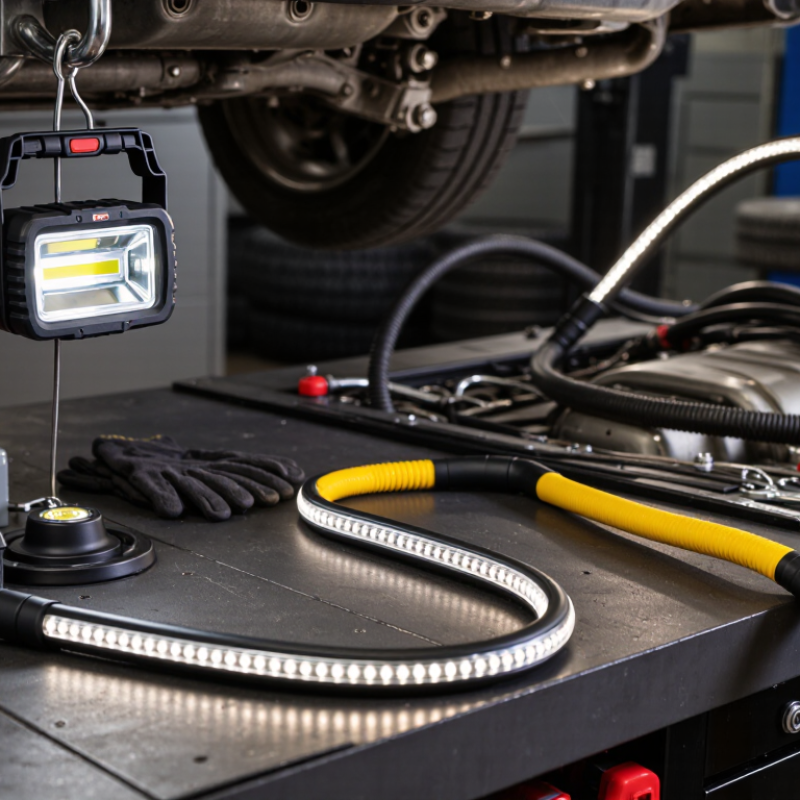
Flexible LED work lights use light-emitting diodes mounted in adjustable heads, strips, or bendable arms. A driver regulates electrical current, while a battery or external supply powers the unit. The LEDs produce light when current passes through semiconductor material. A flexible neck lets a technician aim the beam into a cabinet, beneath a vehicle, or across a workbench without moving the whole lamp. Some models also use magnets or hooks, though these attachments do not suit every surface.
Heat still matters. LEDs convert much of their input energy into light, but the circuit and housing can warm during prolonged use. The U.S. Department of Energy’s Energy Saver guidance reports that LEDs use at least 75% less energy and can last up to 25 times longer than incandescent lighting. Those figures describe LEDs broadly, not every portable work light; battery capacity, driver quality, and operating temperature affect real-world performance. Check stated runtime and light output, not just wattage. A compact light may illuminate a narrow cavity well, yet feel harsh at close range. That trade-off is easy to overlook.
Flexible LED work lights use LEDs mounted on a bendable strip or substrate, allowing the light to be positioned around a workspace. When electrical current flows through an LED, it produces light; a driver or power supply regulates the electrical input.
Current draw is calculated using I = P ÷ V for a 12 V DC supply. The wattage levels are illustrative examples, not measurements or specifications for particular products. Actual current depends on a light’s rated power and driver.
A flexible LED work light depends on more than its lamp. The LED board, heat sink, driver, and power cable must work together. A sturdy metal neck should hold its angle without sagging over a workbench. The hinge matters too. Loose joints can send light away from a small repair area.
Check the light’s color rendering index when accurate color identification matters. A higher value can help reveal differences between wires, paint shades, or surface finishes. Color temperature also affects comfort: neutral white often suits close inspection, while warmer light can feel less harsh in dim spaces. Brightness is only part of the picture. Beam spread, glare control, and adjustable output shape how useful those lumens feel. Numbers can mislead.
Heat management affects both comfort and service life. During evaluation, run the light for an extended period and check whether the head becomes uncomfortably hot. For cordless models, compare battery capacity with realistic operating time at full brightness, not just the lowest setting. Inspect cable strain relief and charging connections for signs of weak construction. A splash-resistant housing may help in dusty or damp work areas, but the rating should match the actual task. Buyers sourcing across regions should also confirm input voltage, plug type, and relevant electrical documentation. One detail is easy to miss: a flexible arm that feels smooth in a showroom may drift under the weight of its lamp head.
Flexible LED work lights suit jobs where fixed fixtures leave shadows behind machinery, inside cabinets, or beneath vehicle frames. Common designs include gooseneck lamps, articulated-arm lights, magnetic-base units, and flexible strip lights. Each solves a different access problem.
A magnetic-base light can hold to a steel panel while a technician checks a connection. A gooseneck directs a narrow beam into a pump housing, while an articulated arm stays positioned over a bench during assembly. Flexible strips spread light along a work surface or inside a service bay. The U.S. Department of Energy’s LED Lighting guidance reports that LEDs use at least 75% less energy than incandescent lighting. That broad comparison is useful, but it does not predict the savings of every work-light setup.
For inspection areas, a broad, diffused beam can reveal surface flaws without harsh glare. In cramped maintenance spaces, a compact head and protected cable matter more than maximum brightness. The IEA’s Energy Efficiency 2023 report estimates that lighting consumes about 15% of global electricity; this figure covers lighting overall, not portable task lights. A flexible neck is not automatically durable. Repeated bending can weaken it, and crews sometimes overlook that detail. Check the joint, cable strain relief, and ingress-protection rating before choosing a design for dusty or damp work areas.
Top Flexible LED Work Lights for Global Buyers?
Global buyers should compare flexible work lights by task, not headline lumens alone. A mechanic under a vehicle needs a narrow beam and a neck that holds its angle. A warehouse team may value a wide flood, a stable hook, and easy battery replacement. Check sustained output, runtime, color rendering, charging time, and cable strain relief. The U.S. Department of Energy’s 2020 U.S. Lighting Market Characterization estimated that LEDs made up 48% of installed U.S. lighting stock. That figure covers general lighting, not work lights, but it shows how established LED technology has become.
Durability needs closer inspection. Compare ingress protection ratings under IEC 60529, and ask how the rating applies to ports and battery covers. Check impact resistance, operating temperature, and whether the flexible arm stays put after repeated bending. Small details matter. Can a gloved worker switch modes? Does the magnet hold on a dusty steel panel? A specification sheet may not answer either question. Request test conditions and sample units for hands-on checks; initial brightness can feel impressive, then fade during a long shift. There is no perfect configuration. A compact lamp may trade runtime for portability, and buyers should record that trade-off rather than hide it.
A practical comparison of common work-light formats and the specifications buyers should evaluate.
| Light format | Typical light output | Power and runtime | Positioning flexibility | Common protection range | Best suited to | Buyer checks |
|---|---|---|---|---|---|---|
| Rechargeable handheld bar | About 300–1,000 lm | Rechargeable battery; commonly several hours per charge, depending on brightness and battery capacity. | Often includes a swivel hook, magnetic base, or pivoting head. | Varies by model; check the stated IP rating and impact rating. | Vehicle repair, inspections, and close-up maintenance. | Battery capacity, charging time, magnet strength, and whether the light can operate while charging. |
| Compact folding floodlight | About 500–2,000 lm | Typically rechargeable; runtime changes substantially between low and high output settings. | Folding panels or a hinged head provide adjustable beam direction; some models have a built-in stand. | Model-dependent; confirm dust, water, and drop-test claims for the intended job site. | Portable repairs, indoor fit-outs, and temporary task lighting. | Packed size, stability when unfolded, battery replacement options, and output at each setting. |
| Tripod-mounted LED work light | About 2,000–10,000 lm | Mains-powered or rechargeable versions are available; battery runtime depends on output and capacity. | Height-adjustable stand and tilting heads help illuminate a broad work area from above. | Check the fixture and power connection ratings separately; protection may differ across components. | Construction, renovation, and larger work zones. | Maximum height, folded dimensions, stand footprint, cable length, and transport weight. |
| Magnetic gooseneck or flexible-arm light | About 100–800 lm | Battery or mains-powered options; designed mainly for targeted illumination rather than lighting a full room. | Bendable arm and magnetic base position the beam around machinery or metal surfaces. | Often intended for controlled work environments; verify resistance to oil, dust, and moisture where needed. | Machine maintenance, inspection, and confined work areas. | Arm reach, magnetic holding force, base size, and whether the beam stays in position. |
| Portable area light | About 1,000–5,000 lm | Commonly rechargeable or mains-powered; some units support multiple brightness levels. | Wide-beam design; may include a hanging hook, floor stand, or tripod connection. | Ratings vary; an IP rating indicates ingress protection under defined test conditions, not universal job-site durability. | Workshops, utility work, and temporary area illumination. | Beam distribution, glare control, battery runtime, and mounting compatibility. |
| Dual-head portable work light | About 2,000–8,000 lm combined | Usually mains-powered or battery-powered; actual runtime depends on whether one or both heads are operating. | Independently adjustable heads can direct light toward separate tasks or surfaces. | Check the rating for the complete assembled unit and its connectors. | Multi-directional lighting for repair bays and work areas with several task points. | Independent head controls, heat management, stand stability, and total output versus per-head output. |
Comparison note: Output and runtime figures are indicative ranges for common product formats, not guarantees for every model. Compare measured lumens, battery capacity in watt-hours (Wh), runtime at the required brightness, color temperature, color rendering index (CRI), and verified ingress-protection claims in the product documentation. A higher lumen rating indicates more total light output, but beam shape and placement also affect usable illumination.
A flexible LED work light may look simple, but global sourcing involves more than comparing brightness and price. Buyers should check the rated voltage, plug type, cable length, color temperature, and stated operating temperature against the worksite. Small mismatches matter. A cable that feels adequate in a showroom may snag around a crowded repair bench.
Ask suppliers for current test reports and conformity documents, then confirm that they cover the exact model and destination market. Standards such as IEC 60598 for luminaires and IEC 60529 for ingress protection can help frame questions, but requirements vary by product and country. An IP rating is not a promise that a light can withstand every washdown. Request clear test scope, not just a certificate image. A sample inspection is useful: flex the neck, check the strain relief, and compare the delivered unit with its datasheet. Paperwork can look convincing; that alone is not enough.
Maintenance affects both safety and usable life. Disconnect power before cleaning, and use a soft cloth rather than abrasive pads that can cloud the lens. Inspect the cable near the plug and the flexible joint for cuts, looseness, or unusual heat. Stop using a damaged unit until it has been assessed. Keep spare clips and compatible power supplies available, but do not assume every replacement fits. One detail is easy to miss: record inspection dates, even when the light still works. It adds a little routine, and may reveal wear before a busy shift does.