Top 10 Essential Belt Conveyor Parts You Need to Know?

Belt conveyor systems are vital in various industries. Understanding the essential belt conveyor parts is crucial for efficient operation. Each component plays a unique role, impacting overall performance.

For instance, rollers support the conveyor's weight. They allow for smooth movement of materials. Belts themselves are fundamental. They transport goods over varying distances. Each part has specific maintenance needs, which require attention. Neglecting any belt conveyor parts may lead to costly downtime.

Improper knowledge can result in challenges. Users may overlook critical components. This can cause inefficiencies in the workflow. Therefore, grasping the importance of these parts is essential for anyone involved in material handling. Knowing how each piece functions will aid in making informed decisions. It ensures your system runs smoothly and efficiently.
Top 10 Essential Belt Conveyor Parts You Need to Know?

Understanding the Role of Belt Conveyor Systems in Industries

Belt conveyor systems play a crucial role in modern industries. They are essential for material handling. From manufacturing to mining, these systems facilitate the smooth movement of goods. This efficiency drives productivity and reduces operational costs. A well-designed conveyor can streamline workflows and improve logistics.

However, not all conveyor systems function perfectly. Some may face issues like belt slippage or misalignment. Regular maintenance is vital to avoid these problems. Implementing preventive measures can save time and money in the long run. It’s important to recognize that every component matters.

Each part contributes to the entire system’s effectiveness. Understanding the components of belt conveyors is essential. The belt, pulleys, and rollers are crucial. Without them, the system could fail. Keep in mind that industry standards should not be overlooked. Proper training for operators can ensure smooth operations. Mistakes can happen, and learning from them is key.
Key Components of Belt Conveyors: An Overview

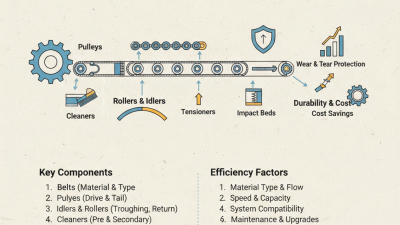
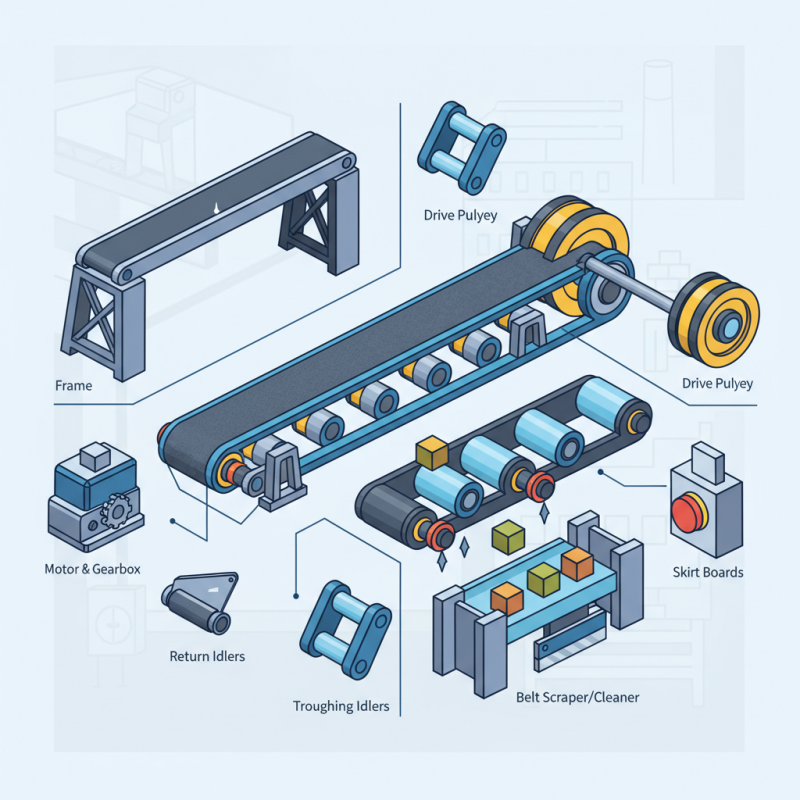
Belt conveyors play a crucial role in the material handling industry. Understanding their key components enhances efficiency and longevity. The essential parts include the belt, pulleys, idlers, and motors. Each component contributes to the conveyor's overall function. For example, the belt must withstand various loads and environmental conditions. According to industry reports, belts can last between 1 to 4 years, depending on usage.

Pulleys drive the belt and maintain tension. They are often subject to wear and can affect performance if not maintained. Idlers support the belt and reduce friction. Properly configured idlers can save energy. Regular maintenance is advised to avoid costly downtimes.

Tip: Always inspect your conveyor regularly. Small issues can lead to bigger problems.

Motors are vital for driving the entire system. Selecting the right motor ensures optimal performance. Research indicates that energy-efficient motors can reduce operational costs significantly.

Tip: Consider upgrading to a more efficient motor after a few years. This investment pays off in the long run.

Knowing these parts and their functions can lead to smarter decisions in conveyor system management. It's always good to reflect on potential improvements.

Top 10 Essential Belt Conveyor Parts You Need to Know

Part Description Function Material Maintenance Tips
Belt The surface that carries the load. Transports materials from one point to another. Rubber or PVC Regular inspection for wear and tear.
Pulley Wheel on which the belt is looped. Guides the belt and helps in tensioning. Steel or aluminum Lubricate bearings to avoid friction.
Drive Motor Motor that powers the conveyor system. Provides energy to move the belt. Electric Check voltage and connections regularly.
Idler Roller Rollers that support the belt. Minimizes friction and wear on the belt. Steel or plastic Inspect regularly for alignment.
Tension Device Adjusts the tension of the belt. Ensures optimal operation of the conveyor. Metal Monitor tension levels frequently.
Chute Guides materials onto the belt. Controls flow of materials. Steel or rubber Maintain alignment and cleanliness.
Support Frame Framework supporting the conveyor system. Provides structural integrity. Steel Check for structural damage.
Control System Electronic system to manage operations. Automates belt movement. Electrical components Test functionality regularly.
Emergency Stop Button to quickly halt operations. Ensures safety in emergencies. Plastic or metal Test functionality often.

Essential Parts of Belt Conveyors: Function and Importance

Top 10 Essential Belt Conveyor Parts You Need to Know?

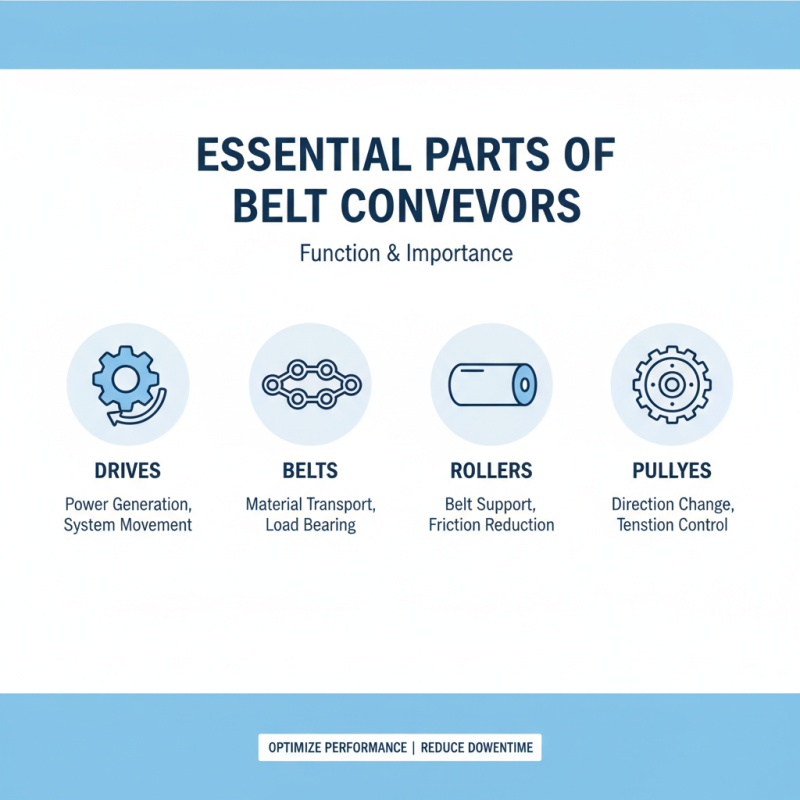
Belt conveyors are vital in various industries, facilitating the efficient movement of materials. Understanding the essential parts of these systems can optimize performance and reduce downtime. The key components include pulleys, rollers, belts, and drives. Each part plays a unique role in ensuring the conveyor operates smoothly.

Pulleys, for example, are crucial for belt tension and direction. They come in different sizes and materials. An industry report from Conveyor Dynamics states that pulleys can affect efficiency by up to 15%. The rollers support the belt and minimize friction. Choosing the right rollers is essential to prevent wear and extend conveyor life. Often, operators overlook this aspect, leading to increased maintenance costs.

The belt itself is equally important. Its material affects durability and load capacity. According to a study by the International Journal of Engineering, a poorly selected belt can decrease efficiency by over 20%. It’s common for industries to replace belts too late, resulting in operational delays. Drives regulate the belt’s speed and are fundamental for adapting to various load conditions. Ignoring the significance of these parts can lead to subpar performance and unnecessary breakdowns. Understanding their functions and importance helps ensure reliability and efficiency in material handling.

Maintenance Tips for Keeping Your Conveyor Parts in Optimal Condition

Belt conveyors are critical in many industries. Regular maintenance ensures their efficiency and longevity. Neglect can lead to costly breakdowns. Awareness of essential parts is crucial. However, knowing how to maintain them is equally important.

One key tip is to regularly check belt tension. Too loose or too tight can cause issues. Inspect pulleys for wear and tear. Keep them clean and ensure they rotate freely. Lubricating bearings can extend their life. Regular cleaning prevents material buildup, which can lead to problems.

Another important aspect is to monitor for unusual sounds. Grinding or squeaking noises often signal trouble. Addressing these early can prevent extensive damage. Keep an eye on conveyor alignment. Misalignment can reduce efficiency and create additional wear. Taking time for these routine checks can save time and money in the long run.

Top 10 Essential Belt Conveyor Parts

This chart illustrates the importance level of the top 10 essential belt conveyor parts, each representing a critical component that needs proper maintenance for optimal operational performance.

Innovations in Belt Conveyor Components: What's New in the Industry

The belt conveyor industry is witnessing transformative innovations. Key components, such as drive systems and idlers, have seen significant advancements. According to a recent industry report, smart sensors are now being integrated to monitor performance and predict maintenance needs. This shift reduces downtime and increases system efficiency.

Moreover, there is a growing trend towards using eco-friendly materials. Many manufacturers are exploring sustainable options for conveyor belts. This change not only addresses environmental concerns but also meets rising consumer expectations. Statistics show that up to 30% of production costs can be reduced when using these innovative materials.

Despite these advancements, challenges remain. Not all organizations are adopting new technologies at the same pace. A discrepancy exists between high-tech upgrades and traditional practices. Some companies hesitate due to the initial investment costs. Addressing these concerns is crucial for future growth in the sector. The ongoing evolution of belt conveyor parts promises efficiency, but it requires commitment from all players involved.