What Is an Electronic Puff and How Does It Work?
An Electronic Puff is a compact battery-powered device that heats a liquid and produces an inhalable aerosol. The name is informal; product designs and ingredients can differ. Inside, a battery powers a heating element. Liquid travels from a small reservoir to the heated element, then forms an aerosol that exits through the mouthpiece. No combustion is involved. The device may look simple, but its internal parts and aerosol are not always obvious to users.
The World Health Organization’s 2023 report on e-cigarettes estimated that more than 100 million people worldwide use them, including at least 86 million adults. That figure describes use, not proof of safety. The US National Academies’ 2018 review also found that e-cigarette aerosol can contain potentially harmful substances, while noting that exposure varies by device and use. Public-health expert Brian King, former director of the CDC’s Office on Smoking and Health, has emphasized: “There is no safe tobacco product, and e-cigarettes are no exception.” The practical lesson is straightforward. An aerosol is not just water vapor.
Small device. Hidden details. This introduction can explain the battery, liquid reservoir, heating coil, and airflow without treating every Electronic Puff as identical. One limitation deserves attention: product labels may not reveal every ingredient or the exact amount delivered in each puff. Readers should check reliable public-health sources, not rely on appearance alone. A device that feels cool, quiet, or familiar is not automatically risk-free.
Electronic Puff Defined: CDC Identifies a Battery, Heater, and Liquid Reservoir
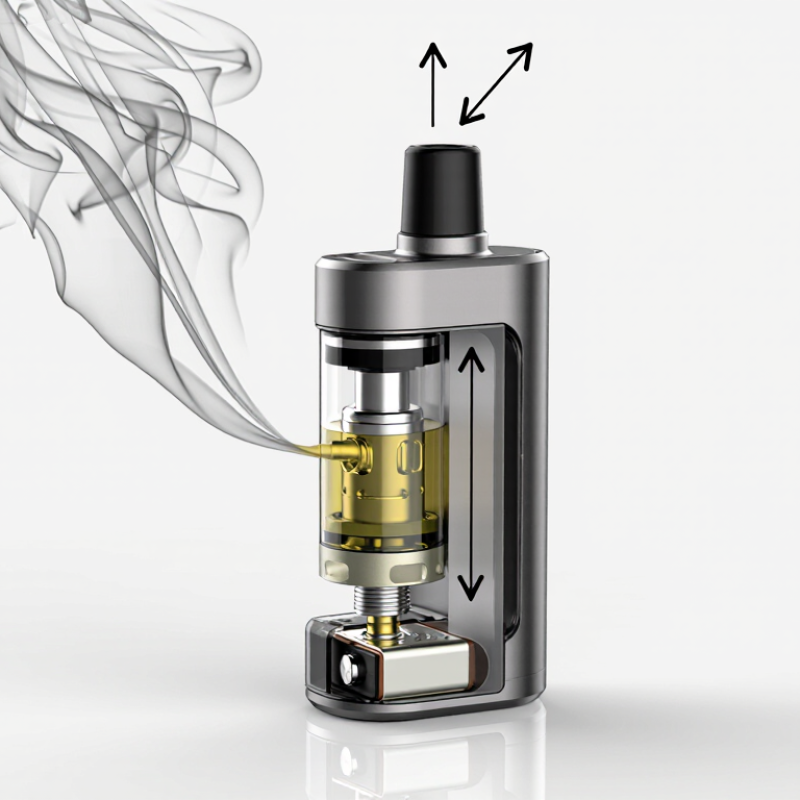
An “electronic puff” generally refers to a battery-powered device that heats liquid to create an aerosol for inhalation. The CDC describes a typical electronic cigarette as having three basic parts: a battery, a heating element, and a liquid reservoir. The battery supplies power. The reservoir holds the liquid, while a small heater warms it when the device is activated. No open flame is involved.
Inside the device, liquid moves from the reservoir toward the heater, often through a wick or similar material. As the heater warms, some liquid becomes an aerosol that travels through the mouthpiece. The exact design can vary, so this description is a useful overview, not a diagram of every device. Small parts may be difficult to see without opening the casing. Don’t do that casually. A damaged battery or exposed wiring can create hazards, and liquid should not be assumed harmless just because it looks clear. Even the word “vapor” can be misleading: the visible cloud is an aerosol, a mixture of tiny particles and droplets. The mechanism is simple on paper. Real devices are less uniform.
What Is an Electronic Puff and How Does It Work? — Electronic Puff Defined: CDC Identifies a Battery, Heater, and Liquid Reservoir
| Dimension | Description | Role in Operation |
| Battery | A rechargeable or single-use power source. | Supplies electrical energy to the heating element. Some devices activate when a user inhales; others use a button. |
| Heating element | An electrically powered component that heats the liquid or a material soaked with it. | Turns the liquid into an inhalable aerosol; it does not simply produce harmless water vapor. |
| Liquid reservoir | A cartridge, tank, or other container holding e-liquid. | Feeds liquid toward the heating element. The liquid commonly contains propylene glycol, vegetable glycerin, flavorings, and may contain nicotine. |
| Wick or liquid-feeding material | A porous material used in many designs to carry liquid to the heater. | Helps keep the heating area supplied with liquid during use; design varies between devices. |
| Airflow and mouthpiece | An air passage and the part through which the user draws. | Moves the generated aerosol through the device and toward the user. |
| Typical operating sequence | Activation → heating → aerosol formation → inhalation. | The battery powers the heater, the heater warms liquid drawn from the reservoir, and airflow carries the resulting aerosol through the mouthpiece. |
| Important health note | Aerosol composition varies by product and use conditions. | Aerosol can contain nicotine and other potentially harmful substances. Nicotine is addictive, and the aerosol is not considered harmless water vapor. |
Note: Electronic cigarette designs differ, but many use the basic battery, heating element, and liquid reservoir arrangement described above.
Activation: Battery-Powered Coils Heat Liquid on a Draw or Button Press
An electronic puff is a compact device that uses a battery to heat liquid into an inhaled aerosol. Its activation system usually responds to either airflow or a button. With draw activation, a small sensor detects changing air pressure when someone inhales. The circuit then sends power to a heating coil. It happens quickly.
The coil warms liquid held in a wick or similar absorbent material. As the liquid heats, it forms an aerosol that moves through the airflow channel and mouthpiece. A button-operated device works similarly, but the user presses a control to complete the circuit. Releasing the button generally stops the heating. Some devices also include a timed cutoff or other electronic safeguards, though features vary.
The process sounds simple, but the details are not identical across devices. Coil resistance, battery output, airflow, and liquid formulation can affect how consistently aerosol is produced. A weak battery may heat differently from a fully charged one. That variation is easy to overlook. This is a simplified description, not a guarantee of performance or safety. Keep devices away from excessive heat, and do not use one with a damaged battery or casing. Follow its instructions; sealed electronics are not designed for casual repair.
How an Electronic Puff Activates
An airflow sensor or button press activates the battery, which sends current through a resistive coil to heat liquid held in a wick. When the draw ends or the button is released, the device stops powering the coil. This chart shows an illustrative, normalized power profile—not measurements from a specific device; actual activation and power patterns vary.
Aerosol Formation: Heated E-Liquid Produces an Inhalable Aerosol
When an electronic puff is activated, a battery powers a small heating element. A wick carries e-liquid toward that element. The liquid warms and forms an aerosol: tiny liquid droplets suspended in air. It is not simply water vapor. The aerosol may contain substances from the liquid, including solvents, flavoring compounds, and, in some products, nicotine. Its exact contents depend on the formulation and heating conditions, so a clear-looking cloud does not reveal what it contains.
Heat matters. If the liquid is not heated evenly, aerosol production can vary from puff to puff. Higher temperatures may also change the mixture and create unwanted compounds. Airflow, device design, and the condition of the wick affect how much aerosol forms and how it feels in the throat.
People often describe the visible cloud as smoke, but combustion is not what produces it. Still, “aerosol” does not mean harmless. I find that distinction easy to overlook: appearance alone cannot tell us the exposure or its health effects.
Nicotine Limits: EU Rules Cap E-Liquid at 20 mg/mL
An electronic puff is produced when a device heats e-liquid into an aerosol that the user inhales. The liquid may contain nicotine, flavorings, and other ingredients. A small coil warms it when the device is activated. The process is quick, but the amount inhaled can vary.
Under EU rules, nicotine-containing e-liquids are capped at 20 mg/mL. This figure describes nicotine concentration in the liquid, not the precise amount delivered with every puff. That distinction matters. Device design, puff length, and personal use can all affect exposure. A bottle marked 20 mg/mL does not tell you exactly how much nicotine reaches your body.
Check the concentration on the product label, and read it carefully. The units can be easy to overlook. Nicotine is addictive, and vaping is not risk-free. A concentration limit sets a legal maximum; it does not make a product harmless. Even clear labeling cannot predict an individual response, which is worth keeping in mind.
Capacity Limits: EU Rules Set Tanks at 2 mL and Refill Bottles at 10 mL
An electronic puff device uses a battery to warm a small coil, which turns e-liquid into an inhalable aerosol. The liquid sits in a tank or cartridge and reaches the coil through a wick. EU rules generally limit nicotine-containing e-cigarette tanks and cartridges to 2 mL. That is roughly a few days’ use for some people, but habits and device settings vary. Small, but significant. A compact tank needs more frequent refilling than a larger one, so its stated capacity does not predict how long it will last.
Refill containers for nicotine-containing e-liquid are limited to 10 mL under the same EU rules. The tank limit concerns the device; the bottle limit concerns the liquid sold for refilling. They are different measures. A 10 mL bottle may refill a 2 mL tank several times, though some liquid can remain in the bottle or wick. Capacity isn’t a measure of safety. Read the container label, follow the device instructions, and keep liquid away from children. The figures sound tidy; real use is less tidy. Check current local guidance, since product requirements and rules can change.