How to Choose the Right Industrial Food Grinder for Your Business?
Choosing the right industrial food grinder for your business can be daunting. With numerous options available, making a decision requires careful thought. An industrial food grinder is essential for operations in food production and processing. It impacts efficiency, product quality, and overall business performance.
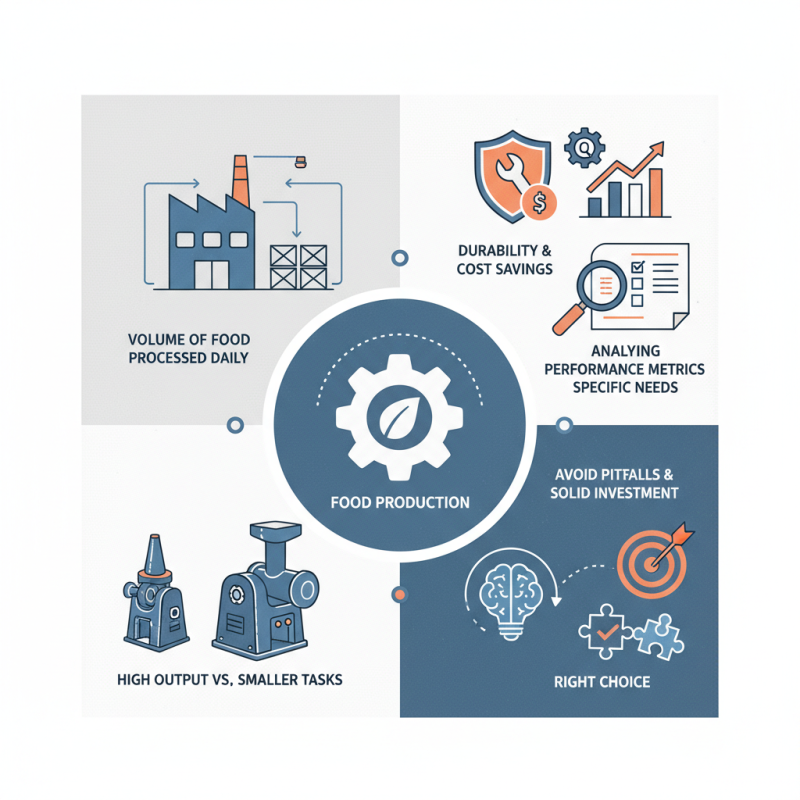
Consider the specific needs of your business. The volume of food processed daily will guide your choice. Some grinders are designed for high output, while others are suitable for smaller tasks. Yet, many businesses overlook the importance of understanding their actual requirements. This lack of clarity can lead to choosing the wrong machine.
Remember, quality matters. A durable industrial food grinder can save money over time. However, selecting based on brand reputation alone may not be sufficient. Some machines may not meet your expectations despite a strong brand image. Therefore, it is crucial to analyze individual performance metrics. Reflecting on your specific needs will help you avoid common pitfalls, ensuring a solid investment.
Understanding Different Types of Industrial Food Grinders Available
When selecting an industrial food grinder, understanding the different types available is crucial. The market primarily features four categories: batch grinders, continuous grinders, industrial meat grinders, and commercial food processors. Each type serves a unique purpose within the food processing industry. According to a report by Market Research Future, the global industrial food grinder market is expected to grow significantly, reaching approximately $1.2 billion by 2025. This growth illustrates the increasing demand for efficient food processing solutions.
Batch grinders are ideal for small-scale operations. They help in grinding materials in smaller quantities. Continuous grinders, however, offer larger capacities and continuous processing methods. They are suitable for high-volume production environments.
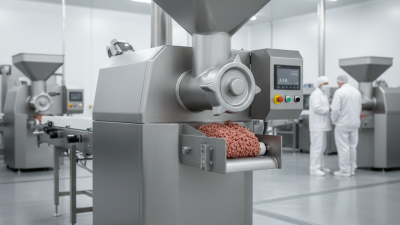
For meat processing plants, industrial meat grinders are essential. They provide uniform consistency and efficiency. Lastly, commercial food processors can handle various items, adding versatility. The choice often boils down to production scale and specific needs.
However, relying solely on one type may lead to inefficiencies. Businesses must evaluate their operational workflow regularly. For instance, a commercial kitchen might need a more versatile processor. Meanwhile, a large meat production facility must ensure they have the right grinding equipment. Reflecting on these aspects can help prevent costly downtimes and improve overall productivity.
Key Factors to Consider When Selecting an Industrial Food Grinder
Choosing the right industrial food grinder requires careful consideration. One key factor is the type of food you will process. Different grinders are designed for specific materials. For instance, meat, grains, and vegetables need different grinding methods. Evaluate your raw materials. This will help you find a machine that meets your production needs.
Another important aspect is the size and capacity of the grinder. Consider how much food you intend to process daily. A larger grinder can handle higher volumes, which might be necessary for busy operations. However, a smaller model may be more suitable for niche markets. Think about your workflow too. Efficiency is crucial in an industrial setting.
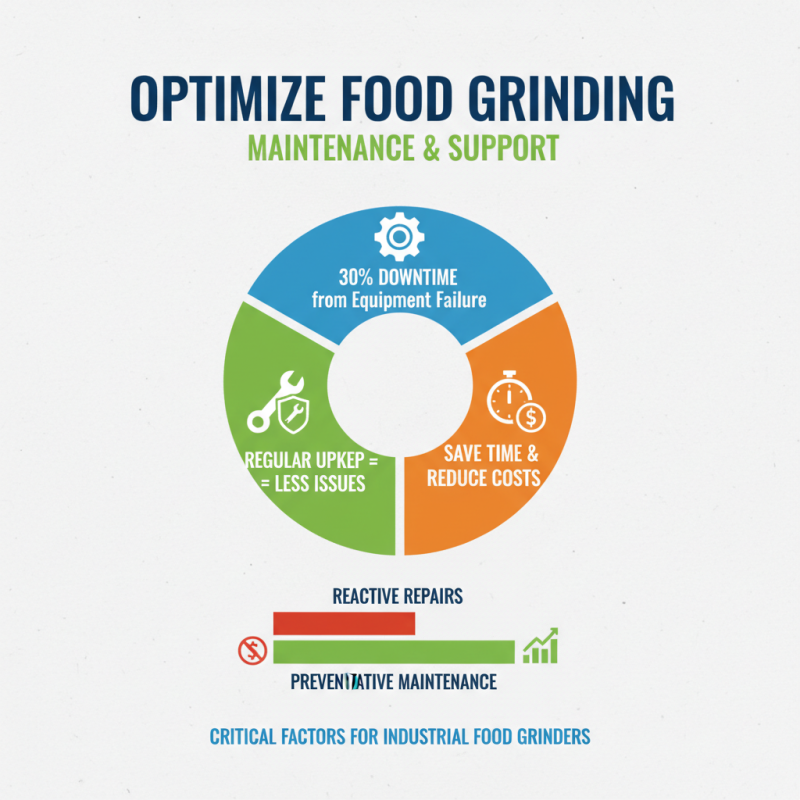
Don't overlook maintenance and durability. A reliable grinder should withstand frequent use. Check if the parts are easy to replace and whether they require special tools. Remember that a more expensive grinder might not always be the best choice. It’s essential to balance cost with your specific requirements. Reflect on your long-term goals, and make an informed decision based on your business's unique needs.
How to Choose the Right Industrial Food Grinder for Your Business? - Key Factors to Consider When Selecting an Industrial Food Grinder
| Factor |
Description |
Importance |
Recommended Specifications |
| Size and Capacity |
The volume of food product it can process. |
High |
500 lbs/hour or higher |
| Material |
Durability and resistance to corrosion. |
High |
Stainless Steel |
| Power |
Wattage and efficiency level of the motor. |
Medium |
3 HP or more |
| Ease of Cleaning |
How easily the grinder can be disassembled and cleaned. |
High |
Tool-less disassembly |
| Safety Features |
Built-in mechanisms to prevent accidents. |
High |
Emergency stop button, safety guards |
| Customization Options |
Ability to alter grinder settings for different products. |
Medium |
Variable speed and grinding plates |
Assessing the Volume and Type of Food to Process Effectively
When selecting an industrial food grinder, it's vital to consider the volume and type of food to process. Different businesses have unique needs, impacting their equipment choices. For example, a bakery may require a grinder for nuts or dried fruits, while a meat processing plant needs one for various meats. Assessing your specific requirements is essential for efficient operations.
Here are some tips to guide your decision. Begin by determining the volume of food you'll process daily. Is it low or high? This factor influences the grinder's capacity. A higher volume demands a more robust grinder. Additionally, consider the type of food you’ll process. Certain grinders handle specific textures better. For instance, chunky vegetables need different settings than soft meats.
It's also crucial to reflect on the grinder's features. Are they user-friendly? Some machines look advanced but are complicated to operate. This can slow down production. Think about maintenance, too. Some grinders require constant oversight, which can be a burden. Always weigh the pros and cons of different models. Make sure the choice aligns with your business's goals.
Budgeting for Your Industrial Food Grinder Purchase and Operational Costs
When budgeting for an industrial food grinder, it’s crucial to consider both the purchase price and ongoing operational costs. According to industry reports, the average cost of a medium-sized grinder ranges from $2,000 to $10,000. This variance hinges on the grinder’s capacity and features. Recognizing how these costs align within your overall budget is essential for sustainable operations.
Operational costs can vary significantly based on usage. Electricity is often a major expenditure, with some models consuming up to 5 kWh during peak operations. Regular maintenance costs, such as blade replacements, can also add up. If not managed, this can turn into a financial burden. Many operators overlook these recurring expenses, which can lead to unplanned financial strains.
Moreover, safety regulations should not be ignored. Compliance can incur additional costs, like safety training and equipment modifications. These expenses can average around 10% of your total budget. An underestimation may leave businesses vulnerable to fines or operational interruptions. A thorough evaluation of both initial and ongoing costs is necessary for informed decision-making.
Cost Analysis of Industrial Food Grinders