How to Choose the Right Inclined Belt Conveyor for Your Needs?
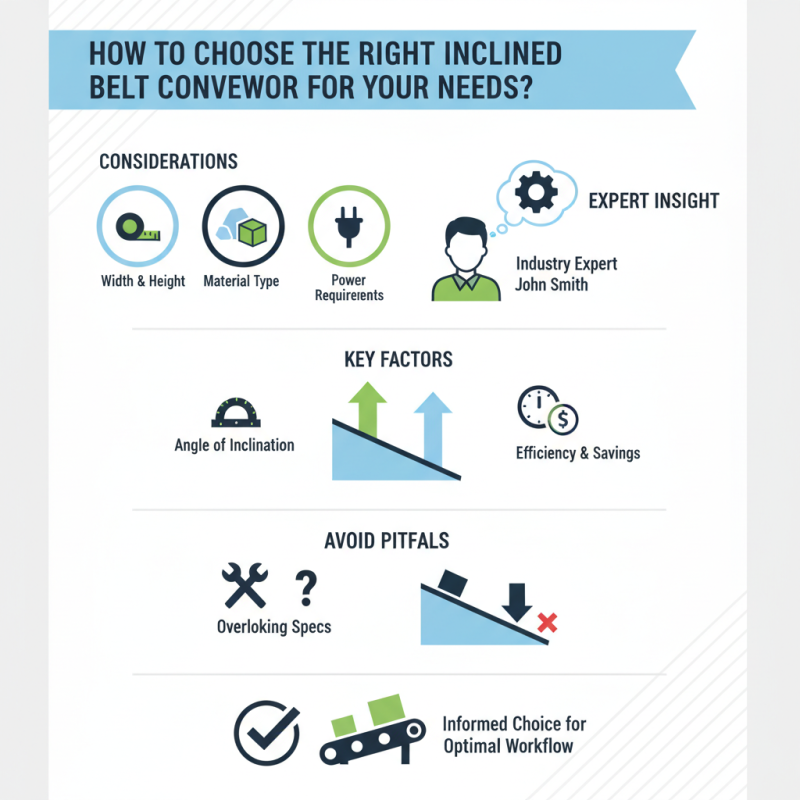
When selecting the right inclined belt conveyor, it's vital to consider various factors. According to industry expert John Smith, "The right conveyor can significantly improve your workflow." This highlights the importance of making an informed choice.
Inclined belt conveyors serve multiple purposes in different industries. They transport materials efficiently, saving time and reducing manual labor. However, choosing one is not always straightforward. You must assess your specific needs carefully. The width, height, and material of the conveyor all play critical roles.
It's essential to avoid common pitfalls. Many overlook the power requirements or the angle of inclination. This can lead to operational inefficiencies. Reflecting on your choices can ensure you pick a conveyor that truly meets your operational needs.
Factors to Consider When Selecting an Inclined Belt Conveyor
Choosing the right inclined belt conveyor requires careful thought. Start by considering the material you will transport. Is it heavy, light, or fragile? Each type requires a different conveyor design. For instance, heavy materials need a stronger frame and belt. Fragile items might require gentler handling features.
Next, think about the angle of incline. A steeper angle can save space. However, it may cause materials to slide or fall. You need to strike a balance between efficiency and safety. Additionally, consider the conveyor's length. A longer conveyor may offer more flexibility, but it can be more challenging to install.
Lastly, keep maintenance in mind. Some conveyor systems are easier to clean than others. Also, think about accessibility for repairs. A well-chosen conveyor can last years, but neglecting maintenance can lead to issues. Reflect on how often you can commit to upkeep when making your choice.
Types of Inclined Belt Conveyors and Their Applications
Inclined belt conveyors come in various types, each serving specific purposes. The most common type is the modular belt conveyor. This design uses interlocking segments, making it easy to replace sections. Ideal for food processing or packaging, it offers versatility in handling different products. However, efficiency can suffer with heavy loads or uneven surfaces.
Another option is the belt on roller conveyor. This type features rollers under the belt, allowing smooth transportation of materials. It’s great for heavy goods but might require more maintenance over time. Many users overlook regular checks, which can lead to unexpected downtimes.
Flexible conveyors are also popular, especially in warehouses. They can adapt to different layouts and needs. While convenient, their stability can be an issue, especially when loaded unevenly. Consider these nuances to find the right solution for your material handling needs. Reflecting on your requirements and potential challenges can lead you to the best choice.
Evaluating Load Capacity and Material Compatibility
Choosing the right inclined belt conveyor requires careful consideration of load capacity and material compatibility. Many businesses face challenges when selecting these systems. According to industry reports, over 30% of companies experience inefficiencies due to improper load capabilities. Understanding the weight and dimensions of your materials is crucial. This knowledge helps ensure the conveyor can support the items being transported.
Material compatibility is another key factor. Different materials interact differently with conveying surfaces. For example, abrasive materials may wear down a conveyor belt faster. Reports indicate that selecting the wrong material can reduce system lifespan by up to 25%. Regular maintenance becomes necessary if the chosen materials cause excessive wear. Many companies fail to conduct proper compatibility tests before purchasing, leading to costly setbacks.
Evaluating both load capacity and material compatibility can be complex. It’s essential to collect accurate data on your materials. Frequent mistakes include underestimating the weight or neglecting how materials can affect the belt. This can lead to overflow situations and unexpected downtimes. Thoughtful evaluation is vital to streamline operations and avoid future challenges.
Assessing Space Constraints and Installation Requirements
When choosing an inclined belt conveyor, assessing space constraints is crucial. Many facilities have limited room for equipment installation. A study from the Conveyor Equipment Manufacturers Association highlights that nearly 30% of companies face spatial challenges. Measuring the available space accurately can prevent costly mistakes. Consider the conveyor's height, width, and length. Irregular spaces may require custom solutions.
Installation requirements also play a significant role. Ensure that the conveyor’s design aligns with the building structure. A report from the Material Handling Industry indicates that improper installations can lead to a 15% increase in maintenance costs. Pay attention to factors like ceiling height and floor strength. Angle and incline can affect not only space usage but also efficiency. An incline that is too steep may lead to product spills or jams.
It’s vital to reflect on the specific needs of your operations. Perhaps previous installations did not meet expectations. Assessing past challenges could inform better choices. Engaging with engineers or installation specialists can provide insights. They can offer suggestions on conveyor configurations, which might improve workflow and space utilization.
Maintenance and Durability Considerations for Inclined Belt Conveyors
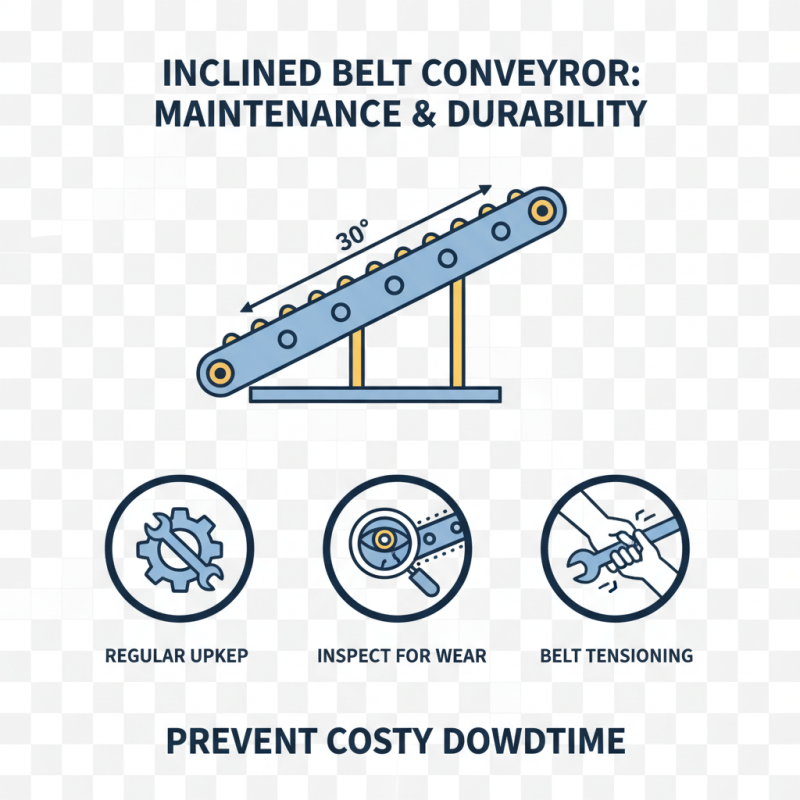
When considering inclined belt conveyors, maintenance and durability are crucial factors. Regular upkeep ensures the system operates smoothly. A simple routine can prevent costly downtimes. Inspecting the belt for wear and tear is essential. Look for fraying edges or cracks. Tightening the belt at intervals can improve performance.
Durability also hinges on material choice. Robust materials withstand heavy loads better. However, these materials can come with higher upfront costs. It's a balance often overlooked. Additionally, the environment impacts longevity—humid or corrosive settings can accelerate wear. Regular cleaning is vital to preserve the conveyor's lifespan. Debris often builds up, affecting performance.
It's common to underestimate maintenance time. Busy operations can lead to neglect, resulting in breakdowns. A proactive approach could save money in the long run. Painting the picture of periodic checks and timely repairs ensures reliability. The cost of inaction often outweighs regular maintenance. Always plan for the unexpected.