How to Choose the Right Food Manufacturing Equipment for Your Business?
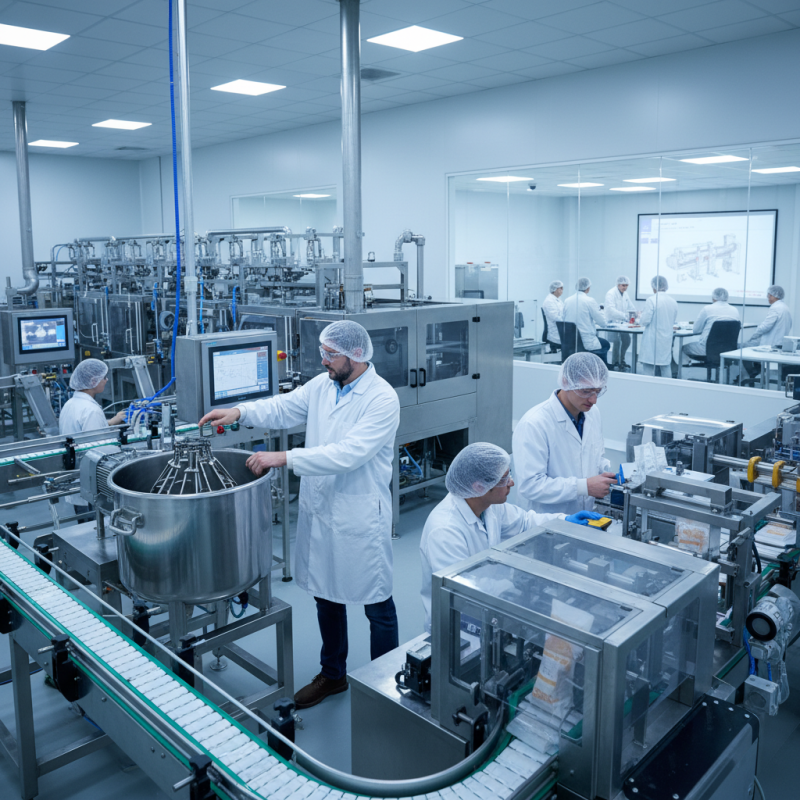
Choosing the right food manufacturing equipment is crucial for any business in the food industry. Jack Thompson, an expert in food processing technology, once stated, "Quality equipment makes all the difference in production efficiency." This remark underscores the importance of selecting the right tools for success.
When evaluating options, consider the specific needs of your operation. Equipment should match your production goals and food safety standards. High-quality food manufacturing equipment can enhance your productivity and reduce waste. However, investing in new machinery can be daunting, especially with so many choices available.
Many businesses overlook maintenance and training. These elements are vital for maximizing equipment potential. Failing to properly train staff or neglecting upkeep can lead to costly mistakes. Reflecting on these factors can help streamline your decision-making process and ensure your investment pays off.
Understanding Your Food Production Needs
When selecting food manufacturing equipment, understanding your specific production needs is crucial. Start by evaluating your production volume. Are you a small operation or a large-scale manufacturer? This will directly influence the type of equipment you require. For instance, high-volume production demands machinery that ensures speed and efficiency. In contrast, smaller manufacturers may prioritize versatility and space efficiency.
Consider the types of food you will be producing. Different products require different processing methods. For example, baking equipment significantly differs from machinery used for bottling. Spend time assessing the consistency and quality you desire in your end products. It's essential to recognize the properties of the food you handle. Different textures require tailored handling equipment.
Budget constraints cannot be overlooked. While investing in quality machinery is important, distinguishing between needs and wants can be challenging. It may be tempting to choose advanced equipment based on glossy features. But sometimes, simpler machines can serve your purpose just as well. Seek equipment that meets expected results without excess functionalities that increase costs unnecessarily. Balancing quality and affordability often requires reflection on your business goals and production capabilities.
How to Choose the Right Food Manufacturing Equipment for Your Business? - Understanding Your Food Production Needs
| Equipment Type |
Key Features |
Typical Use |
Capacity (Units/Hour) |
Price Range (USD) |
| Mixers |
Variable speed, stainless steel construction |
Dough preparation, ingredient blending |
500 - 1500 |
$3,000 - $20,000 |
| Fillers |
Automatic operation, different bottle sizes |
Liquid and semi-solid food packaging |
1000 - 4000 |
$5,000 - $30,000 |
| Ovens |
Temperature control, convection options |
Baking and roasting food items |
30 - 120 |
$10,000 - $50,000 |
| Packaging Machines |
Sealing, labeling, custom sizes |
Final packaging of products |
500 - 3000 |
$7,000 - $40,000 |
| Extruders |
Multi-stage screws, adjustable temperature |
Snacks, pasta production |
200 - 1000 |
$15,000 - $100,000 |
Factors to Consider When Choosing Equipment
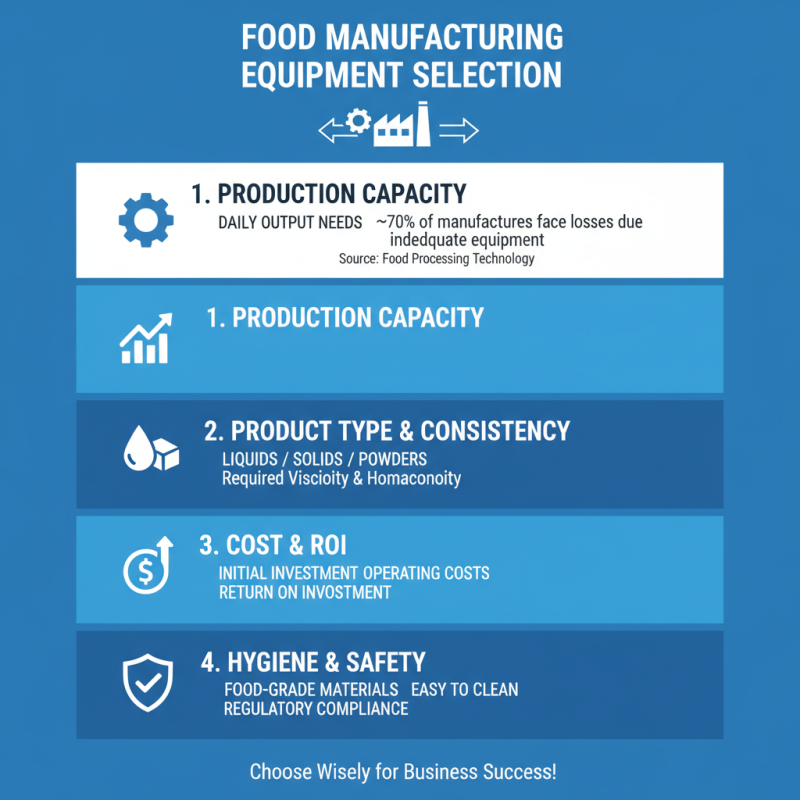
Choosing the right food manufacturing equipment is crucial for business success. Several factors influence this decision. One fundamental aspect is production capacity. According to a report by **Food Processing Technology**, nearly 70% of manufacturers struggled with inadequate equipment leading to production losses. Understanding your daily output needs helps in selecting suitable machinery.
Another vital factor is automation level. Recent data indicates that automation can increase efficiency by up to 30%. However, integrating high-tech systems without proper training can lead to mistakes during operation. Many companies invest in advanced equipment but overlook employee skill development. This gap can create bottlenecks, causing frustration and delays.
Cost is always a concern. Investing in high-quality equipment is essential but should align with your budget. A study from the **Food Manufacturing Association** revealed that 40% of businesses regret overspending, which further strains resources. It's wise to evaluate both initial costs and long-term maintenance. Poor decisions here can lead to unexpected expenses. Balancing quality, cost, and capacity offers a clearer path to effective manufacturing operations.
Types of Food Manufacturing Equipment Available
When selecting food manufacturing equipment, understanding the types available is crucial. Equipment varies widely, each designed for specific tasks. For instance, mixers are essential for combining ingredients. They come in various sizes, from small countertop units to large industrial machines. Each type has unique features suitable for different production scales.
Another key category is packaging equipment. This could include bottlers, fillers, and labelers. Efficient packaging is vital for preserving food quality. It can also enhance product appeal. Some machines are automatic, while others require manual operation. Think about your production volume when choosing the right one.
Processing equipment is also noteworthy. This includes ovens, fryers, and blanchers. Each type plays a role in cooking or preparing food. Their size and efficiency often impact total output. Consider the energy consumption, as high costs can affect profitability. Reflecting on these factors will guide your decision-making. Balancing performance with operational needs is essential for success.
Evaluating Quality and Compliance Standards
When selecting food manufacturing equipment, quality and compliance standards are crucial. These standards ensure that your products are safe and meet industry regulations. Equipment should comply with food safety regulations set by local and international governing bodies. Inspect the materials used in the equipment. Stainless steel is often preferred for its durability and ease of cleaning.
Tips: Always request documentation on quality standards. Ask for certifications related to hygiene and safety. This information can help you gauge the reliability of the equipment.
Consider the equipment's ease of maintenance. Regular maintenance is vital for compliance and operational efficiency. If maintenance is complicated, it can lead to safety risks. Moreover, assess whether the equipment has built-in features for monitoring quality. Such features can detect issues early, helping you avoid costly recalls.
Tips: Look for machines with self-diagnostic capabilities. This can save time and enhance safety. Remember, intuitive designs minimize errors in operation. Equipment that is hard to use can lead to mistakes, which may affect compliance.
Budgeting for Your Food Manufacturing Equipment
Budgeting for food manufacturing equipment requires careful planning. Start by assessing your production needs. Understand the capacity and efficiency required for your operations. Consider both immediate needs and future growth.
It’s tempting to opt for the cheapest option. But this might backfire. Low-cost equipment can lead to high maintenance costs later.
Determine your budget early in the process. This will help narrow down your options. Include not just the purchase price but also installation and operational costs. Sometimes, financing options are available. Explore leasing versus buying. Each option has its pros and cons. Leasing keeps initial costs low but may lead to higher long-term expenses.
Evaluate your timeline for purchases. Rushing the process can result in poor decisions. Make a list of must-have features and nice-to-haves. This will guide your choices. Don’t forget about staff training costs. It’s crucial to ensure your team can effectively use the new equipment. Without proper training, even the best equipment won't perform efficiently.