How to Choose the Best Stainless Conveyor Belt for Your Needs?
Choosing the right stainless conveyor belt can be challenging. The market offers various options, each tailored to specific industries. Your needs may vary based on the materials you handle and the conditions of your production line.
A stainless conveyor belt is essential for many applications. It provides durability, corrosion resistance, and hygiene. However, not every belt suits every situation. For instance, some belts work better in high-temperature environments, while others excel in wet conditions. This makes careful consideration crucial.
Reflecting on your specific requirements is vital. Think about the type of materials you transport. Consider the environment in which the belt will operate. Sometimes, what seems ideal at first may not truly fit your needs. Take the time to analyze these details to ensure the best choice.
Understanding the Different Types of Stainless Conveyor Belts
Stainless conveyor belts come in various types, each designed for specific applications. Understanding these differences is crucial when making a selection. According to industry reports, the food processing sector heavily relies on stainless steel belts due to their hygiene and rust resistance. For instance, modular belts are popular because they allow for easy cleaning and maintenance.
Another common type is flat wire belts. These belts facilitate airflow, making them suitable for cooling and drying processes. The report from the Conveyor Equipment Manufacturers Association states that flat wire belts account for about 25% of the market. However, they may not be ideal for all products, and this limits their application.
Further, there's a need for careful consideration of belt thickness and width. A thicker belt is stronger but heavier, potentially affecting motor load. Conversely, a lighter belt may wear out faster, especially in demanding environments. The balance between durability and efficiency is not always easy to achieve. It's clear that selecting the right stainless conveyor belt requires detailed understanding and reflection on specific operational needs.
How to Choose the Best Stainless Conveyor Belt for Your Needs? - Understanding the Different Types of Stainless Conveyor Belts
| Belt Type |
Material |
Application |
Advantages |
Limitations |
| Flat Wire Belt |
Stainless Steel |
Food Processing, Baking |
Durable, Easy to Clean |
Limited Flexibility |
| Modular Belt |
Plastic-coated or Stainless Steel |
Packaging, Material Handling |
Customizable, Flexible Designs |
Higher Initial Cost |
| Chain Link Belt |
Stainless Steel |
Heavy-duty Applications |
Strong Load Capacity |
Can be Noisy |
| Wire Mesh Belt |
Stainless Steel |
Cooling, Drying |
Excellent Airflow |
Limited Load Capacity |
| Perforated Belt |
Stainless Steel |
Transporting Liquid Products |
Effective Drainage |
Can Accumulate Debris |
Key Factors to Consider When Choosing a Conveyor Belt
When selecting a stainless conveyor belt, several key factors must be taken into account. Material composition is vital. Stainless steel offers durability and corrosion resistance. According to industry reports, 70% of conveyor belt failures occur due to inadequate materials. Understanding the required grade is essential for longevity and optimal performance.
Belt type matters significantly. Flat belts work well for smooth transportation, while modular belts are versatile and easy to clean. Industry data suggests that modular belts can reduce maintenance costs by up to 20%. However, this versatility can allow for over-engineering, leading to unnecessary expenses and complexities.
Furthermore, dimensions and load capacity are critical factors. It's crucial to evaluate the belt’s width and strength. An overestimated load capacity can lead to performance issues. A study highlighted that 30% of conveyor mishaps relate to improper sizing. Careful measurement and needs assessment will prevent costly mistakes and operational downtime. Always reflect on your specific needs before making a decision.
Evaluating the Load Capacity and Strength Requirements
When selecting a stainless conveyor belt, load capacity and strength are pivotal. Many industries depend on precise measurements for efficiency. According to a recent industry report, the tensile strength of stainless steel can vary significantly. Some materials can withstand loads from 150 to over 2000 pounds per linear foot. It’s crucial to assess your specific needs, especially if you’re handling heavy or abrasive materials.
Evaluating the load capacity must involve considering the type of goods transported. For example, bulk materials may require belts with higher strength ratings. A mistake in this assessment can lead to operational failures. Many manufacturers also mention that environmental factors play a role. High temperatures or corrosive substances may weaken the belt over time. Regular maintenance and inspections are often overlooked but can significantly prolong the life of your equipment.
Striking a balance between strength and flexibility is essential. If the belt is too rigid, it might crack under stress. On the other hand, excessive flexibility may lead to sagging and ineffective transport. The choice of belt should reflect both immediate and future needs. It’s not just about current load criteria; trends in production demand also need consideration. This foresight can save costs and prevent disruptions later.
Assessing Environmental Conditions for Optimal Performance
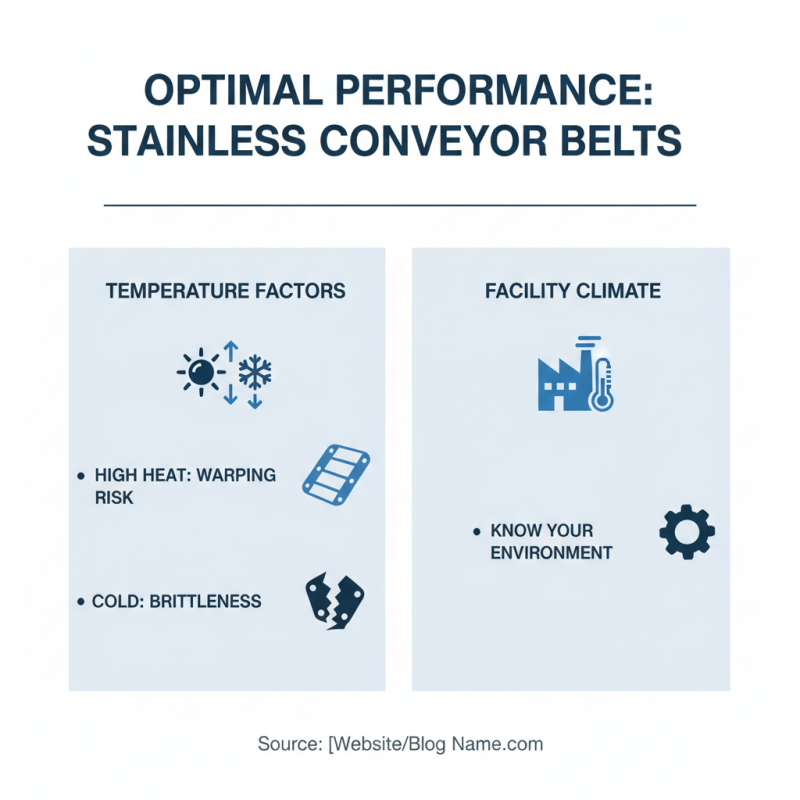
When assessing environmental conditions for optimal performance of stainless conveyor belts, several factors come into play. Temperature can greatly affect material properties. High heat might warp some belt types, while cold conditions can make them brittle. Understanding your facility's climate is crucial.
Humidity levels also matter. Excess moisture can cause corrosion on certain materials, even stainless steel. Contaminants like dust and chemicals may adhere to belts, affecting their function. Consider the cleanliness of the environment.
**Tips:** Ensure proper ventilation in areas with high humidity. Regularly inspect the belts for signs of wear or corrosion. A dirty conveyor can lead to inefficiencies. Over time, this can reflect poorly on productivity. Remember, not every belt suits every condition. Choose wisely!
Cost vs. Quality: Finding the Right Balance in Your Choice
Choosing the right stainless conveyor belt involves balancing cost and quality. Many companies rush to save money, opting for cheaper options. However, this often leads to higher long-term costs. A lower-priced belt may wear out quickly or require frequent replacements. This disrupts production and increases operational costs.
Quality materials are essential for durability. Stainless steel offers corrosion resistance and strength, but not all variants are created equal. Investing in a sturdy belt can prevent future headaches. It’s important to assess the specific needs of your operation. High-volume or harsh environments demand better materials.
Ultimately, understanding the trade-offs is crucial. A cheaper belt may initially seem appealing, but hidden costs can arise. Frequent maintenance or downtime can negate any savings. Reflecting on both cost and quality helps you make an informed choice.