How to Choose the Best Dog Food Manufacturing Equipment?
Choosing the right dog food manufacturing equipment is crucial for success in the pet food industry. High-quality equipment can significantly impact product consistency and safety. Many manufacturers overlook this step, risking their reputation and profits.
Various factors influence your choice of dog food manufacturing equipment. Production capacity, efficiency, and technology are essential aspects to consider. You must evaluate your specific needs and available budget. Investing in reliable machinery can lead to long-term benefits, but it requires careful thought.
It's important to seek expert advice and conduct thorough research. Gathering insights from trusted sources can guide your decision-making process. Make sure to visit live demonstrations and read user reviews. This can help you identify potential challenges and areas for improvement.
Understanding Dog Food Manufacturing Needs
When considering dog food manufacturing, it’s crucial to understand specific production needs. According to industry reports, the global pet food market is projected to reach over $100 billion by 2025. This highlights the importance of efficient manufacturing processes. The choice of equipment must accommodate a variety of product types, including dry kibble, wet food, and treats. Each format requires different machinery and processes, from extrusion to packaging.
Moreover, quality assurance is integral to dog food manufacturing. A study from the Association of American Feed Control Officials emphasizes that proper nutrient profiles are essential for pet health. Equipment must be capable of maintaining strict controls during production. Effective mixing, cooking, and cooling processes can significantly impact the final product’s nutritional integrity. This underscores the necessity for reliable machinery that can handle variations in formula and ingredient sources.
However, there’s a gap in the market when it comes to adaptability. Some manufacturers find existing equipment limits innovation. This can lead to missed opportunities in responding to consumer trends towards organic and specialty diets. Constantly evolving regulations also require a flexible manufacturing setup. Those refining their operations often need to rethink their equipment choices to better meet changing demands.
Types of Dog Food Manufacturing Equipment Available
When selecting dog food manufacturing equipment, it's vital to understand the types available. Commonly used equipment includes mixers, extruders, and dryers. Each plays a crucial role in ensuring high-quality dog food production. Predictive analytics suggest that between 2020 and 2025, the demand for advanced manufacturing technology in pet food will increase by 20%.
Mixers blend dry ingredients evenly, crucial for consistency. They must handle various ingredient sizes and moisture levels. A study by industry experts revealed that inconsistent mixes lead to nutrient loss and customer dissatisfaction. This raises the need for reliable mixers that prevent these issues.
Extruding machines shape the food, creating kibbles or pellets. Their temperature control is vital for preserving nutrients. Manufacturers face the challenge of balancing throughput and quality. A report from the Pet Food Industry Journal indicated that 80% of producers reported difficulties in maintaining this balance. Lastly, drying equipment ensures moisture removal, which is critical for shelf life. Overlooking this step can lead to spoilage and economic loss. Choosing the right equipment requires careful consideration of these factors to guarantee the best product for pets.
How to Choose the Best Dog Food Manufacturing Equipment? - Types of Dog Food Manufacturing Equipment Available
| Equipment Type |
Application |
Production Capacity (kg/h) |
Power Requirement (kW) |
Notes |
| Mixer |
Mixing ingredients for uniformity |
500 |
15 |
Essential for consistent recipes |
| Extruder |
Cooking and forming kibble |
1000 |
50 |
Critical for texture and shape |
| Dryer |
Removing moisture from kibble |
800 |
30 |
Prevents spoilage |
| Coater |
Applying coatings or flavors |
400 |
20 |
Enhances taste and appeal |
| Packaging Machine |
Sealing finished products |
500 |
10 |
Ensures product freshness |
Key Features to Consider When Choosing Equipment
When selecting dog food manufacturing equipment, there are key features to keep in mind. Efficiency is crucial. The right machinery should streamline production. Look for equipment that ensures consistent mixing and cooking times. This promotes uniform quality in the final product.
Balancing cost with quality is essential as well. While initial pricing might seem attractive, consider maintenance costs. Equipment durability influences long-term expenses. Reliable machinery minimizes downtime and production delays.
Check the equipment’s adaptability to different recipes. As dog food trends change, flexibility in machinery can safeguard your production. Examine past user reviews and case studies. This can illuminate real-world challenges and benefits. Not all equipment will meet every need perfectly. It's wise to think critically about your choices.
Key Features to Consider When Choosing Dog Food Manufacturing Equipment
Evaluating Equipment Suppliers and Manufacturers
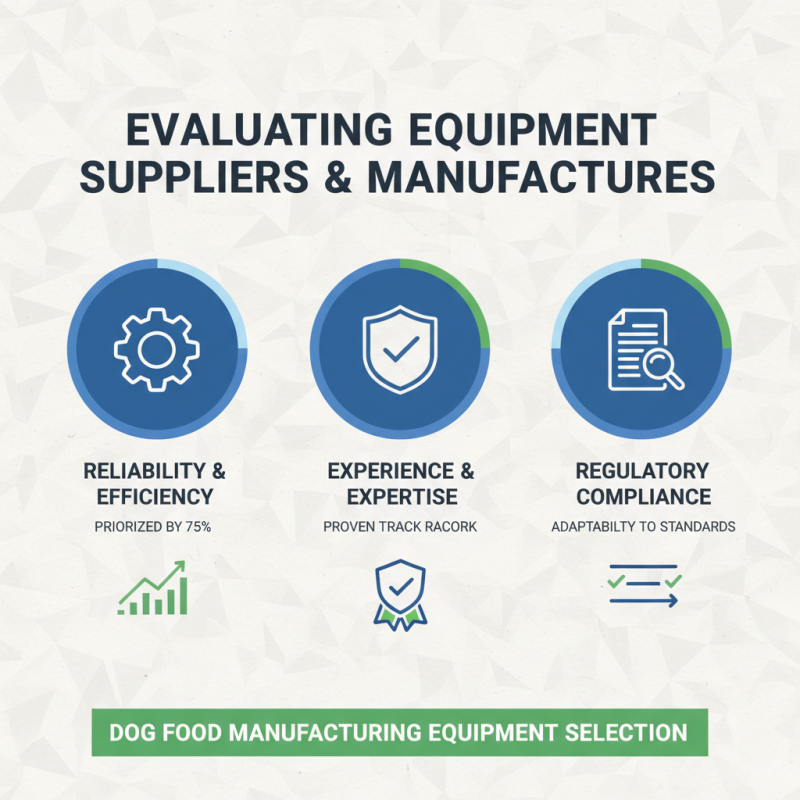
Choosing the right dog food manufacturing equipment involves careful evaluation of suppliers and manufacturers. Industry reports indicate that nearly 75% of pet food producers prioritize equipment reliability and efficiency. This underscores the need for manufacturers to showcase their experience and technical expertise. A supplier's history in the industry can reveal its capability to meet evolving regulatory standards.
When assessing suppliers, consider customer support and after-sales service. A 2022 industry survey showed that 60% of manufacturers value ongoing maintenance agreements. This ensures equipment longevity and consistent production quality. Transparency levels in pricing and terms are also crucial. Suppliers who provide clear breakdowns of costs foster trust and reliability.
Additionally, it's vital to reflect on the supplier's technological innovations. Many top manufacturers invest in automation and smart machinery. Reports suggest that automated systems can enhance production speed by up to 30%. However, buyers must question the adaptability of such equipment to their specific needs. This questioning ensures alignment with future growth and production changes. Balancing cost, efficiency, and adaptability is essential for making an informed decision.
Maintenance and Support for Dog Food Manufacturing Equipment
Maintaining dog food manufacturing equipment is vital for consistent product quality. Regular inspection and servicing can prevent costly breakdowns. According to industry data, equipment failure can halt production for up to 20% of the time. This impacts supply chains and ultimately affects profitability. Ensuring all moving parts are well-lubricated can extend equipment life and improve operational efficiency.
Support is equally important. Having access to experienced technicians can make a significant difference. Studies show that businesses with dedicated maintenance teams report a 30% increase in production efficiency. Knowledgeable staff can quickly diagnose issues, minimizing downtime. Additionally, training employees on routine checks can empower them to identify problems early.
Reflecting on these practices is essential. Many manufacturers overlook the benefits of preventive maintenance. Investing in training and support systems may seem additional, but they pay off. Every effort made to maintain equipment can translate into better product quality and customer satisfaction, which is vital in a competitive market.