How to Choose the Best Industrial Food Grinder Machine for Your Business
When selecting the right industrial food grinder machine for your business, understanding the specific requirements and operational needs is crucial. According to Richard Hughes, an expert in food processing technology, "The right industrial food grinder machine can significantly enhance productivity and ensure consistent quality in food preparation." This insight highlights the importance of making a well-informed decision, as the choice of equipment can directly impact the efficiency of production lines and the quality of the final product.
The diversity of industrial food grinder machines available today presents unique opportunities and challenges for businesses in the food industry. With options ranging from high-capacity grinders to specialized models designed for particular types of food, it’s essential to evaluate the technical specifications, material compatibility, and the capacity required for your operations. Understanding these factors will help you choose an industrial food grinder machine that not only meets your current needs but also supports your long-term business growth.
Ultimately, investing in the right industrial food grinder machine is a critical step in optimizing food processing operations. It ensures not only operational efficiency but also a better end product quality, which in turn can enhance customer satisfaction and loyalty.
Key Factors to Consider When Selecting an Industrial Food Grinder
When selecting an industrial food grinder machine, one of the key factors to consider is the capacity of the machine. Different businesses have varying production needs, so it's crucial to choose a grinder that can handle the volume of food processing required. This capacity is often measured in kilograms per hour, and you should evaluate your current output as well as anticipated growth. A grinder that cannot meet your demands will cause delays and inefficiencies, ultimately affecting your bottom line.
Another important consideration is the type of material and design of the grinder. The materials used in construction should be durable and compliant with food safety regulations. Stainless steel is a popular choice because it resists corrosion and is easy to clean, ensuring that the grinder maintains hygiene standards. Additionally, the design should allow for easy disassembly for maintenance and cleaning, as this will save time in your operational processes and help maintain product quality over time. Evaluate these factors thoroughly to ensure that you select a machine that meets your operational needs effectively.
Understanding the Different Types of Industrial Food Grinders Available
When selecting the best industrial food grinder machine for your business, understanding the different types of industrial food grinders available is crucial. There are primarily three categories of food grinders: batch grinders, continuous grinders, and industrial meat grinders. Batch grinders are typically suitable for small to medium-sized operations, allowing businesses to process specific quantities in one go. They are particularly effective for ingredients that require precise grinding without overheating, making them ideal for products like spices and herbs.
On the other hand, continuous grinders are designed for high-volume production, allowing for a steady flow of materials through the grinding process. This type is well-suited for large-scale operations and can handle a variety of ingredients, from grains to fruits and vegetables. According to the Global Industrial Food Grinding Machines Market report, the continuous grinder segment is projected to grow at a compound annual growth rate (CAGR) of 5.1% over the next five years, reflecting the increasing demand for efficient processing solutions in the food industry.
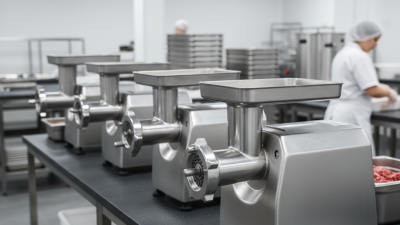
Lastly, industrial meat grinders are specifically engineered to handle meat and protein-rich products, featuring robust designs that prevent overheating and maintain hygiene standards. The rising trend towards processed meat products has led to a significant uptick in the demand for these machines, with industry forecasts estimating that the market for industrial meat grinders will expand by 4.3% annually. Understanding these various types allows businesses to make informed decisions that align with their operational needs and production goals.
How to Choose the Best Industrial Food Grinder Machine for Your Business - Understanding the Different Types of Industrial Food Grinders Available
| Type |
Description |
Capacity (kg/hr) |
Power (HP) |
Best For |
| Batch Grinders |
Designed for grinding larger quantities in a single batch. |
500 |
10 |
Meat Production |
| Continuous Grinders |
Ideal for processing food items continuously without stoppage. |
1000 |
15 |
Large Scale Production |
| High-Pressure Grinders |
Capable of grinding tough materials through high-pressure mechanisms. |
300 |
20 |
Nuts and Hard Ingredients |
| Wet Grinders |
Utilizes water during the grinding process; best for making pastes. |
200 |
5 |
Curry and Sauces |
| Bowl Choppers |
Chops food items into fine pieces and emulsifies fat. |
150 |
7.5 |
Deli Meats and Spreads |
Evaluating Grinding Capacity and Efficiency for Food Processing Needs
When selecting an industrial food grinder machine, evaluating
grinding capacity and efficiency is
paramount for aligning with food processing needs. According to the International Food Milling Industry (IFMI),
the efficiency of food grinders can vary significantly, with some models achieving up to 95% efficiency
in material processing. This allows businesses to minimize waste and maximize productivity, essential parameters in a competitive food processing landscape.
Furthermore, the grinding capacity of a machine directly correlates with the scale of operations.
The Food Processing Industry Report indicates that
grinders with a capacity of 500 to 1,000 kg/hour are often sufficient for
medium-sized enterprises, while larger operations may require equipment capable of processing
over 2,000 kg/hour. Analyzing your production scale and setting realistic
grinding goals based on these metrics is crucial, as it can help determine the right machinery tailored to your operational demands.
Efficiency and capacity not only streamline production but also enhance food quality and consistency, thereby
fostering customer satisfaction and loyalty in a rapidly evolving market.
Assessing Maintenance and Durability of Food Grinder Machines
When selecting an industrial food grinder machine for your business, evaluating maintenance and durability is crucial. A well-maintained machine not only ensures food safety but also extends the lifespan of your equipment, leading to cost savings in the long run. Look for machines that offer easy access to components for cleaning and servicing to reduce downtime. Regular maintenance schedules can help catch issues before they escalate, ensuring that your operations run smoothly.
Tips for maintenance include establishing a daily cleaning routine to minimize buildup of food particles and bacteria. Inspect the blades regularly for wear and tear, as sharp, well-maintained blades grind more efficiently and effectively. Additionally, consider the materials used in the construction of the machine; stainless steel options typically provide better resistance to corrosion and damage, ensuring durability in a busy commercial kitchen.
Investing time in understanding the maintenance requirements of different food grinder machines can significantly influence your choice. Opt for machines with readily available replacement parts and comprehensive support from manufacturers. This not only aids in quick repairs when necessary, but also fosters a culture of proactive maintenance within your team.
Comparative Analysis of Industrial Food Grinder Machine Durability and Maintenance Requirements
Comparing Cost vs. Performance in Industrial Food Grinding Equipment
When selecting an industrial food grinder machine, striking the right balance between cost and performance is crucial for maximizing productivity and profitability. According to a recent report by IBISWorld, the industrial food grinding equipment market has seen a consistent growth rate of approximately 4.5% annually. This growth is driven by rising demand for processed foods, emphasizing the importance of investing in high-performance grinders that can efficiently handle various food types while maintaining quality and safety standards.
Cost considerations extend beyond initial purchase prices; operational efficiency and maintenance costs are pivotal in determining the total cost of ownership. A study conducted by Grand View Research reveals that while premium industrial grinders may have a higher upfront investment, they can offer lower operational costs over time due to energy efficiency and durability. Equipment that resists wear and tear can significantly reduce the frequency of replacements and repairs, effectively lowering lifetime costs to the business.
Furthermore, performance metrics such as throughput, grind consistency, and energy consumption should play a central role in the decision-making process. A high-performance grinder that operates efficiently can enhance production output and quality, leading to reduced wastage and satisfied customers. As the industry becomes increasingly competitive, investing in the right industrial food grinder machine that aligns with both financial constraints and operational performance goals will ultimately lead to better returns on investment.