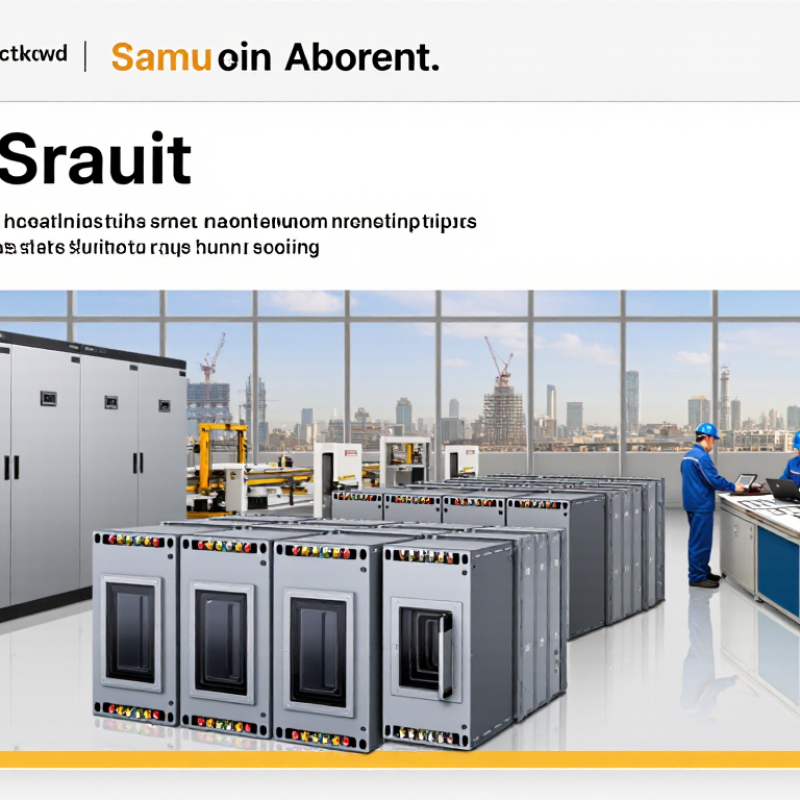
China Top RMU Electrical Panel Suppliers for Global Buyers

China’s RMU manufacturing landscape includes suppliers serving utilities, industrial sites, commercial buildings, and infrastructure projects. For global buyers, choosing a Rmu Electrical Panel supplier involves more than comparing prices. Product design, documented testing, and responsive engineering support all matter. Small details matter.

A practical review should begin with the network’s rated voltage, fault level, operating conditions, and required protection functions. Buyers can then compare switchgear configurations, cable termination layouts, enclosure ratings, and relay options against project specifications. Ask suppliers for current technical drawings, routine test records, and relevant type-test documentation. Where IEC 62271-200 is specified, verify that the offered configuration and evidence match the requirement. Do not assume a certificate covers every model or customization.

Factory audits, sample inspections, and clear quality-control records can help confirm manufacturing capability. So can checking references for projects with similar voltage levels and operating environments. Yet paperwork alone cannot predict every commissioning issue. It may not. Discuss lead times, spare parts, installation guidance, and after-sales response before placing an order. Compare warranty terms and communication practices in writing, and involve a qualified electrical engineer in technical approval. Suppliers vary in specialization, so the best fit depends on the application, not simply the country of origin. This guide introduces key considerations for evaluating China-based RMU suppliers, while recognizing that specifications and service quality should be assessed case by case.

China Top RMU Electrical Panel Suppliers for Global Buyers

Understanding RMU Electrical Panels and Their Role in Power Distribution

An RMU, or ring main unit, is compact medium-voltage switchgear used to connect and control sections of a distribution network. It commonly combines load-break switches, circuit breakers, and earthing switches in one enclosure. If a cable fault occurs, operators can isolate the affected section and keep other parts of the ring supplied, where network design allows. Small equipment, large consequences. Switching access and clear status indicators matter in a cramped substation.

RMUs may use air or gas insulation, and their layouts differ by application. Buyers should check rated voltage, short-circuit withstand, protection coordination, enclosure rating, and operating conditions—not just footprint. The IEA’s 2023 report, Electricity Grids and Secure Energy Transitions, says more than 80 million kilometres of grids must be added or refurbished by 2040. It also estimates annual grid investment needs to rise from roughly USD 300 billion to over USD 600 billion by 2030. These are grid-wide figures, not RMU market forecasts, but they show the scale of network upgrades. A neat specification can still miss real site constraints: salt air, dust, tight cable bends, or limited maintenance access. Those details deserve a second look.

Typical RMU Voltage Classes for Power Distribution

Typical network nominal voltages and corresponding equipment highest-voltage ratings used for medium-voltage distribution.

RMUs are commonly selected to match the voltage class of the distribution network. Equipment ratings shown here are typical examples; actual specifications depend on local standards and project requirements.

China’s RMU Supplier Landscape and Main Product Categories

China’s RMU supplier landscape spans manufacturers of compact medium-voltage switchgear, with product ranges shaped by insulation method and network configuration. Common categories include air-insulated, gas-insulated, and solid-insulated units. Suppliers may also offer load-break switches, fuse-switch combinations, or circuit-breaker panels. Details matter.

Air-insulated designs allow straightforward visual inspection but need more installation space. Gas-insulated models are compact, which can suit dense urban substations. Solid-insulated units avoid gas insulation, though buyers should check service procedures and material documentation. The categories overlap in real catalogs, so labels alone can mislead.

The International Energy Agency’s Electricity 2024 report recorded 2.2% global electricity-demand growth in 2023. It projected average annual growth of 3.4% for 2024–2026. That outlook points to sustained needs for distribution equipment, but it does not establish the quality of any supplier.

Buyers can compare rated voltage, short-circuit withstand, protection options, enclosure rating, and test records. Ask for drawings that show cable entry, busbar layout, and operating access. A sample inspection helps reveal practical issues, such as tight cable bends or awkward maintenance clearance. These checks take time. They are still useful when comparing quotations with different configurations.

How to Evaluate Chinese RMU Manufacturers for Global Projects

Evaluating Chinese RMU manufacturers for a global project starts with the site conditions, not a catalogue. Confirm rated voltage, busbar current, short-time withstand current, ambient temperature, altitude, and required internal arc classification. A 12 kV unit for a humid coastal substation may need different enclosure protection and corrosion controls from one installed indoors. Small details matter.

Ask for type-test reports that match the proposed design, not merely a similar product family. Check report scope, test laboratory, ratings, and configuration against the project specification. Request routine-test records, material traceability, wiring diagrams, and a sample inspection plan. Documents should be clear and consistent. If an answer relies on “equivalent” without explaining the difference, ask for evidence.

Factory capability deserves a close look. Review assembly processes, calibration records, incoming-inspection controls, and how nonconforming parts are handled. A witnessed factory acceptance test can verify interlocks, mechanical operation, wiring, and protection settings before shipment. Also confirm packing dimensions, spare-part availability, drawing turnaround, and who handles technical questions across time zones. A video call helps, but it cannot replace an independent inspection when project risk is high. One imperfect point: paperwork can look complete while production varies between batches, so agree on inspection checkpoints before placing the order.

Key Standards, Certifications, and Quality Checks for Buyers

For China-based RMU suppliers, check that the proposed equipment meets the project’s applicable IEC requirements. IEC 62271-200 covers AC metal-enclosed switchgear above 1 kV and up to 52 kV. Confirm the rated voltage, short-time withstand current, and internal-arc classification match the site specification. A certificate alone is not proof of performance.

The IEA’s 2023 report, Electricity Grids and Secure Energy Transitions, says annual grid investment needs to rise to more than US$600 billion by 2030. As networks expand, consistent equipment quality matters. Review type-test reports from competent laboratories, routine test records for the supplied units, and production traceability. Check enclosure protection, interlocks, wiring diagrams, and the condition of the operating mechanism. ISO 9001 supports quality management; it does not certify the RMU itself.

Tips: Ask for test records linked to the unit’s serial number, then match its nameplate to the approved drawings. Inspect a sample unit in person when practical. Small document mismatches are easy to overlook, and they deserve a second look.

China Top RMU Electrical Panel Suppliers for Global Buyers - Key Standards, Certifications, and Quality Checks for Buyers

Evaluation Area Relevant Standard or Requirement What Buyers Should Confirm Evidence to Request Practical Quality Check
Product scope and ratings Project specification and applicable local grid requirements; IEC 62271 standards where specified. Rated voltage, rated frequency, continuous current, short-time withstand current and duration, peak withstand current, and operating duty match the project. Approved datasheet, nameplate schedule, drawings, and a rating-by-rating compliance statement. Compare the offered configuration and ratings against the project’s single-line diagram and utility requirements. Do not assume one rating suits every installation.
Metal-enclosed switchgear design IEC 62271-200, covering AC metal-enclosed switchgear and controlgear above 1 kV and up to and including 52 kV. Rated voltage range, service conditions, compartments, accessibility, and loss-of-service-continuity category are appropriate for the specified design. Design documentation and applicable type-test reports for the offered switchgear family and configuration. Check that the tested design is representative of the supplied assembly, including its enclosure, busbar arrangement, and relevant options.
Common design requirements IEC 62271-1, common specifications for high-voltage switchgear and controlgear. General service conditions, ratings, operating mechanisms, and specified tests are addressed for the equipment. Technical compliance schedule identifying deviations, exceptions, and the applicable standard edition. Review deviations before purchase and confirm that contract documents clearly state the governing editions and project-specific requirements.
Switching devices Depending on the RMU configuration: IEC 62271-103 for switches; IEC 62271-100 for AC circuit-breakers; IEC 62271-105 for AC switch-fuse combinations. The standard matches the actual switching device and its intended duty, including the specified fault interruption or fuse-protection arrangement. Device datasheets, test reports, fuse coordination information where applicable, and operating sequence documentation. Verify that the ratings and coordination apply to the exact switch, breaker, fuse combination, and system fault level being supplied.
Disconnectors and earthing switches IEC 62271-102 for AC disconnectors and earthing switches, where applicable to the design. Earthing-switch making capability, mechanical operation, interlocking, and the specified electrical ratings are suitable for the installation. Relevant type-test documentation, mechanism details, and interlocking diagrams. Witness the specified operating sequence and confirm that access to relevant compartments is prevented unless the required safe conditions are met.
Internal arc classification IEC 62271-200, where an internal arc classification is specified. IAC classification, accessible sides, test current, and test duration correspond to the project risk assessment and installation layout. Internal-arc test report for the applicable tested arrangement and classification. Check the report’s tested configuration and installation conditions; do not treat an IAC claim as covering untested layouts or all enclosure sides.
Enclosure protection IEC 60529 for IP degrees of protection, where an IP rating is specified. The stated IP rating applies to the relevant enclosure and installed configuration, including doors, covers, cable entries, and ventilation features. Declared IP rating and supporting test or design documentation appropriate to the claim. Inspect seals, gaskets, door alignment, cable-entry provisions, and enclosure finish against the approved drawings and installation conditions.
Type tests and design verification Applicable product standards, particularly IEC 62271-200 and the relevant device standards. Required dielectric, temperature-rise, short-time withstand, peak withstand, mechanical, and other applicable design tests are covered. Complete reports showing the tested specimen, configuration, ratings, test results, and issuing laboratory. Confirm that reports are traceable and relevant to the offered design. A report for a similar-looking product is not automatically evidence for the supplied configuration.
Production routine tests Routine tests required by the applicable product standards and purchase specification. Each supplied unit receives the required production checks before release, with results linked to its serial number. Unit-specific routine-test reports, inspection records, and final release documentation. Review records for completeness and consistency with the nameplate, drawings, and agreed test plan; arrange witnessing where contractually required.
Quality management system ISO 9001 certification may support evaluation of the manufacturer’s quality-management system; it is not, by itself, product certification. The certificate covers the relevant manufacturing site and activities and is valid for the stated period. Current certificate details and, if required, verification with the issuing certification body. Assess document control, incoming-material checks, calibration, nonconformance handling, corrective actions, and production traceability.
Laboratory competence ISO/IEC 17025 accreditation is relevant when evaluating a testing laboratory’s competence for specified tests. The laboratory’s accreditation scope covers the test methods and equipment relevant to the submitted reports. Accreditation certificate and scope, plus the original or verifiable test report. Check the issuing laboratory, report references, tested ratings, and whether the accreditation scope applied to the specific test.
Export-market conformity Destination-country laws, grid codes, and project approval rules; requirements differ by market and product configuration. Required declarations, approvals, language, documentation, and importer responsibilities are identified for the destination. Market-specific compliance documents and a written list of applicable requirements and exclusions. Verify requirements with the project owner, utility, or qualified local compliance adviser. Do not assume that one certificate is accepted in every country.
Materials, assembly, and traceability Approved drawings, bill of materials, purchase specification, and the manufacturer’s controlled production procedures. Materials and critical components match the approved design, with production changes controlled and documented. Inspection and material records, component schedules, serial-number records, and approved change documentation. Inspect assembly quality, wiring identification, fasteners, busbar joints, labeling, cleanliness, and workmanship against agreed acceptance criteria.
Shipment and documentation Contract requirements, approved packing instructions, and applicable transport and import rules. Equipment is protected for the route and storage conditions; documentation is complete and matches the shipped units. Packing list, serial-number list, drawings, manuals, test records, and storage or handling instructions. Before dispatch, check packaging condition, moisture protection, lifting instructions, shipping marks, and document consistency.

Buyer note: The applicable standards, editions, ratings, tests, and approvals depend on the project specification and destination market. Request evidence for the exact proposed configuration and confirm acceptance requirements with the project owner or local utility.

Comparing Quotes, Logistics, and After-Sales Support

For global buyers comparing RMU electrical panel suppliers in China, a quotation should show more than the unit price. Check the listed voltage, insulation medium, rated current, fault withstand rating, and included accessories. Ask whether routine tests, drawings, packing, and spare parts are included. Small omissions matter. A missing operating handle or unclear test scope can change the final cost. It is easy to focus on the lowest number and miss what the number leaves out.

Logistics deserve the same close review. Confirm the delivery term, estimated production lead time, packing method, and port of loading in writing. Ask how the panels will be protected against moisture and impact during a long sea journey. Request shipping dimensions and gross weight early; these details affect freight planning. Lead times can shift when specifications change, so a firm date should be tied to approved drawings and agreed inspection steps.

After-sales support is harder to compare, but ask practical questions. Who responds to commissioning questions, and how quickly? Can the supplier provide wiring diagrams, operation instructions, and remote troubleshooting? Clarify the warranty period, exclusions, and process for replacement parts before placing an order. A polished promise is not proof of dependable service. I would also keep a written record of unresolved technical points; relying on memory is an easy mistake.