
10 Best Sprinkler Trucks for Sale in 2026
A Sprinkler Truck can look like a simple water tank on wheels. On active construction sites, however, the right model must match the ground, workload, and water supply. The U.S. Census Bureau reported construction spending at a seasonally adjusted annual rate of about $2.19 trillion in December 2024. That scale points to sustained demand for equipment that supports roadwork, site preparation, and dust control. But national spending alone cannot tell buyers which truck will suit a particular job.
The U.S. Environmental Protection Agency’s AP-42 emissions compendium identifies traffic on unpaved roads as a source of particulate emissions and discusses water application as a dust-control measure. That makes tank capacity, spray coverage, pump output, and nozzle placement practical buying considerations—not just brochure details. A truck with a large tank may reduce refill stops, yet its size can limit access on tight sites. A real trade-off. Buyers should also compare chassis condition, payload ratings, parts availability, and service support, then confirm specifications with the manufacturer or dealer. Not every published figure tells the whole story.
This 2026 guide reviews 10 Sprinkler Truck options for sale, with attention to how their configurations fit different work demands. We consider capacity and application equipment alongside operating practicality. The best choice depends on the route, surface, water access, and daily workload. Those details matter. No single model is right for every crew, and a promising specification still deserves careful verification before purchase.
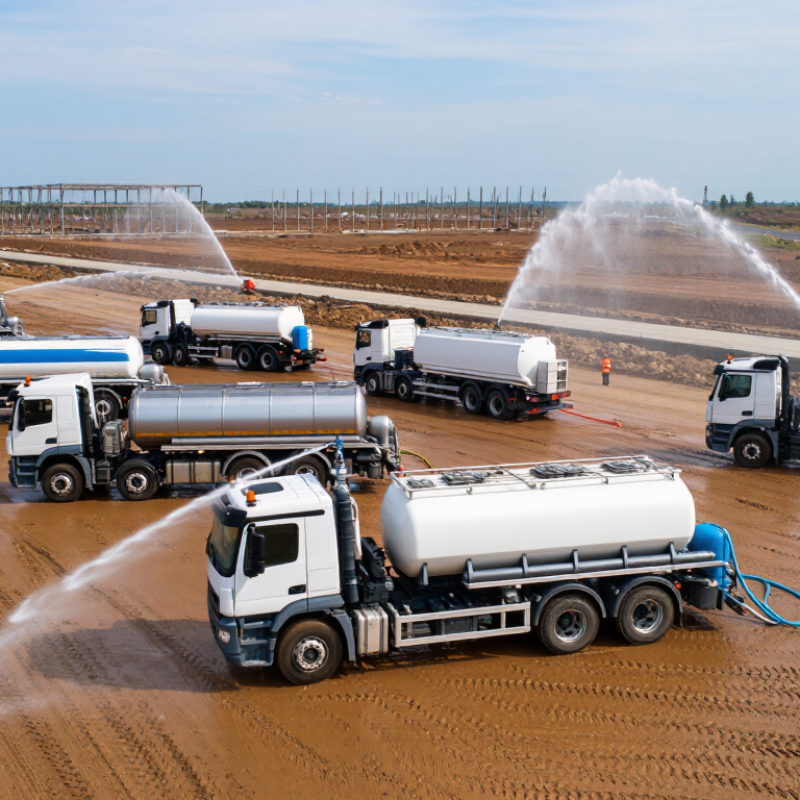
What Sprinkler Trucks Do and How Their Systems Work
A sprinkler truck carries water in a tank and spreads it through spray bars, side nozzles, or a hose reel. Crews use it to dampen dusty haul roads, construction areas, and unpaved surfaces. The pump draws water from the tank and pushes it through valves that control flow and spray width. A driver can adjust the pattern to suit a narrow road or a broad work area. The details matter.
The U.S. Environmental Protection Agency’s AP-42 Section 13.2.2 assesses unpaved-road dust using factors such as surface silt, vehicle weight, and speed. Its watering-control method also considers application rate and the time between applications. In practical terms, a light pass may dry quickly under traffic or hot wind. Too much water can leave puddles and soft patches. Not magic.
For buyers comparing sprinkler trucks, check tank capacity, pump output, nozzle placement, and whether controls are accessible from the cab. A pressure gauge and flow meter help crews repeat settings across shifts. Inspect strainers and drain points, too; clogged nozzles create uneven coverage, often visible as dry strips in the dust. EPA’s method is not a promise of fixed reductions: local soil, weather, and traffic change results. Even experienced operators need to adjust the schedule.
10 Best Sprinkler Trucks for Sale in 2026 - What Sprinkler Trucks Do and How Their Systems Work
A practical comparison of ten common sprinkler-truck configurations. These are representative buying categories, not specific listings; capacities and equipment vary by build and local regulations.
| Truck configuration | Typical water capacity | Typical chassis / drive | Water-delivery system | Best suited for | What to check when buying |
|---|---|---|---|---|---|
| Compact urban sprinkler truck | 1,000–1,500 US gal (3,785–5,678 L) | Medium-duty, 4×2; commonly 26,000–33,000 lb GVWR | Rear spray bar, adjustable nozzles, and hose connection; pump commonly around 100–300 gpm | Street cleaning, small parks, narrow roads, and municipal watering routes | Confirm legal payload, turning clearance, tank baffling, and that the filled truck meets axle limits. |
| General-purpose municipal water truck | 1,500–2,500 US gal (5,678–9,464 L) | Medium- or heavy-duty, usually 4×2; GVWR selected for the loaded weight | Front spray heads, rear spray bar, side sprays, and a pump-fed hose outlet | Road washing, landscaping, dust suppression, and routine public-works operations | Test each spray zone, valve, pump, and hose outlet; inspect tank interior and corrosion protection. |
| Construction-site dust-control truck | 2,000–3,500 US gal (7,571–13,249 L) | Heavy-duty, typically 6×4; often a multi-axle configuration for payload | Rear spray bar with multiple independently controlled nozzles; pump commonly around 200–500 gpm | Haul roads, earthworks, quarries, and large construction sites | Check nozzle coverage, pump condition, ground clearance, and site access requirements. |
| High-capacity highway water truck | 3,000–5,000 US gal (11,356–18,927 L) | Heavy multi-axle chassis; GVWR and axle ratings must match the loaded tank | High-flow pump, rear spray bar, front sprays, and hose connections | Long work zones, large road projects, and applications where fewer refill stops are valuable | Verify tank capacity against legal weight limits, braking capacity, tire ratings, and route restrictions. |
| All-wheel-drive off-road water truck | 2,000–4,000 US gal (7,571–15,142 L) | Off-road 6×6 or other driven-axle arrangement; chassis ratings vary | Spray bar and pump-fed hose; controls may be accessible from the cab | Unpaved worksites, remote projects, and rough or low-traction terrain | Inspect drivetrain, suspension, tires, underbody, and the truck’s actual off-road payload rating. |
| Fine-mist dust-suppression truck | 1,500–3,000 US gal (5,678–11,356 L) | Heavy-duty 4×2 or 6×4, depending on tank size and site conditions | Fine-spray nozzles or a misting attachment, usually supplied by a dedicated pump | Dust-sensitive work areas where controlled water application is preferred | Ask for nozzle specifications, filtration details, water-quality requirements, and cleaning instructions. |
| Landscape and irrigation support truck | 1,000–2,500 US gal (3,785–9,464 L) | Medium- or heavy-duty 4×2; configuration depends on payload and route | Hose reel, controlled-flow outlet, and optional spray heads for broad watering | Tree establishment, parks, planted medians, and temporary irrigation | Check hose length, reel condition, flow control, tank access, and compatibility with the water source. |
| Road-maintenance flushing truck | 2,000–4,000 US gal (7,571–15,142 L) | Heavy-duty 6×4 is common for larger tanks and equipment loads | Pressure pump, directed front or side sprays, rear bar, and hose outlet | Washing road surfaces, clearing light debris, and supporting maintenance crews | Distinguish high-pressure washing equipment from a standard sprinkler pump; inspect hoses and pressure controls. |
| Compact 4×4 site-service water truck | 500–1,200 US gal (1,893–4,542 L) | Light- or medium-duty 4×4; payload is limited by the vehicle rating | Small pump, hose outlet, and a compact rear spray bar | Small, constrained, or remote sites that need maneuverability more than maximum capacity | Calculate loaded weight carefully; water alone weighs about 8.34 lb per US gallon. |
| Multi-zone sprinkler truck | 2,500–4,000 US gal (9,464–15,142 L) | Heavy-duty 6×4 or 6×6, selected for payload and terrain | Separately valved front, side, and rear spray zones, plus a pump-fed hose outlet | Mixed-use fleets that switch between road spraying, dust control, and hose work | Operate every valve and control; confirm zone isolation, pump priming, tank baffling, and service access. |
How the system works: water is carried in a baffled tank, then supplied by gravity or a pump to selected valves, pipes, spray heads, or hose outlets. Actual flow and spray coverage depend on pump performance, nozzle size, vehicle speed, and system condition. Always verify loaded weight, axle ratings, road legality, and equipment specifications before purchase.