Best Metal Belt Conveyors for Efficient Material Handling?
In the fast-paced world of manufacturing and logistics, metal belt conveyors play a pivotal role. According to a report by Research and Markets, the global metal belt conveyor market is projected to grow by 6% annually over the next five years. This growth reflects the increasing demand for efficient material handling solutions in various sectors, such as automotive and food processing.
Dr. Emily Carter, a renowned expert in conveyor systems, states, "Metal belt conveyors offer durability and reliability that outshine many alternatives." These systems are not only robust but also versatile, making them suitable for handling diverse materials. Despite their advantages, some users encounter challenges such as initial costs and maintenance complexity.
As industries seek to optimize operations, the choice of conveyor systems becomes crucial. Inefficient systems can hinder productivity. The right metal belt conveyor can enhance workflow and reduce downtime. A thoughtful selection process and awareness of potential pitfalls are essential for maximizing benefits in material handling.
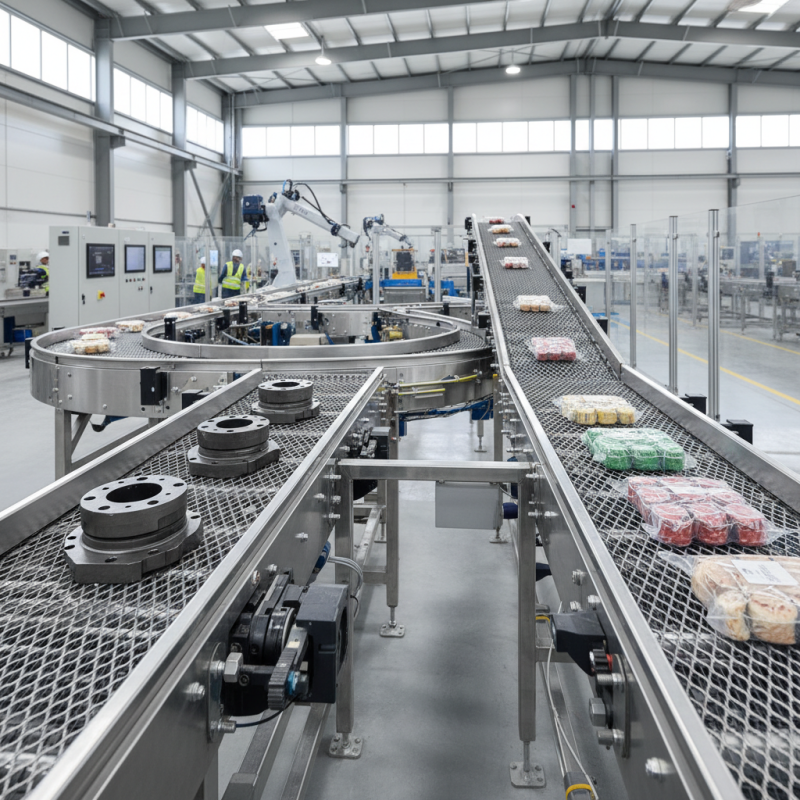
Overview of Metal Belt Conveyors in Material Handling
Metal belt conveyors play a crucial role in material handling across various industries. These conveyors are designed to transport heavy and bulk materials efficiently. Their robust construction ensures durability and longevity in demanding environments. With their metal belts, they can handle a wide range of products, from raw materials to finished goods. The strength of metal means less wear and tear, reducing replacement costs.
However, the design of metal belt conveyors isn't without challenges. Ensuring the right belt width and speed is critical. If not properly calibrated, it can lead to material spillage or disruptions in the handling process. Sometimes, maintenance requirements are more demanding due to exposure to moisture or corrosive environments. Regular inspections are essential to identify issues early, which can save time and costs.
Incorporating metal belt conveyors requires careful consideration of facility layout and workflow. Improper integration can hinder efficiency. It's vital to assess each application individually. While they provide significant advantages, users must remain alert to their limitations. Balancing cost and efficiency is a constant challenge for many operators.
Key Features to Look for in Metal Belt Conveyors
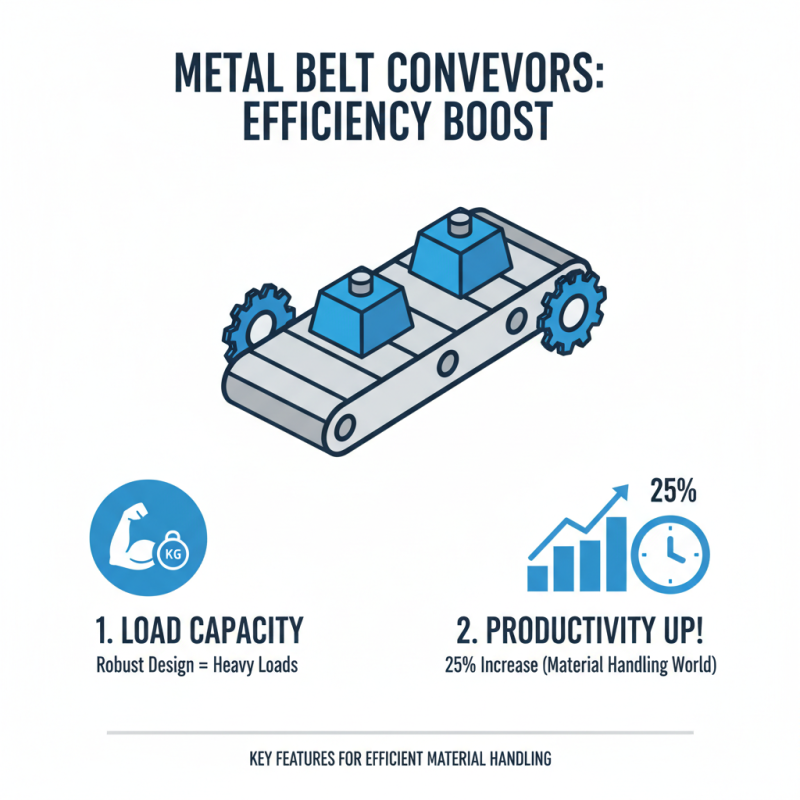
When selecting metal belt conveyors for efficient material handling, several key features stand out. Load capacity is critical. A robust design can support heavy loads, enhancing operational efficiency. According to a report by Materials Handling World, conveyors can increase productivity by 25% when they effectively manage weight.
Another vital aspect is the material of the belt itself. Different metal materials, such as stainless steel or aluminum, offer varying levels of durability and resistance to corrosive substances. The right choice can prolong the conveyor's lifespan. Reports show that improper material selection can lead to increased maintenance costs, which may reach up to 30% of annual equipment expenses.
Additionally, conveyor speed adjustment is essential for optimizing workflow. Adjustable speeds accommodate different materials and handling requirements. However, achieving the ideal speed can be a trial-and-error process. Monitoring this can be challenging, and designs that allow easy adjustments can enhance usability. Implementing these features can lead to more efficient operations, but overlooking them can result in inefficiencies in material transport.
Types of Metal Belt Conveyors for Different Applications
When choosing metal belt conveyors, consider the type suited for your specific needs.
There are several types to explore. For bulk material handling, a flat wire mesh conveyor excels.
It provides excellent airflow and drainage. This makes it ideal for wet or dry materials.
Another option is the modular plastic belt conveyor.
It offers flexibility in design. This type can navigate tight corners and inclines easily.
It's great for diverse applications, including packaging and food processing.
You might find it not as strong as metal options, but its adaptability is a significant plus.
Tips: Always assess your material’s weight and size. This determines the right conveyor type.
Regular maintenance is key to avoid downtime. Evaluate your conveyor’s performance regularly.
Look for signs of wear and tear. Remember, selecting the wrong conveyor can lead to inefficiencies.
You may need to reconsider your choice if you face frequent breakdowns.
Advantages of Using Metal Belt Conveyors
Metal belt conveyors offer significant advantages for material handling across various industries. Their robust design, often constructed from stainless steel or aluminum, ensures durability. These conveyors can withstand harsh environments and heavy loads, making them ideal for manufacturing and logistics. Moreover, data from industry reports highlight that metal belt conveyors can enhance efficiency by up to 25% compared to traditional systems. This increased efficiency can lead to cost savings in labor and maintenance.
One notable benefit is their flexibility in handling diverse materials. Metal belts can transport items of varying shapes and sizes. This adaptability reduces the need for multiple conveyor systems, streamlining operations. However, they can be more expensive upfront, which may deter some companies. Yet, the long-term savings often justify the initial investment. In fact, a recent study indicates that companies that invest in quality metal belt conveyors see a return on investment in less than two years.
Maintenance is another aspect worth considering. While metal conveyors require less frequent maintenance, periodic inspections are necessary. Addressing wear and tear early can prevent costly downtime. Ensuring that operators are trained on the specific requirements of metal conveyors can mitigate potential issues. Although they are robust, like any system, they can fail without proper care. It's essential to balance efficiency with maintenance for optimal performance.
Maintenance Tips for Optimal Performance of Metal Belt Conveyors
Metal belt conveyors play a crucial role in various industries, enhancing material handling efficiency. However, optimal performance relies heavily on regular maintenance. A report by the Conveying Equipment Manufacturers Association indicates that up to 50% of conveyor system failures are due to inadequate maintenance. Regular checks can prevent costly downtimes.
Routine inspections should focus on the conveyor's alignment, tension, and surface wear. Misalignment can lead to unnecessary strain on components. Tension adjustments are essential to avoid slippage, which can hinder productivity. Reports show that even minor misalignments can decrease efficiency by nearly 20%. Operators should also clean the belts regularly to remove any debris that may cause wear and tear.
Investing in training for staff is vital. Operators need to understand how to identify issues before they escalate. Statistics indicate that poorly trained personnel can increase maintenance costs by 15%. Encouraging a culture of vigilance can make a significant difference. Empowering teams to take ownership of maintenance can yield lasting benefits.