2026 Top Belt Conveyor Parts Suppliers for Global Buyers

Choosing a belt conveyor parts supplier is not just a price comparison. For global buyers, the wrong roller, pulley, or belt joint can mean extra downtime and costly delays. This 2026 guide examines suppliers through practical details: product range, material specifications, quality controls, delivery options, and after-sales support. Small details matter. A roller that sounds rough during a hand check may signal a problem worth investigating. So can an unclear warranty or a specification sheet missing load ratings.

A useful reminder comes from Daniel Reed, a fictional composite representing maintenance engineers’ field experience: “A part is only dependable when its fit, duty rating, and service support match the conveyor.” This is an illustrative line, not a quotation from a real, independently verified expert. Buyers should still confirm dimensions, operating conditions, and test records directly with each supplier. That step takes time. It can also reveal where a polished catalog leaves important questions unanswered. The sections ahead compare supplier capabilities and explain how to assess belt conveyor parts for different operating needs. No single vendor fits every site; a dusty quarry and a clean packaging line demand different priorities. Our comparisons aim to make those trade-offs clearer, while recognizing that supplier claims deserve verification.
2026 Top Belt Conveyor Parts Suppliers for Global Buyers

What Belt Conveyor Parts Include and How They Work

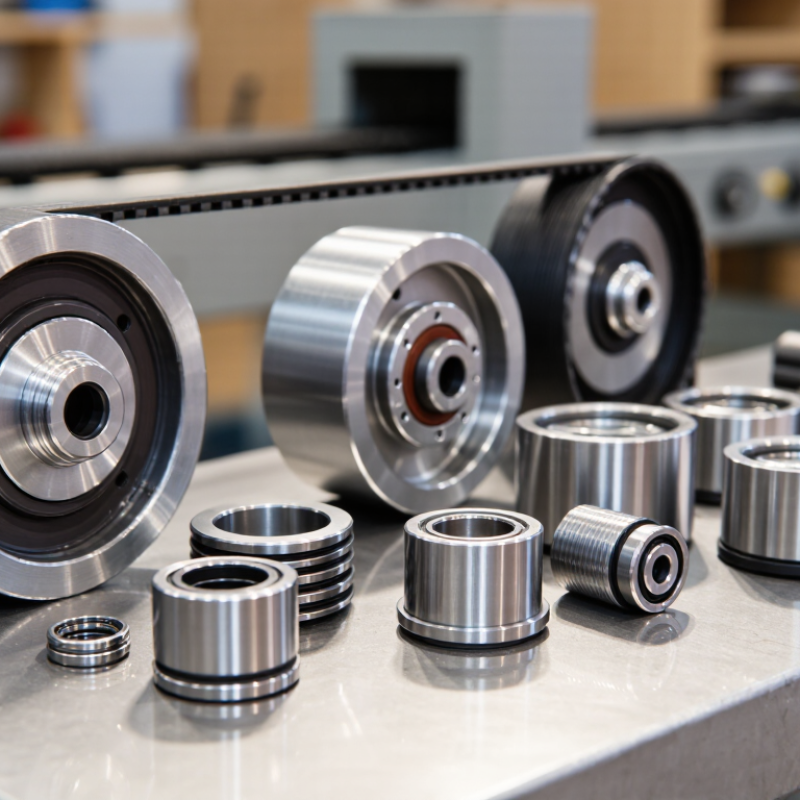
A belt conveyor works as a connected system, not as a belt alone. The belt carries material, while the drive pulley transfers motor torque into motion. Idlers support the loaded belt and guide its return run. A take-up unit maintains tension, helping limit slip and sag. Scrapers remove material stuck to the belt; skirtboards help contain material at loading points. Small parts matter.

CEMA’s Belt Conveyors for Bulk Materials, 7th edition, discusses how load, speed, belt tension, and component selection shape conveyor design. The U.S. Department of Energy’s 2014 Improving Motor and Drive System Performance sourcebook reports that motor-driven systems account for about 70% of U.S. industrial electricity use. That figure is not conveyor-specific, but it shows why drive and gearbox selection deserve careful attention. In operation, check for hot bearings, uneven belt tracking, and material buildup near pulleys. A belt may look sound while a stiff idler quietly increases drag; visual checks alone can miss it. Alignment matters. Even a well-sized conveyor can perform poorly when take-up tension or loading conditions change.

How to Evaluate Belt Conveyor Parts Suppliers in 2026

Evaluating belt conveyor parts suppliers in 2026 starts with the operating conditions, not a catalogue. Share belt width, speed, load, material temperature, and washdown exposure. Ask for documented pulley, bearing, and belt specifications, plus calculations suited to the conveyor duty. Fit comes first. A part that looks interchangeable may shift belt tracking or shorten bearing life.

Check quality evidence, too. Request material certificates, dimensional inspection records, and batch traceability for critical components. For conveyor calculations, ask whether the supplier can support methods aligned with ISO 5048. The U.S. Department of Energy’s 2014 motor-systems sourcebook estimates that motor-driven systems account for about 68% of U.S. industrial electricity use. That makes motor efficiency and correct drive sizing worth checking, not treating as minor details.

Compare lead times against actual stock locations, and confirm how replacement parts are identified after delivery. Ask for clear drawings, installation guidance, and a named technical contact for troubleshooting. Then test it. A short pilot under real load can reveal noise, heat, mistracking, or premature wear that a quotation will not show. A spreadsheet alone can still mislead; even strong paperwork cannot fully predict performance in a dusty transfer point or a wet washdown area.

2026 Top Belt Conveyor Parts Suppliers for Global Buyers - How to Evaluate Belt Conveyor Parts Suppliers in 2026

Use this supplier-evaluation framework to compare offers for conveyor belts, idlers, pulleys, rollers, fasteners, and related components. Screening targets below are buyer-defined starting points, not universal industry requirements; adjust them to the application, contract, and operating environment.

Evaluation dimension What to verify Evidence to request Practical screening benchmark Buyer follow-up question
Application fit Whether the part suits the conveyor layout, conveyed material, operating temperature, speed, load, and site conditions. A completed technical questionnaire, drawings, and a written selection rationale. All critical operating conditions are confirmed before quotation or production. Which application assumptions could change the proposed specification?
Specification and drawing control Dimensions, interfaces, materials, tolerances, revision status, and compatibility with existing equipment. Controlled drawings, a dimensional data sheet, and a documented review of buyer specifications. Every critical dimension and interface is agreed in writing before order release. How are drawing revisions approved and communicated?
Material traceability Whether material grades and batches can be traced to the finished part, where required by the application or contract. Material certificates, batch or heat numbers, and a sample traceability record. Traceability records are available for all contractually specified materials and components. Can you trace a finished item back to its material batch?
Quality management Documented inspection, nonconformance handling, corrective action, and change control. Quality manual or process overview, inspection plan, and any current third-party certification in scope. Processes are documented; verify any claimed ISO 9001 certification directly with the issuing certification body. How are defects contained, investigated, and prevented from recurring?
Inspection and testing Inspection methods and acceptance criteria appropriate to the part, such as dimensions, runout, balance, coating, or belt properties. Inspection and test plan, sample reports, calibrated-equipment records, and agreed acceptance limits. Critical-to-quality characteristics have defined methods, limits, and recorded results. Which checks are performed on every unit, and which are sampled?
Product and process capability Whether the supplier can consistently manufacture the required design, quantity, and finish using suitable equipment and processes. Process flow, production capacity statement, sample inspection records, and a pre-production sample where appropriate. Capacity and process controls are demonstrated for the expected order volume and specification. What production step is the main capacity constraint?
Delivery and export readiness Quoted production lead time, shipment terms, packaging, customs documents, and ability to support the destination market. A dated delivery schedule, packing details, sample export documents, and written Incoterms® agreement. Dates, responsibilities, document requirements, and delivery assumptions are explicit in the offer. What events could delay shipment, and how will you notify us?
After-sales support and spares Availability of technical assistance, replacement parts, installation guidance, and clear handling of warranty claims. Support contact details, spare-parts list, response process, and written warranty terms. Support scope, response channel, spare availability, and claim requirements are documented before purchase. What information and evidence are required to assess a warranty claim?
Total cost of ownership Purchase price alongside freight, installation, expected maintenance, replacement frequency, and downtime exposure. Itemized quotation, maintenance guidance, and any substantiated service-life data for comparable conditions. Compare offers using the same scope, operating assumptions, currency, and delivery basis. Which quoted costs or operating assumptions are excluded?
Supplier risk and continuity Dependence on single-source materials or processes, business continuity planning, and notification of production or material changes. Continuity plan summary, key subcontractor controls, and documented change-notification procedure. Material or process changes require buyer review when specified by the contract. How would you maintain supply if a critical process or material source became unavailable?

Evaluation tip: score each dimension against your project requirements, record supporting evidence, and resolve technical exceptions in writing before placing an order.

Leading Belt Conveyor Parts Suppliers for Global Buyers

Leading Belt Conveyor Parts Suppliers for Global Buyers

Choosing a belt conveyor parts supplier means checking more than price and availability. Buyers should confirm whether the supplier can match belt width, pulley diameter, bearing type, and operating conditions. Clear drawings and material specifications reduce the risk of receiving parts that look right but do not fit. Ask how dimensions are inspected and how wear-prone components are protected during shipping. A polished catalog is useful, but it is not proof of consistent quality.

Reliable suppliers communicate realistic lead times and explain what information they need before quoting. Share operating speed, load, temperature, and dust exposure where possible. These details help clarify whether a proposed roller, idler, or pulley suits the application. Request inspection records or samples for critical parts, and compare packaging, spare-part availability, and after-sales response. A low quote can still be costly if a replacement stops a line. Buyers sometimes focus too heavily on unit price; that is worth reconsidering.

Tips: Keep a parts list with dimensions and machine references. Confirm tolerances in writing. Check sample fit before ordering in volume. Small details matter.

Regional Strengths and Global Supply Capabilities

Regional strengths shape how belt conveyor parts reach buyers in 2026. Asian manufacturing hubs often offer broad product ranges and flexible production volumes. Buyers can source rollers, idlers, pulleys, and belt fasteners from one production base. However, quoted capacity does not always equal available capacity. Confirm lead times against current production schedules.

European suppliers may provide close engineering support, detailed documentation, and options for specialized operating conditions. North American suppliers can offer shorter delivery routes to nearby customers and easier access to local technical service. These are general patterns, not guarantees. Ask for dimensional drawings, material specifications, and inspection records before approving parts. A roller’s shell thickness and bearing fit can matter more than a polished catalogue image.

Global supply capability depends on more than factory location. Check whether suppliers can pack parts to prevent impact damage, identify cartons clearly, and provide shipment updates. Request samples for critical components, then compare them with the conveyor’s actual operating conditions. Dust, moisture, load, and temperature all affect service life. Lead times vary. A rushed order can expose gaps in communication, especially when drawings change late. That is worth admitting: even a capable supplier may need time to correct a mismatch, so clear specifications and a named technical contact reduce avoidable delays.

How to Verify Suppliers and Select the Right Partner

Supplier checks should begin with the duty, not a glossy catalogue. Record belt width, carcass, cover grade, splice method, speed, load, temperature, and exposure to dust or moisture. Ask for drawings, batch traceability, test certificates, and references from sites handling similar materials. Compare those documents with actual belt and pulley dimensions. Small mismatches matter.

Grand View Research valued the global conveyor belt market at USD 5.85 billion in 2023. Its report projected a 4.5% compound annual growth rate from 2024 to 2030. That signals broad demand, not supplier quality. Verify current quality certificates with the issuing body, and check that their scope covers the parts being supplied. ISO’s 2022 Survey reported 1,265,216 ISO 9001 certificates worldwide. Certification helps, but it cannot prove splice strength or delivery consistency. Request recent test results for tensile strength, abrasion, adhesion, and dimensional tolerances, with lot numbers matching the quotation. Speak with two customers, preferably maintenance staff, about lead times, claims, and replacement-part fit. A factory video is not evidence. No checklist removes every risk; a small trial order can still reveal problems before a critical line depends on the parts.

2026 Top Belt Conveyor Parts Suppliers for Global Buyers — How to Verify Suppliers and Select the Right Partner

Use relevant international management standards as part of supplier due diligence. The chart shows the publication year of each listed standard edition, not supplier ratings or certification status.

How to use this: Ask suppliers for current certificates where relevant, verify their validity with the issuing certification body, and review audit records and scope. A standard’s publication year does not confirm that a supplier is certified.

References: ISO 9001:2015, ISO 14001:2015, ISO 45001:2018, ISO 19011:2018, and ISO 20400:2017.