What Are the 2026 Top Air Breaker Types for Global Buyers?
As global electrical systems become more automated, buyers need clearer guidance on the 2026 Air Breaker market. Choosing a device is not simply a matter of comparing prices. It requires attention to voltage, fault current, installation space, maintenance access, and local grid conditions.
This article examines the leading Air Breaker types expected to attract global buyers in 2026. It considers air circuit breakers for low-voltage main distribution, molded case circuit breakers for industrial feeders, and compact air-break solutions for commercial panels. Each type serves a different operating environment. A factory switchboard may require adjustable trip settings and strong short-circuit capacity. A small commercial building may value compact dimensions and simple maintenance. The details matter.
Real purchasing experience shows that catalog ratings can be misleading. A breaker marked with a high current value may still perform poorly in a hot, dusty enclosure. Not every buyer checks derating tables carefully. That is a weakness worth recognizing. Reliable selection should combine manufacturer data, independent testing, installation records, and advice from qualified electrical professionals. International buyers must also confirm certification, enclosure compatibility, spare-part support, and after-sales service.
Safety comes first. Always.
The following outline compares performance, application range, protection features, lifecycle cost, and procurement risks. It also highlights practical questions buyers should ask before approving a supplier. Technology will continue changing. Good judgment remains essential.
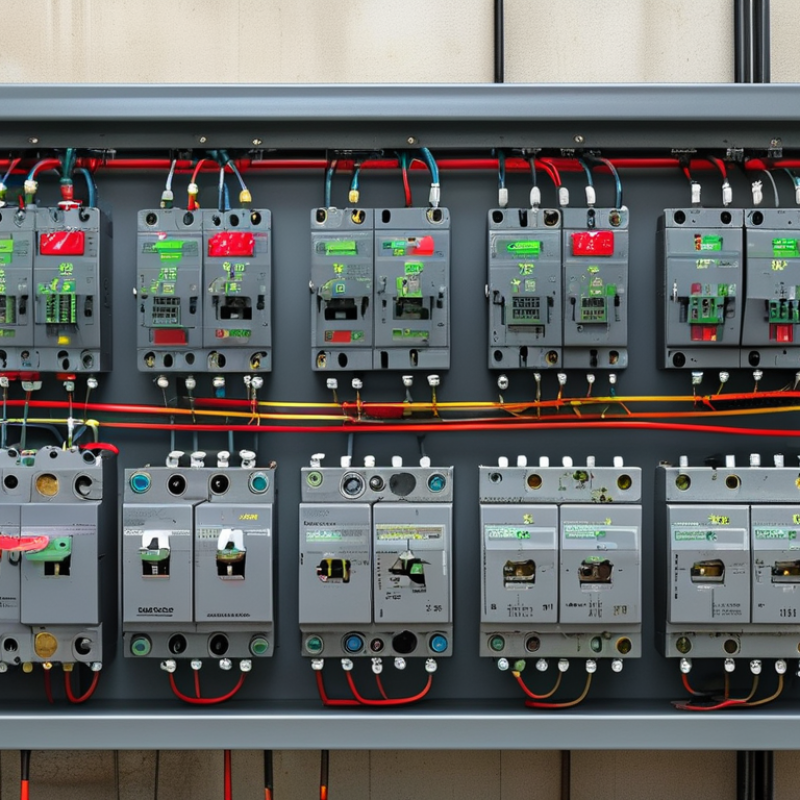
Air Breakers Explained: Purpose, Structure, and Operating Principles
For global buyers in 2026, air breakers remain essential for low-voltage power distribution. They interrupt excessive current before cables, busbars, and equipment suffer serious thermal damage. Unlike oil or gas breakers, they use surrounding air to extinguish the electrical arc. That distinction matters. The term can cover several designs, including air circuit breakers, miniature breakers, and molded-case breakers. Their ratings, internal construction, and adjustment options are not interchangeable.
A typical air circuit breaker contains fixed contacts, moving contacts, arc chutes, a trip unit, operating mechanism, terminals, and an insulated frame. During normal operation, current passes through closed contacts with limited resistance. When a short circuit occurs, the trip unit detects the abnormal current and releases the mechanism. The contacts separate rapidly. Arc chutes divide, cool, and lengthen the arc until it disappears. Air performs the insulating work.
Small breakers often serve branch circuits, while larger draw-out air circuit breakers protect generators, distribution panels, and industrial busbars. Selection requires more than comparing ampere ratings. Buyers should verify breaking capacity, voltage, frequency, short-time withstand current, trip settings, enclosure conditions, and maintenance access. Dust, humidity, and heat can change real performance. A catalog rating can look reassuring. Yet field conditions may disagree. I would also question whether every adjustable feature is necessary, because extra complexity can invite incorrect settings during commissioning. Experienced engineers normally confirm coordination with upstream and downstream protection before approval.
How to Compare Ratings, Protection Features, and Breaking Capacity
For global buyers, the leading 2026 air breaker choices are fixed, withdrawable, and electronically controlled types. Fixed breakers suit compact switchboards and stable installations. Withdrawable breakers support faster maintenance and safer isolation. Electronic-trip models provide adjustable long-time, short-time, instantaneous, and ground-fault protection. IEA’s Electricity 2024 report expects global electricity demand to grow by about 4% annually through 2026. That pressure makes accurate protection settings more important, not merely larger frame sizes.
Compare the rated current, service voltage, insulation voltage, and impulse withstand voltage. Then examine Icu and Ics under IEC 60947-2. Icu shows the ultimate short-circuit breaking capacity; Ics indicates the capacity after which the breaker can remain serviceable. Check Icw for short-time withstand and coordination with upstream devices. A 1,600-ampere breaker with inadequate Icu remains unsafe. Bigger is not automatically better.
Protection functions deserve a practical test. Selectivity, adjustable delay, neutral protection, and ground-fault sensing should match the facility’s load profile. Withdrawable designs can reduce downtime, but their interlocks and contact positions need careful verification. Independent laboratory data, type-test certificates, and site short-circuit calculations should support every purchase. In real projects, settings are sometimes copied from older panels. That is a weak habit. Temperature, cable length, motor starting current, and future expansion can change the correct choice. Research reports help frame demand, but field measurements decide reliability.
Choosing Air Breakers for Industrial, Commercial, and Infrastructure Projects
What Are the 2026 Top Air Breaker Types for Global Buyers?
Choosing an air breaker begins with the project’s operating demands, not a catalog label. Fixed air circuit breakers suit stable switchboards with enough front access. Draw-out versions support faster inspection and replacement during planned maintenance. They also help large facilities reduce shutdown exposure. Space matters.
Industrial projects usually need high interrupting capacity, adjustable electronic trip units, and dependable short-circuit coordination. A steel plant may require continuous current above 2,000 amperes, while a data center may prioritize selective tripping. Commercial buildings often favor compact frames, clear status indication, and simple testing procedures. Infrastructure systems need stronger attention to utility interfaces, remote operation, and emergency power transfer.
Check the altitude. Reduced air density can affect cooling and insulation performance, so derating data must be verified. High humidity, dust, vibration, and frequent switching also influence enclosure and mechanism choices. International buyers should compare tested ratings under recognized standards, including voltage, frequency, breaking capacity, and temperature conditions. Installation practices still matter; an excellent breaker can perform poorly with loose terminals or inadequate ventilation.
From commissioning experience, coordination studies often reveal problems that product comparisons miss. Buyers sometimes select the highest current frame, assuming it offers better protection. That choice can increase cost and weaken discrimination between upstream and downstream devices. A better review includes fault calculations, cable size, maintenance access, spare parts, and local technical support. Reality is messier. Project teams should document assumptions, because site conditions can change after the purchase order.
What Are the 2026 Top Air Breaker Types for Global Buyers?
This chart compares representative continuous-current selection bands commonly used for low-voltage air circuit breakers in industrial, commercial, and infrastructure projects. Fixed ACBs are often selected for simpler installations, while draw-out ACBs are preferred where inspection, replacement, and maintenance isolation are important. Actual selection must be verified against system voltage, short-circuit withstand, protection settings, neutral requirements, enclosure design, and applicable IEC 60947-2 or local standards.
Global Standards, Installation Factors, and 2026 Market Trends
For global buyers, air circuit breakers in 2026 will likely center on fixed, drawout, and electronically controlled types. Fixed breakers suit stable installations with limited maintenance access. Drawout breakers support faster servicing and safer isolation during inspections. Electronic trip units provide adjustable protection for overloads, short circuits, and earth faults. They also record operating data. Useful evidence.
Global standards still shape every purchasing decision. IEC 60947-2 commonly guides industrial applications, while North American projects may require different testing and certification routes. Buyers should verify voltage, frequency, breaking capacity, and local approval before ordering. A familiar certificate does not always satisfy the installation authority. That detail is often missed.
Installation conditions can change the correct breaker choice. Check ambient temperature, altitude, enclosure size, cable arrangement, and available fault current. Dusty factories may need stronger environmental protection and scheduled cleaning. A drawout design needs clear withdrawal space and reliable mechanical interlocking. Digital monitoring is gaining attention in 2026, especially for energy visibility and predictive maintenance. Yet connected functions add configuration work and cybersecurity responsibilities. Simpler equipment may be more dependable in remote sites. Field experience suggests that oversized protection is not automatically safer. Coordination studies and commissioning tests remain essential, even when the breaker appears highly intelligent.